Overview
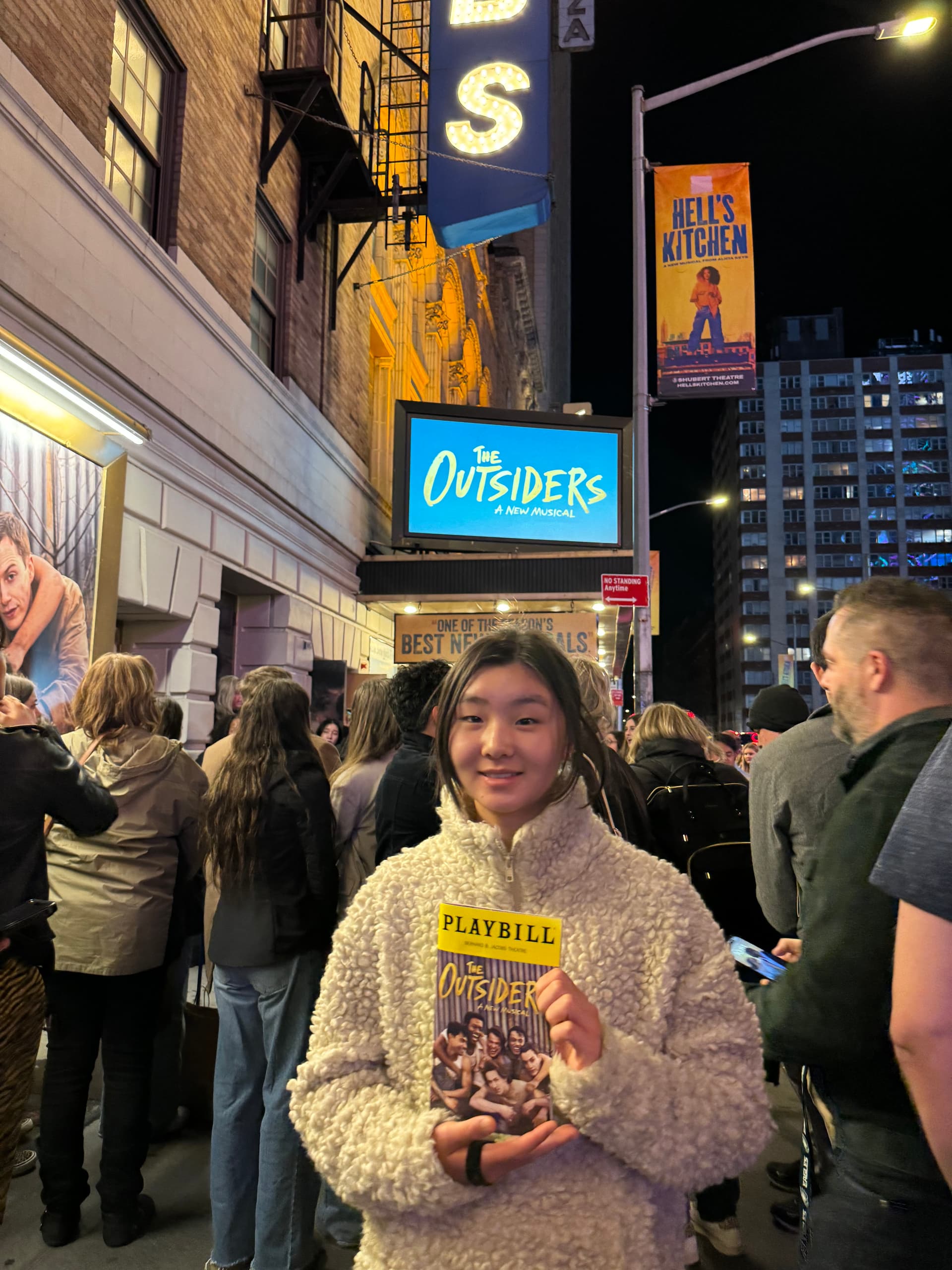
When The Outsiders opened at the Bernard B. Jacobs Theatre on April 11, 2024, it transformed one of America's best-known young-adult novels into a visceral Broadway musical about class, masculinity, violence, brotherhood, and the possibility of remaining sensitive in a world that rewards toughness. Set in Tulsa, Oklahoma, in 1967, the musical follows fourteen-year-old Ponyboy Curtis, who lives with his older brothers Darrel and Sodapop after the death of their parents. Ponyboy belongs to the Greasers, working-class teenagers identified by their long hair, leather jackets, and social position on the poorer side of town. Their rivals are the Socs, wealthier teenagers whose economic privilege offers them opportunities—and protection—that the Greasers do not possess. When Ponyboy and his best friend Johnny Cade become involved in a violent confrontation that ends with the death of a Soc, they flee Tulsa. The consequences eventually pull both groups toward the climactic rumble that seems destined to settle their conflict. It does not. Songs including “Great Expectations,” “Tulsa ’67,” “Run Run Brother,” “Death’s at My Door,” “Throwing in the Towel,” “Little Brother,” and “Stay Gold” transform Hinton's coming-of-age story into a question that extends beyond adolescence: How do you remain open to beauty when the world keeps teaching you to harden yourself?
Historical Era
S. E. Hinton published The Outsiders in 1967, when she was only eighteen years old. She had begun writing the novel while still in high school. That origin is crucial to understanding its historical significance. Young characters had certainly appeared throughout American literature, but Hinton wrote about teenagers with an unusual degree of seriousness. Poverty, violence, family instability, class resentment, grief, and emotional vulnerability were not presented as temporary adolescent inconveniences before “real life” began. For Ponyboy and Johnny, this already is real life. The novel became enormously influential in the development of modern young-adult literature, demonstrating that books written for teenage readers could address difficult social realities without reducing them to moral lessons. More than half a century later, the Broadway musical asks whether those characters still speak to contemporary audiences. The answer was emphatically yes.
Historical & Cultural Context
The Greaser-Soc divide gives The Outsiders its central social structure. At first, the conflict appears almost tribal. Greasers look one way. Socs look another. Each group has its own language, expectations, and loyalties. But underneath those identities is class. The Socs possess cars, money, social status, and the assumption that a future is waiting for them. The Greasers understand that one mistake can narrow their futures dramatically. That difference becomes especially important after violence occurs. The two groups may participate in the same fights, but they do not necessarily experience the same consequences. Hinton's story therefore challenges the idea that adolescence is a universal experience.
Growing up looks different depending on what society has already decided you are allowed to become. Masculinity and Brotherhood The musical is also deeply interested in masculinity. The Greasers survive partly through toughness. They fight. They insult one another. They protect their group. They learn not to show fear. But underneath that performance is enormous tenderness. Darrel's anger toward Ponyboy is connected to the pressure of suddenly becoming a parent to his younger brothers. Sodapop attempts to hold the family together emotionally. Johnny's vulnerability exists alongside his willingness to defend Ponyboy. Ponyboy himself loves books, movies, sunsets, and poetry—interests that do not fit comfortably within the masculine world surrounding him. The musical therefore asks whether strength must require emotional hardness. Its answer is embedded in Johnny's most famous instruction: “Stay gold.” “Nothing Gold Can Stay” One of the most important cultural references in The Outsiders comes from Robert Frost's 1923 poem “Nothing Gold Can Stay.” Ponyboy recites the poem to Johnny while they are hiding outside Tulsa. Frost describes the fleeting nature of beauty: beginnings, innocence, and perfect moments cannot remain unchanged forever. Johnny eventually interprets the poem differently. “Stay gold” does not mean remaining permanently innocent.
That would be impossible. Instead, it becomes an instruction to keep the ability to recognize beauty even after experiencing pain. This distinction is essential to Ponyboy's development. Growing up will change him. The question is whether violence will determine what he becomes.
Production Innovation
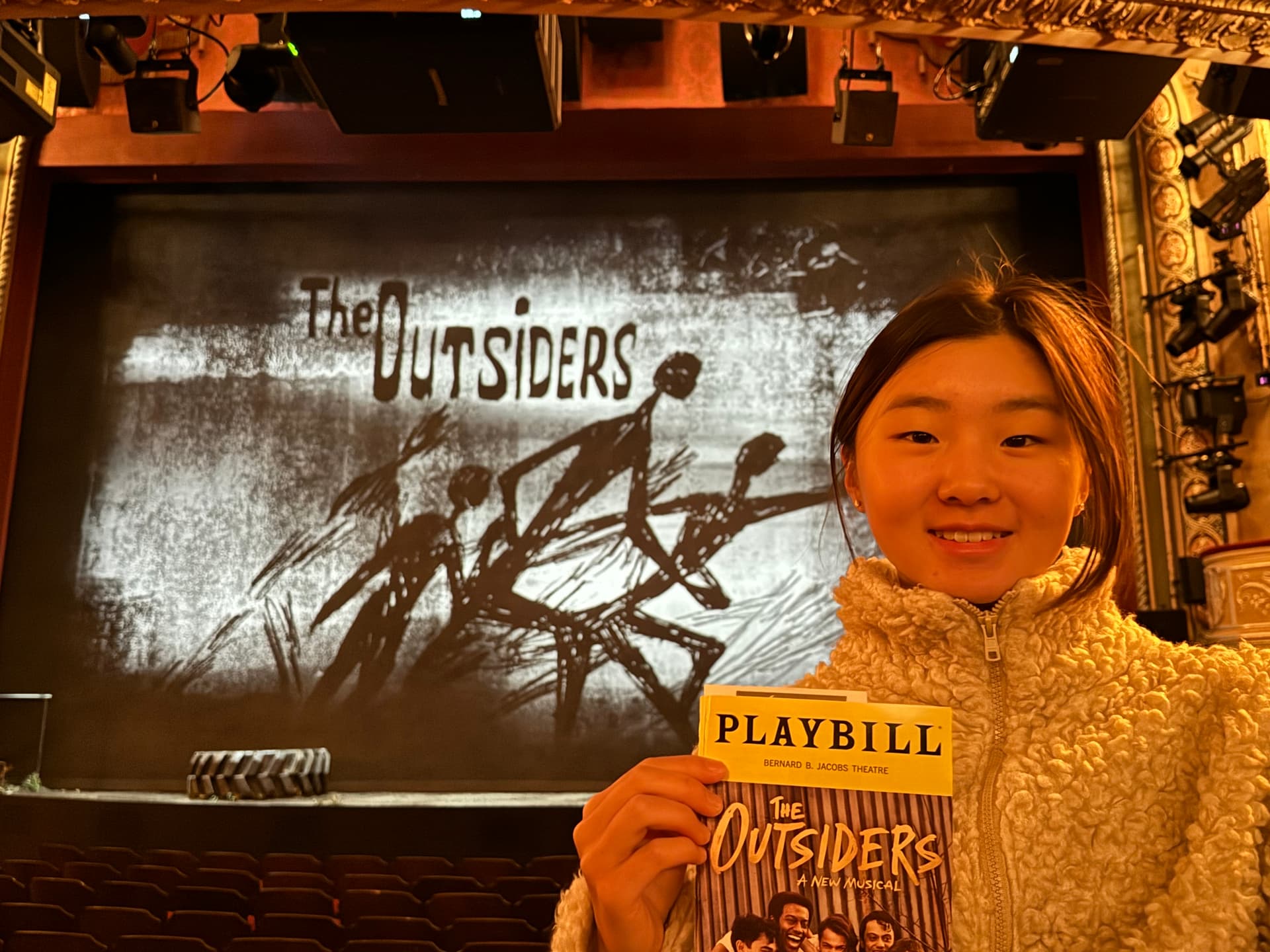
The Broadway production, directed by Danya Taymor, rejected literal realism in favor of intensely physical theatrical storytelling. The stage uses relatively elemental materials—wood, metal, tires, dirt, water, light, and bodies—to create Tulsa. Rather than attempting to reproduce Francis Ford Coppola's film cinematically, the production asks what live theater can accomplish that film cannot. The ensemble becomes part of the environment. Movement creates cars, fights, streets, and emotional pressure. Lighting and sound transform relatively simple materials into a world that feels simultaneously realistic and expressionistic. The audience is never allowed to forget that people are physically creating this story in front of them. The Rumble The production's most celebrated sequence is the climactic rumble between the Greasers and the Socs. Rather than staging the fight as conventional theatrical combat, the creative team transforms it into something closer to a violent dance. Rain pours onto the stage. Bodies collide. Lighting flashes. Movement alternates between explosive speed and stylized slow motion. The choreography by Rick and Jeff Kuperman makes violence simultaneously thrilling and horrifying. That contradiction matters.
A conventional action sequence might encourage audiences to ask who will win. The staging gradually makes the question feel irrelevant. Everyone is being damaged. The sequence turns the musical's central cycle of violence into something physically unavoidable: the more spectacular the fight becomes, the less victory seems to mean. Adaptation Across Generations The Outsiders has now existed in three major forms. First came Hinton's 1967 novel. Then came Francis Ford Coppola's 1983 film, featuring a cast that included C. Thomas Howell, Ralph Macchio, Matt Dillon, Patrick Swayze, Rob Lowe, Emilio Estevez, and Tom Cruise. Then came the Broadway musical. Each adaptation belongs to a different generation. The novel captured adolescence from remarkably close to a teenager's own perspective. The film turned the story into an enduring piece of American popular culture. The musical uses music, choreography, lighting, and live physical performance to make the characters' emotions visible. That evolution demonstrates an important principle running throughout Broadway history: adaptation is not simply repetition. Each medium discovers a different way to tell the same story.
Historical Significance
At the 2024 Tony Awards, The Outsiders received 12 nominations and won four awards, including Best Musical, Best Direction of a Musical for Danya Taymor, Best Lighting Design, and Best Sound Design. Taymor's victory made her one of the relatively small number of women to win the Tony Award for directing a musical. The production's Best Musical victory was particularly significant because it competed in a season filled with major adaptations and new works, including Hell's Kitchen, Illinoise, Suffs, and Water for Elephants.
Its success demonstrated that a story more than fifty years old could still feel immediate when its theatrical language was reinvented for a new generation. Why The Outsiders Still Matters The world of 1967 Tulsa is historically specific. But the emotions driving the story remain recognizable. Young people still compare themselves according to wealth and status. They still form groups that provide belonging while creating divisions. Boys still encounter pressure to turn vulnerability into toughness. People still inherit conflicts they did not begin. And teenagers still struggle with the uncomfortable realization that adults do not necessarily have solutions waiting for them. That may explain why The Outsiders has survived across generations. It does not treat adolescence as a lesser version of adulthood. It treats young people's questions about identity, loyalty, class, violence, and purpose as serious questions in their own right.
Why It Resonates With Me
What I find most powerful about The Outsiders is the meaning of “stay gold.” Ponyboy cannot remain innocent forever, and the musical does not pretend that he can. He experiences violence, grief, inequality, and responsibilities that force him to grow up. But Johnny's message suggests that maturity does not have to mean becoming cynical. I also love that Ponyboy's way of surviving is ultimately connected to storytelling. He takes experiences that could simply harden him and turns them into something another person can read and understand. For me, that is what “stay gold” means: not avoiding difficult experiences, but refusing to let those experiences destroy your curiosity, empathy, and ability to see beauty. And perhaps that is why The Outsiders itself has lasted so long—one teenager wrote honestly about her world, and generations of other young people continued to recognize themselves inside it.