Overview
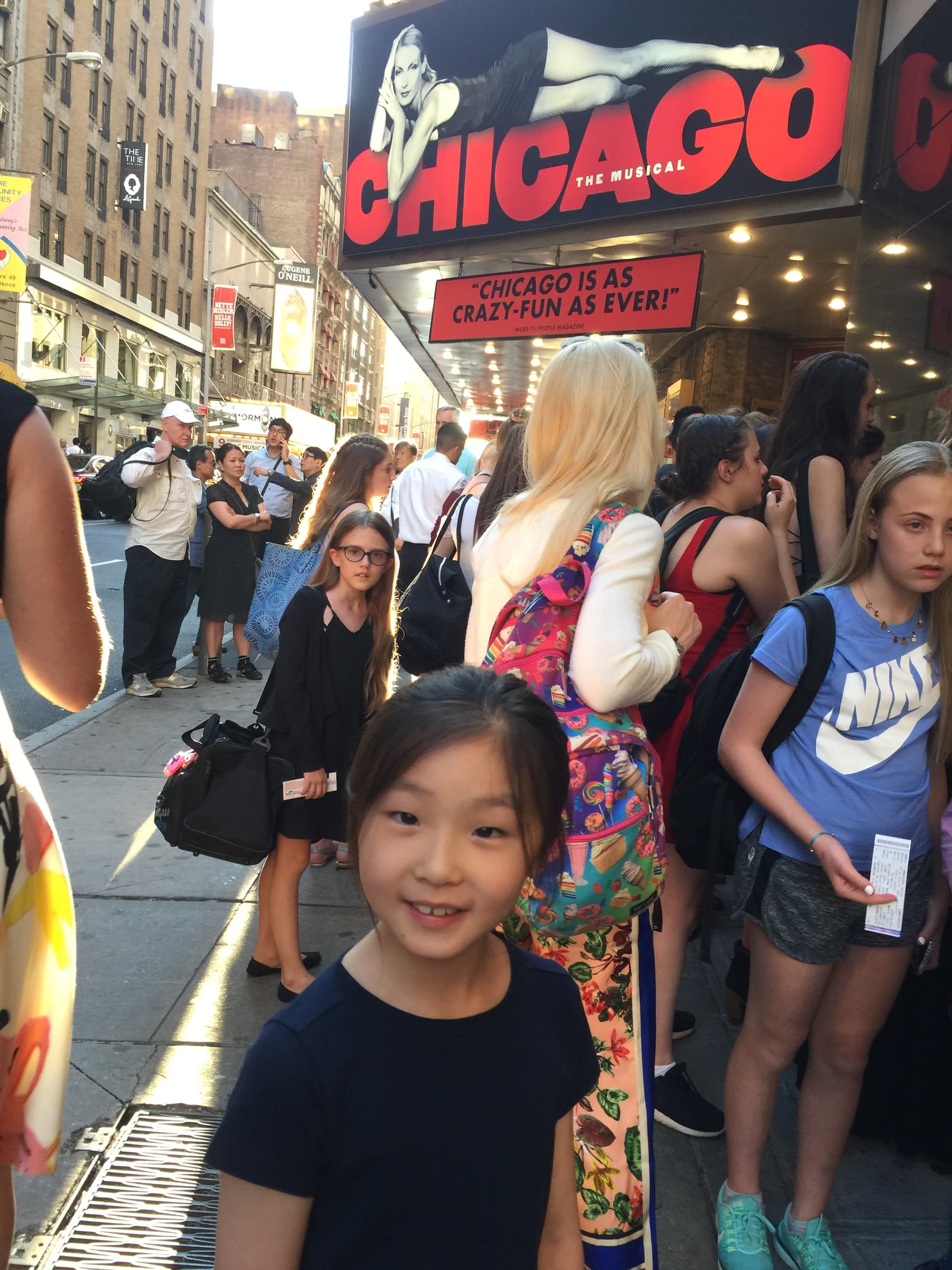
When Chicago returned to Broadway in 1996, the production seemed almost deliberately too small for the increasingly spectacle-driven Broadway of its era. There were no enormous barricades like Les Misérables. No falling chandelier like The Phantom of the Opera. No helicopter like Miss Saigon. The performers wore mostly black. The orchestra sat visibly onstage. Scenery was minimal. And yet this stripped-down revival became one of the greatest successes in Broadway history. Originally staged as part of New York City Center’s Encores! series, the revival transferred to Broadway, opening at the Richard Rodgers Theatre on November 14, 1996. Directed by Walter Bobbie, with choreography by Ann Reinking in the style of Bob Fosse, it rediscovered the cynical brilliance of a musical whose original 1975 production had been overshadowed by A Chorus Line. More importantly, the America encountering Chicago in 1996 was different from the America that had encountered it in 1975. Celebrity trials had become television entertainment. Criminal defendants could become media personalities. News and spectacle increasingly occupied the same cultural space. Suddenly, a musical about murderers turning themselves into celebrities did not seem exaggerated. It seemed almost documentary.
The revival did not modernize Chicago. The modern world caught up with Chicago.
The Original Chicago
Chicago is based on actual murder cases from 1920s Chicago and on Maurine Dallas Watkins’s 1926 play of the same name. Its protagonists, Roxie Hart and Velma Kelly, are accused murderers who discover that the American justice system can function like show business. With the help of celebrity lawyer Billy Flynn, crime becomes publicity. Trials become performances. Reporters become an audience. Defendants become stars. Kander and Ebb's score and Bob Fosse's original staging framed the story through vaudeville. Each number functions almost like an act on a bill. “The Cell Block Tango” becomes a performance by accused murderers. “We Both Reached for the Gun” turns a press conference into ventriloquism. “Razzle Dazzle” explicitly describes a courtroom trial as entertainment. The musical's central argument is brutally simple: If you control the performance, you may be able to control what people believe.
Why Did Chicago Need a Revival? When the original Chicago opened in 1975, it ran for more than two years—a respectable success. But it existed in the shadow of A Chorus Line, which became the season's cultural phenomenon. Chicago's cynicism could also seem unusually harsh. Its characters are selfish. Its justice system is corruptible.
Its reporters chase sensation. Its public quickly moves from one celebrity scandal to another. There is almost no conventional moral center. Two decades later, those qualities felt less alienating. By the 1990s, American audiences had experienced an increasingly powerful 24-hour news culture, tabloid television, celebrity journalism, and highly publicized criminal trials. The boundary between information and entertainment had become increasingly difficult to locate. The musical had stayed the same. Its audience had learned how to understand it.
The O. J. Simpson Era It is impossible to separate the extraordinary reception of the 1996 Chicago from the media environment surrounding it. The O. J. Simpson criminal trial, which ended in 1995, had become a massive televised cultural event. Millions of people followed attorneys, witnesses, evidence, personalities, and courtroom strategies almost as though they were watching serialized entertainment. Regardless of one's interpretation of that particular case, the broader cultural phenomenon demonstrated something Chicago had been satirizing for decades: a criminal trial could become a national show. Billy Flynn's “Razzle Dazzle” therefore landed differently. His philosophy— give the audience enough spectacle and they may stop examining what is actually happening— no longer seemed like theatrical exaggeration. The revival benefited from one of the strangest phenomena in theater history: a satire written decades earlier had become more realistic with age.
Stripping Broadway Down
The production's most important visual choice was its simplicity. The revival grew out of Encores!, where productions were originally designed to foreground scores rather than create elaborate full-scale stagings. Instead of abandoning that aesthetic when Chicago transferred to Broadway, Walter Bobbie preserved much of it. The orchestra remained onstage. Performers used chairs. Costumes were predominantly black. Scenery was minimal. The audience's attention therefore went toward three things: music, bodies, and performance. This was especially striking in the 1990s, when Broadway had become associated with increasingly expensive technological spectacle. Chicago demonstrated that theatrical power did not necessarily require physical scale. A chair, a spotlight, a body, and a gesture could be enough.
Ann Reinking and the Fosse Vocabulary
The revival also faced a difficult choreographic question. Bob Fosse had died in 1987. How could Chicago return without him? Ann Reinking—who had played Roxie in the original Broadway production and had worked closely with Fosse—created choreography “in the style of Bob Fosse.” That wording matters.
The production did not simply reproduce every original dance step as though choreography were a museum object. Instead, Reinking worked within Fosse's movement vocabulary: turned-in knees, isolated shoulders, bowler hats, gloved hands, controlled sensuality, angular poses, and tiny gestures carrying enormous theatrical weight. The revival therefore became an important example of how choreographic style can be transmitted across generations. Fosse was gone. But the movement language could continue evolving through the bodies of other performers.
Minimalism Makes the Audience Work
The stripped-down staging also changes how audiences watch the story. Because there is relatively little scenery to establish literal locations, performers constantly create the world through movement. A courtroom can appear without constructing a courtroom. A prison exists because performers make us believe one exists. A press conference can become a puppet show. The audience knows it is watching theatrical machinery. That is precisely the point. Chicago is about people manufacturing reality through performance.
A production that openly displays its own theatrical construction therefore mirrors the story's argument. Everything is a show. Even the show knows it is a show.
“We Both Reached for the Gun” Few numbers capture that idea better than “We Both Reached for the Gun.” Billy Flynn places Roxie on his lap and effectively transforms her into a ventriloquist's dummy while speaking to reporters. Roxie's public identity is manufactured before our eyes. The journalists believe they are interviewing her. But Billy controls the story. The theatrical metaphor is almost perfect. He does not merely advise Roxie what to say. He performs her. The number exposes the process by which public narratives can be constructed by people who understand media better than the audiences consuming it. That idea has only become more relevant in an era of public relations, social media, viral narratives, and personal branding.
Celebrity Casting as Part of the Musical
Over its extraordinary run, the revival became famous for another phenomenon: celebrity casting. A remarkable range of performers and public figures have entered the production over the decades, including Broadway stars, film and television actors, recording artists, and other celebrities. Rather than undermining Chicago, celebrity casting almost becomes part of its argument.
The musical itself is about people turning fame into currency. Audiences sometimes purchase tickets specifically to see a recognizable person step into Roxie, Velma, Billy Flynn, or another role. The production therefore participates in the same celebrity economy it satirizes. That contradiction feels completely appropriate. In Chicago, even the casting can become commentary on fame.
A Revival That Outlived the Original
The revival's commercial history became extraordinary. After opening in 1996, Chicago continued. And continued. And continued. It surpassed the original production. It survived enormous changes in Broadway economics. It survived changing casts and changing audiences. It survived the Broadway shutdown after September 11. It survived the COVID-19 shutdown. It reopened. In 2023, it surpassed The Phantom of the Opera to become the longest-running show then playing on Broadway, while remaining the longest-running American musical in Broadway history. The revival ultimately became vastly more historically prominent than the production it revived. That reversal is unusual. Usually a revival depends upon the reputation of an original. With Chicago, the revival helped redefine the reputation of the musical itself.
Historical Significance
The 1996 Chicago received eight Tony nominations and won six, including: Best Revival of a Musical Best Actress in a Musical — Bebe Neuwirth Best Actor in a Musical — James Naughton Best Direction of a Musical — Walter Bobbie Best Choreography — Ann Reinking Best Lighting Design — Ken Billington The revival's influence subsequently extended beyond Broadway. The enormously successful 2002 film adaptation, starring Renée Zellweger, Catherine Zeta-Jones, and Richard Gere, introduced the musical to a much larger global audience and won the Academy Award for Best Picture. The revival therefore helped move Chicago from an admired Kander and Ebb musical into one of the most recognizable works in musical-theater culture.
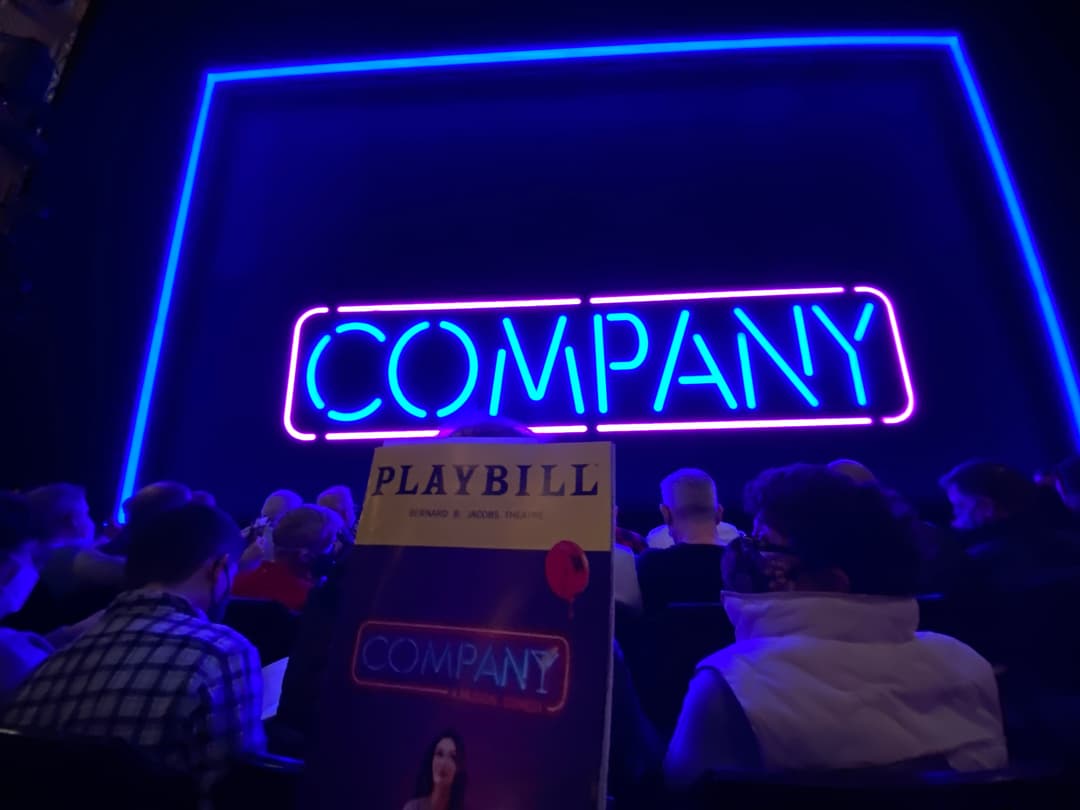
Revival vs. Reproduction Chicago provides an important contrast with several other productions in this gallery. The 2021 Company changes gender to reveal new social meanings. The 2023 Parade uses historical documentation to force audiences to reconsider the past. The 2023 Merrily We Roll Along changes the historical reputation of a famous failure. The 1996 Chicago does something different. It removes. Instead of adding a radical concept, the revival strips away much of the machinery surrounding the musical until its underlying argument becomes clearer. That is why its minimalism should not be confused with simplicity. The absence of spectacle is the concept.
In a musical about “razzle dazzle,” the production refuses to provide conventional razzle dazzle—and reveals how little is actually required to manipulate an audience.
Why This Revival Changed Broadway
The 1996 Chicago demonstrated several things that would become increasingly important to Broadway. A revival could become more successful than its original production. Minimalist staging could compete with multimillion-dollar spectacle. A choreographer's movement language could be preserved and reinterpreted after the choreographer's death. Celebrity replacement casting could help sustain a production across decades. And perhaps most importantly, a musical that seemed unusually cynical in one era could become startlingly recognizable in another. That is what makes Chicago such an important revival. Walter Bobbie did not need to relocate the story to 1996. He did not need Roxie to watch television or Billy Flynn to use the internet. The production trusted audiences to make the connection. The revival did not update the satire. History did.
Why It Resonates With Me
What fascinates me most about the 1996 Chicago is the contradiction between what the musical says and how the revival presents it. Billy Flynn tells us that people want “razzle dazzle,” yet the production itself became legendary by removing almost everything Broadway traditionally uses to dazzle us. The orchestra is visible, the scenery is minimal, and the dancers' bodies do most of the storytelling. That makes the show's argument about performance and manipulation even clearer. I also find its history remarkable: a musical that was overshadowed in 1975 returned twenty-one years later and became one of Broadway's defining productions. For me, Chicago proves that revivals do not only preserve Broadway history. Sometimes they rewrite it so completely that the revival becomes the version through which future generations understand the musical itself.