Overview
Few musicals have become as closely associated with the art of the Broadway revival as Gypsy. Since its original 1959 production starring Ethel Merman, Broadway has returned again and again to the story of Rose, the relentlessly ambitious stage mother who drags her daughters through the dying world of vaudeville while pursuing the success she believes her family deserves. The plot does not change. Rose still pushes June toward stardom. June still escapes. Louise still becomes Gypsy Rose Lee. Rose eventually stands alone on an empty stage and confronts the possibility that her children's careers may always have been partly about her own frustrated ambitions. But the woman playing Rose changes. That has made all the difference. Angela Lansbury. Tyne Daly. Bernadette Peters. Patti LuPone. Audra McDonald. Each major revival has returned to essentially the same text and found a different woman inside it. One Rose appears monstrous. Another seems wounded. Another glamorous. Another ferocious. Another forces audiences to reconsider how race changes the meaning of ambition and opportunity in American show business. Together, the landmark revivals of Gypsy demonstrate one of the simplest and most powerful forms of theatrical reinterpretation: sometimes you do not have to rewrite the role. You change the person standing inside it.
Why Gypsy Keeps Coming Back
Gypsy premiered on Broadway in 1959, inspired by the memoirs of burlesque performer Gypsy Rose Lee.
On one level, it is a backstage musical. Rose travels with her daughters June and Louise, trying desperately to turn their vaudeville act into a success while vaudeville itself is disappearing. But underneath the show-business story is a much darker examination of ambition. Rose insists everything she does is for her children. She fights theater managers for them. She sacrifices financial security for them. She believes in their talent when nobody else does. Yet the musical gradually asks: Where does devotion end and self-interest begin? That question is never completely answered. And because Rose is so contradictory, every great actress can answer it differently.
1974: Angela Lansbury — Rose After Merman The first major Broadway revival arrived in 1974, starring Angela Lansbury. This production mattered partly because of the enormous shadow cast by Ethel Merman. Merman's performance had become inseparable from Rose. Her enormous voice and forceful personality made it easy to imagine that the role simply belonged to her. Lansbury proved otherwise. Her Rose was not a reproduction of Merman's. She found greater vulnerability and emotional instability inside the character, demonstrating that Rose could be interpreted rather than merely impersonated. Lansbury won the 1975 Tony Award for Best Actress in a Musical for the performance. The larger significance was clear: Rose could survive Ethel Merman.
Once that happened, Gypsy became available to future generations of actresses as one of musical theater's great interpretive challenges.
1989: Tyne Daly — Rose Without Glamour The 1989 Broadway revival offered another transformation through Tyne Daly. Daly was already widely known for television, particularly Cagney & Lacey, but she did not arrive with the kind of glamorous musical-theater persona audiences might associate with Rose. That became part of the production's strength. Her Rose could feel exhausted, practical, desperate, and intensely human. The character's relentless ambition seemed less like theatrical grandeur and more like survival. This matters because Rose's dreams exist within an unforgiving economic world. She is raising children. Money is unstable. Vaudeville is collapsing. The entertainment industry constantly rejects her. Ambition therefore becomes more than ego. It can also become a refusal to accept the life circumstances available to her. Daly won the 1990 Tony Award for Best Actress in a Musical. Another Rose had entered Broadway history.
2003: Bernadette Peters — Rose as Seduction Then came one of the most controversial casting choices in the musical's revival history. In 2003, director Sam Mendes cast Bernadette Peters as Rose. At first, Peters seemed almost opposite to the traditional image of the role. She was glamorous, sensual, and closely associated with a different kind of musical-theater performance.
That difference became the point. Her Rose could charm people. She could seduce. She could make audiences understand why Herbie remains with her and why people continue following her even when her behavior becomes destructive. This interpretation complicated the assumption that Rose must dominate every room through sheer force. Power can operate through attraction as well as intimidation. The casting therefore demonstrated one of the most productive possibilities of revival: sometimes the performer who initially seems “wrong” for a canonical role can reveal qualities audiences stopped noticing because they became too accustomed to one interpretation.
2008: Patti LuPone — Rose Unleashed The 2008 revival, directed by the musical's own book writer Arthur Laurents, starred Patti LuPone. If Peters complicated expectations surrounding Rose, LuPone seemed almost destined to play her. Her enormous vocal power, theatrical intensity, humor, and ferocity allowed the production to embrace Rose's force without apologizing for it. But the performance did not simply celebrate her ambition. LuPone's Rose could be thrilling and terrifying within the same scene. That contradiction is central to Gypsy. Audiences can admire Rose's refusal to surrender while simultaneously recognizing the damage she causes. LuPone won the 2008 Tony Award for Best Actress in a Musical. Laura Benanti won Featured Actress for Louise, and Boyd Gaines won Featured Actor for Herbie. The revival became one of the most acclaimed Gypsy productions in modern Broadway history.
“Rose's Turn”
Every interpretation eventually arrives at the same test:
“Rose's Turn.” By this point, June has left. Louise has become Gypsy Rose Lee. Herbie is gone. Rose finally stands alone. Throughout the musical, she has insisted that everything she did was for her children. Now there are no children beside her. No act. No manager. No audience within the story. Only Rose and an empty theater. She begins performing anyway. “Rose's Turn” dismantles the boundary between character and performer. Rose imagines the applause she never received and finally admits the desire she has spent the musical projecting onto her daughters. She wanted to be noticed. She wanted to be special. She wanted the audience. Every actress therefore arrives at a slightly different answer to the musical's central question: Who is Rose when nobody else is left to perform for?
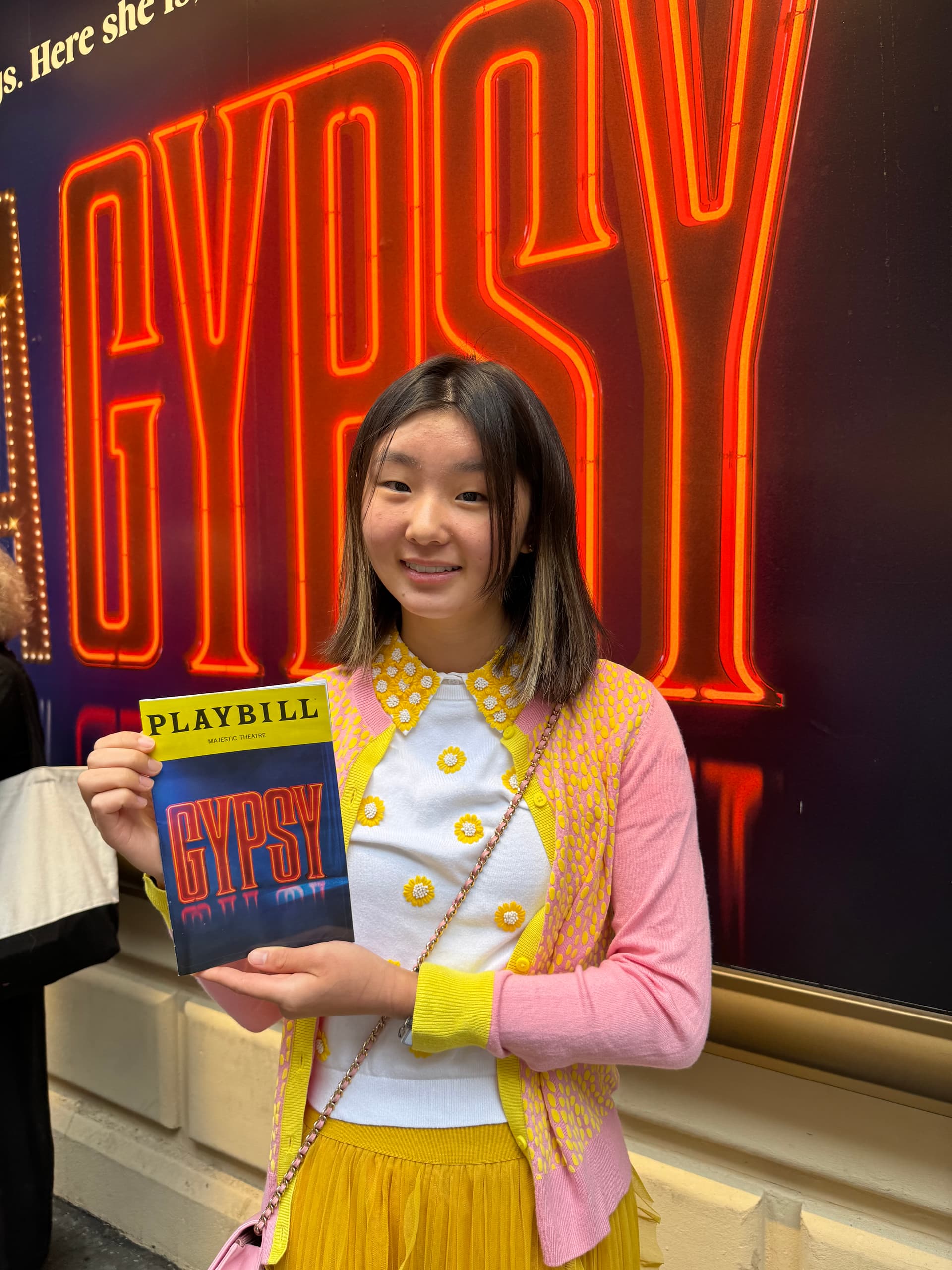
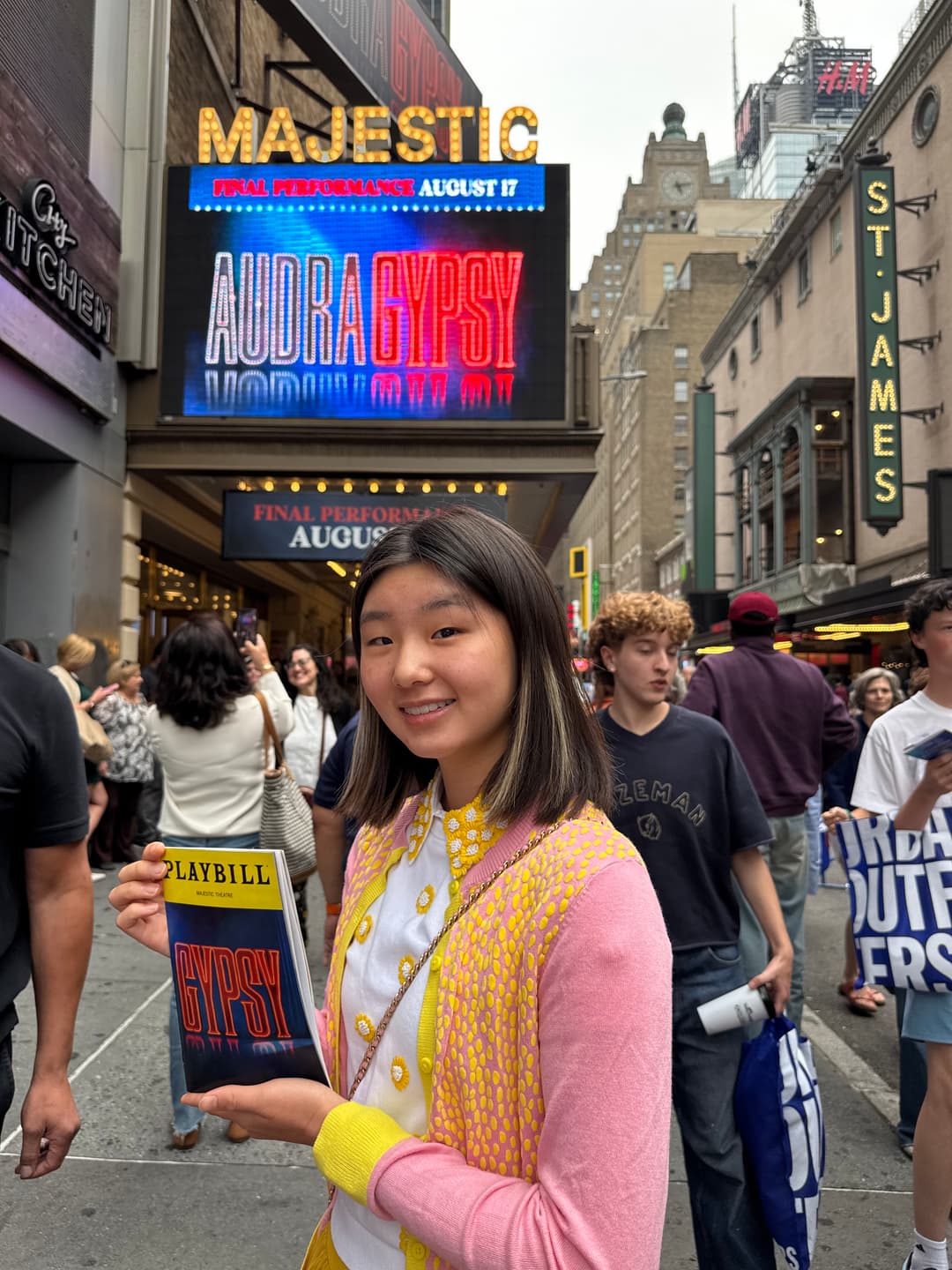
2024: Audra McDonald — Race Changes the Text Without Changing the Words The 2024 Broadway revival, directed by George C. Wolfe, introduced perhaps the most historically significant reinterpretation yet. Audra McDonald became the first Black actress to play Rose in a Broadway production of Gypsy.
That casting changes the musical even when the text remains substantially the same. Rose's famous declaration— “Somebody tell me, when is it my turn?” —carries different historical implications when spoken by a Black woman trying to build a performing career for herself and her daughters in early twentieth-century America. The character's frustration can no longer be understood only through gender, motherhood, personality, or professional rejection. Race enters the historical world around her. The production does not need Rose to stop and explain this. The body of the performer brings history onto the stage.
Race-Conscious Casting
The distinction between colorblind and race-conscious casting is particularly important here. Colorblind casting asks audiences to treat race as irrelevant. Race-conscious casting recognizes that an actor's racial identity may alter how audiences understand a character and the historical world surrounding them. Casting McDonald as Rose inevitably raises questions about access to American entertainment. Who was allowed onto certain stages? Who could become a mainstream star? Who had access to managers, theaters, audiences, and touring circuits? What would it mean for a Black mother to insist that her daughters deserved a place within that system? Rose's ambition therefore gains another possible dimension. She is still difficult. Still controlling. Still capable of hurting the people closest to her.
But her refusal to accept exclusion can now resonate against a much larger history of race and American performance.
Audra McDonald's Voice
McDonald's casting also challenged expectations about how Rose should sound. The role is associated with enormous Broadway belters: Merman, Lansbury, Daly, LuPone. McDonald's instrument is different—classically trained, extraordinarily flexible, and possessing a distinctive soprano quality. Instead of attempting to reproduce another actress's vocal approach, she brought her own instrument to Styne and Sondheim's score. That matters because canonical roles can accumulate assumptions that eventually begin masquerading as rules. Rose must sound like this. Rose must look like this. Rose must behave like this. A revival can ask: Who decided?
The Same Words, Different History
This is perhaps Gypsy's greatest contribution to a gallery about revivals. The musical demonstrates that casting itself can be interpretation. You do not necessarily need to rewrite dialogue. You do not need to change the period. You do not need to relocate the story. Place a different performer inside the role, and suddenly the audience notices things it did not notice before.
With Rose, this has happened repeatedly. Lansbury revealed vulnerability. Daly foregrounded survival. Peters revealed seduction and fragility. LuPone exposed ferocious theatrical ambition. McDonald introduced race into the historical equation in a way Broadway had never previously experienced with the role. The words survive. Their meanings accumulate.
A Role as a Historical Record
This makes Rose unusual even among great musical-theater characters. Playing her has become almost a Broadway institution. Audiences compare Roses. Critics compare Roses. Performers inherit the memories of earlier performances whether they want to or not. Every new actress is therefore performing not only opposite Herbie, Louise, and June. She is performing against the history of everyone who played Rose before her. That turns the role into something like a living archive of Broadway acting styles. What did Broadway understand as female power in 1959? What did it look like in 1974? 1989? 2003? 2008?
2024? Watching Rose change provides one way of watching Broadway change.
Historical Significance
Few roles provide such a remarkable lineage of major Broadway actresses. Ethel Merman — 1959 Angela Lansbury — 1974 Tyne Daly — 1989 Bernadette Peters — 2003 Patti LuPone — 2008 Audra McDonald — 2024 The first four actresses in that sequence through LuPone helped establish Rose as one of Broadway's defining star roles, with Lansbury, Daly, and LuPone winning Tonys for their revival performances. McDonald's casting then added a major new chapter by breaking the racial precedent surrounding Broadway's Rose. The accumulated history means that a new production of Gypsy is rarely judged simply as a new production. It becomes part of an ongoing argument about what Rose is. That is precisely what keeps the musical alive.
Why These Revivals Changed Broadway
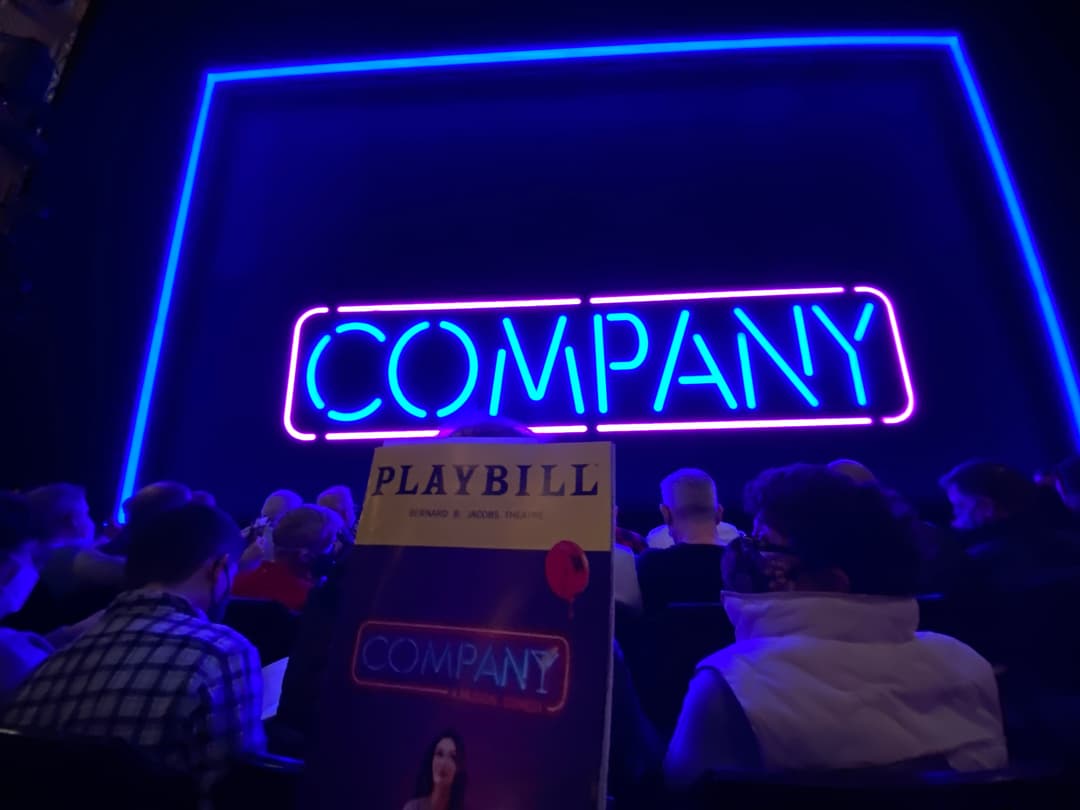
Gypsy offers a different model of reinterpretation from the other productions in this gallery. Company demonstrates gender reinterpretation. Chicago demonstrates how minimalism and historical context can transform a musical's reception. Cabaret demonstrates how staging can change the audience's relationship to the story. Merrily We Roll Along demonstrates historical reevaluation. Gypsy demonstrates the transformative power of performance and casting.
Its landmark revivals show that there may never be a definitive Rose. That is not a weakness. It is why the role endures. Each actress receives the same extraordinary material and asks a slightly different question about the woman singing it. A classic role is not a monument. It is an argument passed from performer to performer.
Why It Resonates With Me
What fascinates me most about the revival history of Gypsy is that it makes acting itself part of Broadway history. Rose does not need to be rewritten for her meaning to change. Put Angela Lansbury, Tyne Daly, Bernadette Peters, Patti LuPone, or Audra McDonald in the role, and suddenly ambition, motherhood, femininity, vulnerability, race, and success appear in different proportions. I especially find the idea of “Rose's Turn” powerful in this context: every actress eventually reaches the same empty stage and asks, in her own way, when it will finally be her turn. For me, that is exactly what a great revival should make possible. The role remains, but no performer—and no generation—can inhabit it in exactly the same way. Gypsy survives because Broadway keeps giving Rose another turn.