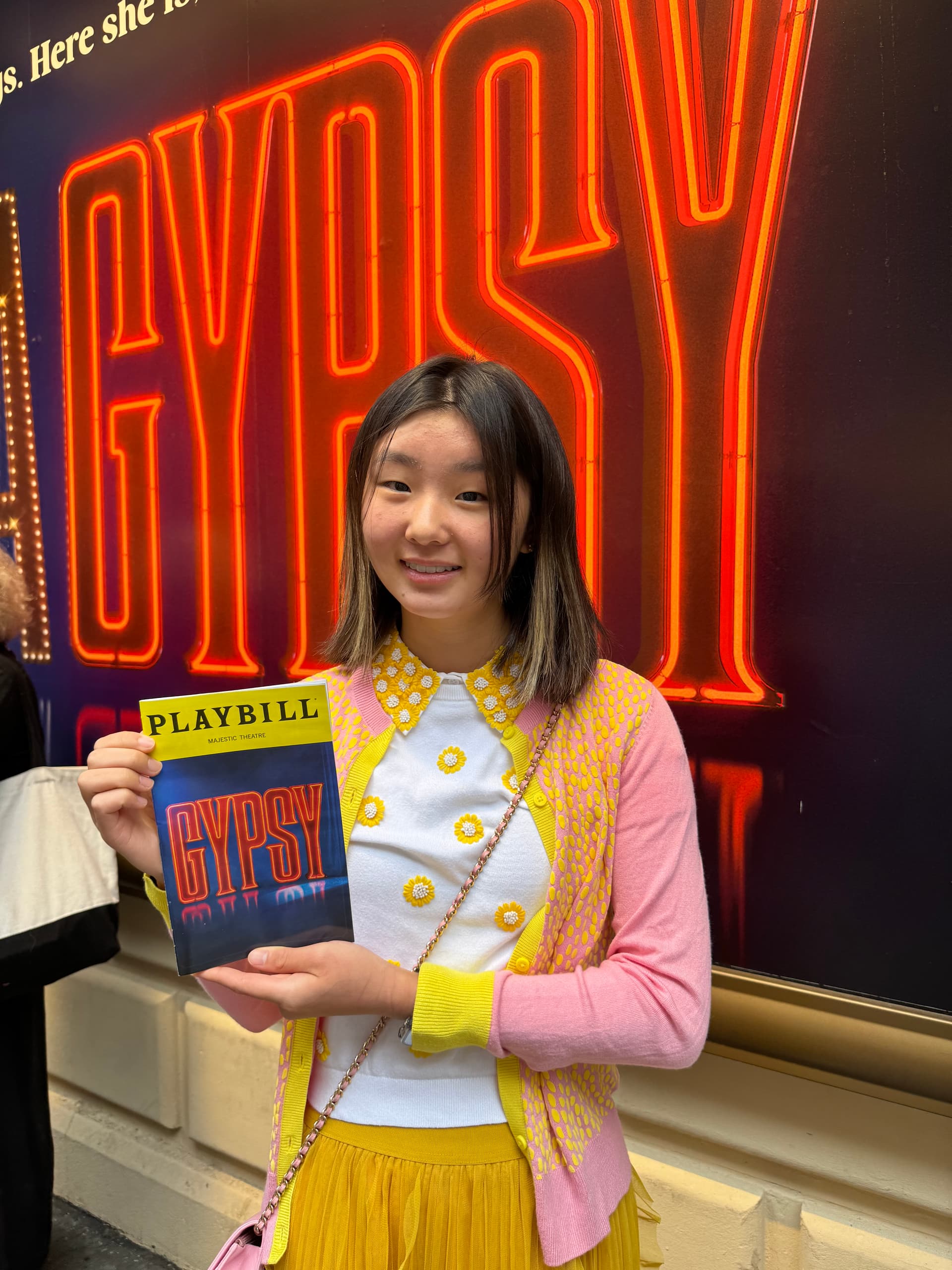
Overview
When Gypsy opened at the Broadway Theatre on May 21, 1959, it took the familiar backstage musical and turned it into something darker: a psychological study of ambition, motherhood, performance, and the desire to be seen.
Inspired by the memoirs of burlesque performer Gypsy Rose Lee, the musical initially appears to tell the story of Louise, the overlooked daughter who eventually becomes a star. Yet its true center is her mother, Rose, one of the most complicated characters in musical-theatre history. Rose is determined to make her daughters famous. She pushes the younger June as a vaudeville child star while Louise remains in the background, traveling from theater to theater as the family chases success. But vaudeville is disappearing, June eventually leaves, and Rose refuses to surrender her dream. When circumstances lead Louise into burlesque, the supposedly untalented daughter unexpectedly reinvents herself as the glamorous Gypsy Rose Lee. Songs including “Everything’s Coming Up Roses,” “Together, Wherever We Go,” “If Momma Was Married,” “You Gotta Get a Gimmick,” and “Rose’s Turn” make Gypsy both a celebration of show business and a devastating examination of what the hunger for applause can cost.
Historical Era
Gypsy premiered in 1959, near the end of the period traditionally described as Broadway's Golden Age. The integrated musical had reached extraordinary sophistication, but Broadway itself was beginning to change. Within the next decade, composers and writers would increasingly challenge conventional plots, romantic structures, and heroic protagonists. Gypsy points directly toward that transition. Its story looks backward to the decline of vaudeville and the rise of burlesque during the 1920s and 1930s. Rose desperately tries to preserve an entertainment form that is disappearing around her. The family's act remains almost comically unchanged while audiences, theaters, and popular tastes move on. The musical is therefore partly about an industry undergoing technological and cultural disruption. Vaudeville cannot compete indefinitely with changing forms of mass entertainment, especially film and radio. Rose's tragedy is not simply that she fails. She refuses to recognize when the world has changed.
Historical & Cultural Context
Although Gypsy is remembered as a backstage musical, its deepest subject is ambition. Rose insists that everything she does is for her children. She sacrifices stability, relationships, and conventional domestic life to pursue their careers. Yet the musical gradually reveals that her daughters' success is also a vehicle for ambitions she has never been able to fulfill herself. That tension makes Rose difficult to categorize. She is controlling and often emotionally destructive, but she is also a woman attempting to exercise enormous agency in a world that offers her few conventional paths toward the kind of recognition she
wants. Her ambition would be familiar in a male impresario; in a mother, it becomes both impressive and frightening. Louise's transformation raises a related question about identity. For much of the musical, she is told that June is the talented daughter. Yet once Louise enters burlesque, she discovers that performance can allow her to construct an entirely new self. Louise becomes Gypsy Rose Lee by learning how to control the audience's gaze. In that sense, both mother and daughter are trying to solve the same problem: how to make the world look at them.
Production Innovation
Gypsy represents the integrated musical at an extraordinary level of psychological precision. Jule Styne's music provides the scale and theatrical excitement of traditional Broadway, while Stephen Sondheim's lyrics reveal the characters' inner lives with remarkable specificity. “Everything’s Coming Up Roses” is the clearest example. On the surface, it sounds like an inspirational anthem. Within the story, however, it is almost terrifying. After June abandons the act, Rose immediately transfers her ambitions onto Louise. The triumphant music clashes with what the audience understands is happening psychologically. The same technique reaches its culmination in “Rose’s Turn.” Near the end of the musical, Rose finally imagines herself performing the act she has spent years forcing her daughters to perform. Fragments of earlier songs return as she confronts her resentment, loneliness, ambition, and need for recognition. The number collapses the boundary between character and performance. Rose is simultaneously confessing, fantasizing, performing, and psychologically unraveling. Instead of using song merely to express emotion, Gypsy uses musical structure to reveal how a character's mind works.
Historical Significance
The original production starred Ethel Merman as Rose, creating one of the legendary performances of Broadway's Golden Age. Although the production did not win the Tony Award for Best Musical, Gypsy gradually acquired a reputation as one of the greatest American musicals ever written. Its extraordinary revival history has strengthened that reputation. Rose has become one of musical theatre's defining roles, repeatedly reinterpreted by major performers including Angela Lansbury, Tyne Daly, Bernadette Peters, Patti LuPone, and Audra McDonald.
Each has emphasized different aspects of the character: her humor, desperation, aggression, vulnerability, maternal love, or hunger for fame. That history makes Gypsy particularly revealing as a work of living theatre. The text remains recognizable, but Rose changes depending on the performer inhabiting her. The musical also anticipates the more psychologically complex works that would emerge in the 1960s and 1970s, particularly those associated with Sondheim. Traditional distinctions between hero and villain become increasingly inadequate. Audiences are not simply asked whether Rose is a good mother or a bad one. They are asked to understand why she needs what she needs. In that sense, Gypsy stands at a crossroads in Broadway history: it possesses the sweeping score and theatrical confidence of the Golden Age while pointing toward the ambiguity and psychological complexity of the modern musical.
Why It Resonates With Me
What fascinates me most about Gypsy is its understanding of the desire to be seen. Rose spends almost the entire musical pushing other people onto the stage before finally admitting that she wanted the applause herself. That makes “Rose’s Turn” feel larger than a song about show business. It asks what happens when ambition becomes inseparable from identity—and whether achievement can ever satisfy someone who is really searching for recognition.