Overview
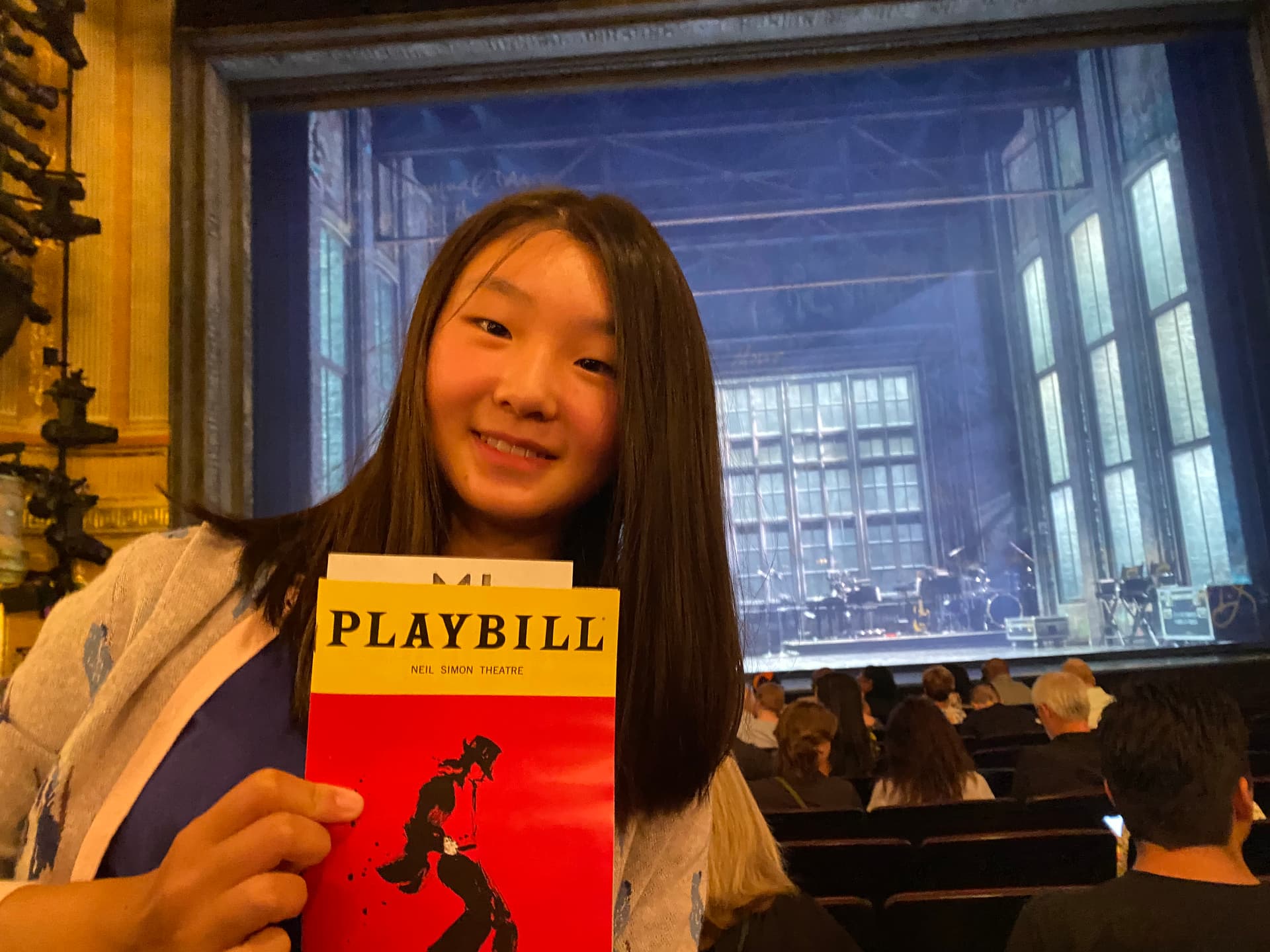
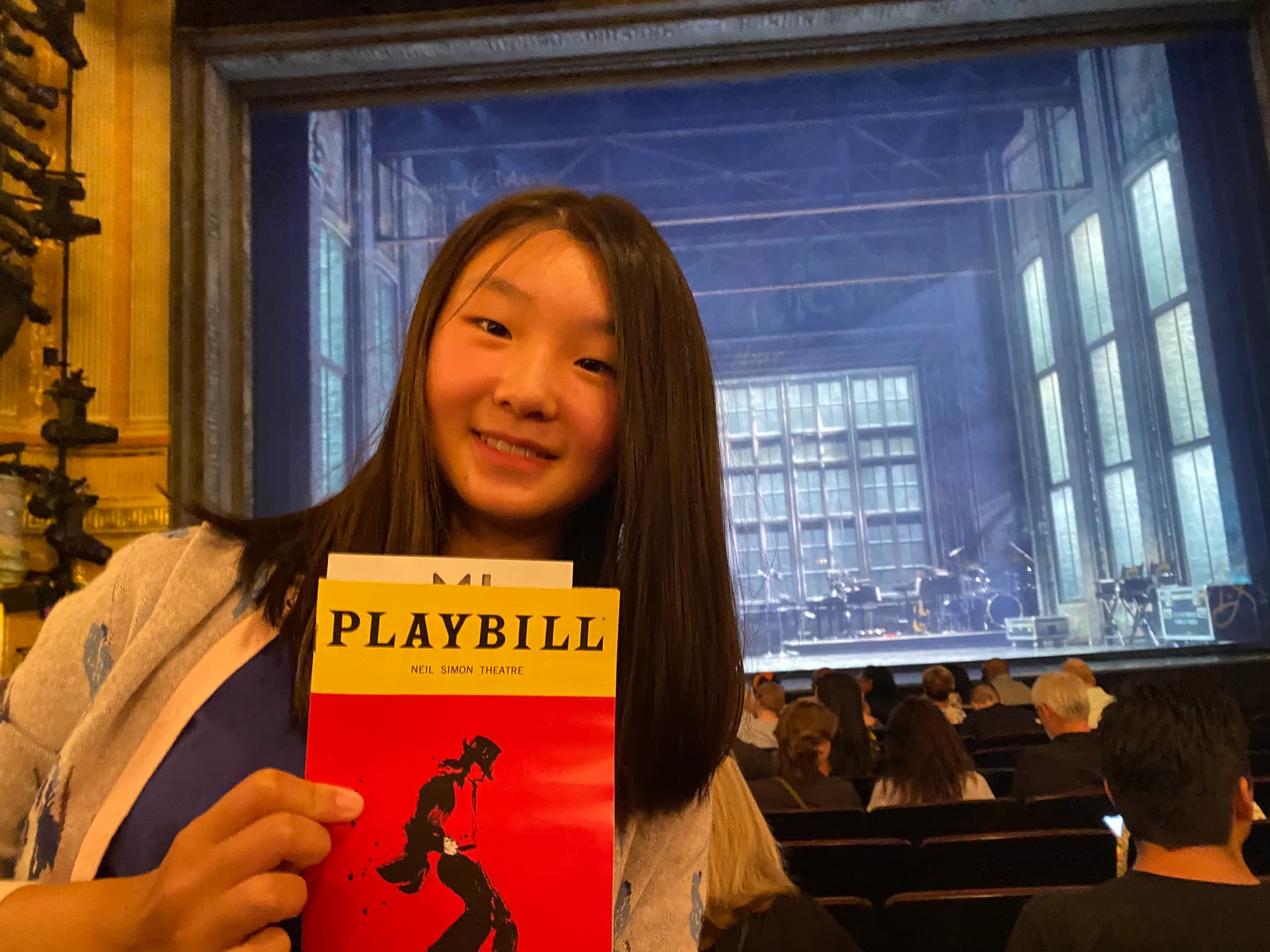
When MJ the Musical opened at the Neil Simon Theatre on February 1, 2022, it faced a difficult problem: how do you turn the life of one of the most famous—and most controversial—performers in modern popular culture into a Broadway musical? Rather than attempting to tell Michael Jackson’s entire life chronologically, MJ concentrates primarily on one moment: rehearsals for his 1992 Dangerous World Tour. A documentary crew has been permitted inside the rehearsal room. As a journalist interviews Jackson and watches the tour take shape, moments in the rehearsal process trigger memories from different stages of his life. Three performers represent Michael at different ages: the child star emerging through the Jackson 5, the young adult establishing independence from his family, and the global superstar attempting to create a concert unlike anything audiences have seen before. The structure allows songs including “ABC,” “I’ll Be There,” “Don’t Stop ’Til You Get Enough,” “Billie Jean,” “Beat It,” “Smooth Criminal,” “Man in the Mirror,” and “Thriller” to function not simply as a greatest-hits concert but as markers in the development of Jackson’s artistic identity. At its center is a question about creative ambition: What does it cost to become so committed to making something extraordinary that “good enough” stops being acceptable?
Historical Era
MJ belongs to the twenty-first-century tradition of the jukebox biographical musical, in which an existing catalog of popular songs becomes the basis for a theatrical narrative. Broadway had already seen major successes with shows such as Jersey Boys, about Frankie Valli and the Four Seasons; Beautiful: The Carole King Musical; Tina: The Tina Turner Musical; and Ain’t Too Proud, about the Temptations. These productions reflected a larger shift in Broadway economics. Popular music catalogs already possess audiences. Songs carry memories before audiences enter the theater. But MJ presented this model on an unusually large scale because Michael Jackson was not simply a successful recording artist. He was one of the defining global entertainers of the late twentieth century. The musical therefore had to recreate not only familiar songs but an entire performance vocabulary audiences already recognized.
Michael Jackson and the Transformation of Pop Performance
Michael Jackson’s career traces major transformations in American popular entertainment. He entered the music industry as a child performer with the Jackson 5 in the late 1960s and early 1970s before developing a solo career that reached extraordinary commercial heights with albums including Off the Wall, Thriller, Bad, and Dangerous. But Jackson’s influence extended beyond recorded music. He helped transform the music video into a major visual art and marketing form, particularly through works such as “Thriller,” “Beat It,” and “Billie Jean.” Dance became inseparable from his musical identity. Costume became inseparable from dance. Lighting, film, choreography, sound, and stage illusion increasingly became parts of a single performance system. That makes his career particularly suitable for theatrical examination. Jackson did not simply make songs. He thought in terms of total performance.
Production Innovation
Christopher Wheeldon’s direction and choreography make movement the primary storytelling language of MJ. The production does not merely imitate famous Jackson choreography. It attempts to show where movement comes from. In “Dancing Machine,” for example, different performers and dance traditions appear within Michael’s imagination, suggesting how an artist absorbs influences and transforms them into something recognizably his own. Jackson’s movement vocabulary drew from numerous sources: James Brown’s precision and rhythmic intensity, Fred Astaire’s theatrical elegance, Bob Fosse’s isolations and silhouettes, street dance, jazz, and other traditions. The musical visualizes artistic influence almost as a conversation across generations. A performer watches. He absorbs.
He experiments. Eventually, the influences become part of a style audiences recognize instantly as Michael Jackson. The Rehearsal Room Setting much of the musical during rehearsals is one of Lynn Nottage’s most important structural decisions. Instead of showing Jackson primarily in front of cheering stadium audiences, MJ frequently shows him building the performance before the audience arrives. He adjusts choreography. He questions lighting. He pushes musicians and dancers. He thinks about transitions between songs. He worries about costs while simultaneously demanding increasingly elaborate effects. This makes the musical partly a story about creative process. The polished performance audiences eventually see is revealed as the result of repetition, argument, technical experimentation, and extraordinary attention to detail. Broadway becomes a particularly effective medium for that story because the audience is itself watching dozens of performers, musicians, designers, technicians, and stagehands coordinate a live event. Race, Industry, and Control Jackson’s career also unfolded within the complicated history of race in the American entertainment industry. As a Black child performer, he entered a business in which Black artists had often faced exploitation, restricted opportunities, and unequal control over their careers. His later success became historically extraordinary. Thriller became one of the bestselling albums in music history, while Jackson’s videos helped challenge barriers that had limited Black artists’ exposure on major music television platforms. Within MJ, this history connects to Jackson’s intense desire for control. As a child, adults determined where he performed, what he rehearsed, and how hard he worked.
As an adult superstar, he attempts to control nearly every element of his performances. The musical therefore presents artistic perfectionism partly as an effort to gain authority over a career that began before he was old enough to control it himself. The Cost of Perfection The rehearsal structure also exposes a darker side of Jackson’s ambition. His body is treated almost like another piece of performance technology—something that must continue working regardless of exhaustion or pain. The musical connects his physical difficulties and reliance on medication to the demands of performance and injuries sustained during his career. This creates a tension running through the show: the body producing the spectacle is still a human body. Audiences see extraordinary precision. Behind that precision are repetition, physical strain, and pressure. In this sense, MJ belongs to a broader tradition of backstage musicals that ask audiences to look beyond the finished performance and consider the labor required to produce it. Controversy and the Limits of Biography Any historical assessment of MJ also has to acknowledge what the musical largely chooses not to dramatize. Jackson’s legacy remains deeply contested because of allegations that he sexually abused children—allegations Jackson denied during his lifetime. His estate has also rejected those allegations. Because the musical concentrates on rehearsals for the 1992 Dangerous tour and emphasizes Jackson’s artistic development, it does not substantially investigate the later allegations that became central to public debates about his legacy. That choice generated criticism. It raises an important question about the biographical musical as a historical form. A musical must select what to include and what to exclude. But when the subject is a real person, those selections inevitably shape how audiences understand that person. MJ is therefore not a neutral biography.
It is primarily an examination and celebration of Jackson as performer and creative artist, and its historical value must be understood alongside the limits of that perspective.
Historical Significance
The original Broadway production starred Myles Frost as Michael Jackson, whose performance became one of the show's defining features. At the 2022 Tony Awards, MJ received ten nominations and won four awards: Best Actor in a Musical for Frost, Best Choreography for Christopher Wheeldon, Best Lighting Design, and Best Sound Design. Its success reinforced the commercial strength of the jukebox musical while also demonstrating how sophisticated the form could become choreographically. Rather than treating familiar songs as the entire attraction, MJ used Broadway's resources—live musicians, ensemble dance, scenic transformation, lighting, costume, and theatrical illusion—to reconstruct the physical experience of a Michael Jackson performance. Broadway as an Archive of Performance MJ occupies an interesting place within Broadway history because it preserves something more difficult to archive than a song: a performance style. Recordings can preserve Jackson’s voice. Film can preserve individual dances. But a live musical allows contemporary performers to study that vocabulary, reproduce it physically, and transmit it to another generation. In that sense, MJ functions almost as a living performance archive. It also demonstrates how far Broadway’s musical language has expanded. A form once dominated by composers writing specifically for the theater can now incorporate pop albums, music videos, arena concerts, and recorded-performance history into theatrical storytelling.
Why It Resonates With Me
What interests me most about MJ is its focus on how performance gets built. The audience already knows many of the songs and famous movements, so the musical’s most interesting moments are often the ones that show the work underneath them—the repetition, influences, choreography, technology, and constant refinement required to make something appear effortless. As a performer, I find that distinction especially meaningful because audiences usually encounter only the finished product, while the process
behind it can be far longer and more complicated. At the same time, the musical’s selective biography reminds me that preserving an artist’s work and telling an artist’s life are not exactly the same thing. MJ is extraordinarily effective at showing why Michael Jackson changed popular performance; understanding his full historical legacy requires looking beyond the spectacle as well.