Overview
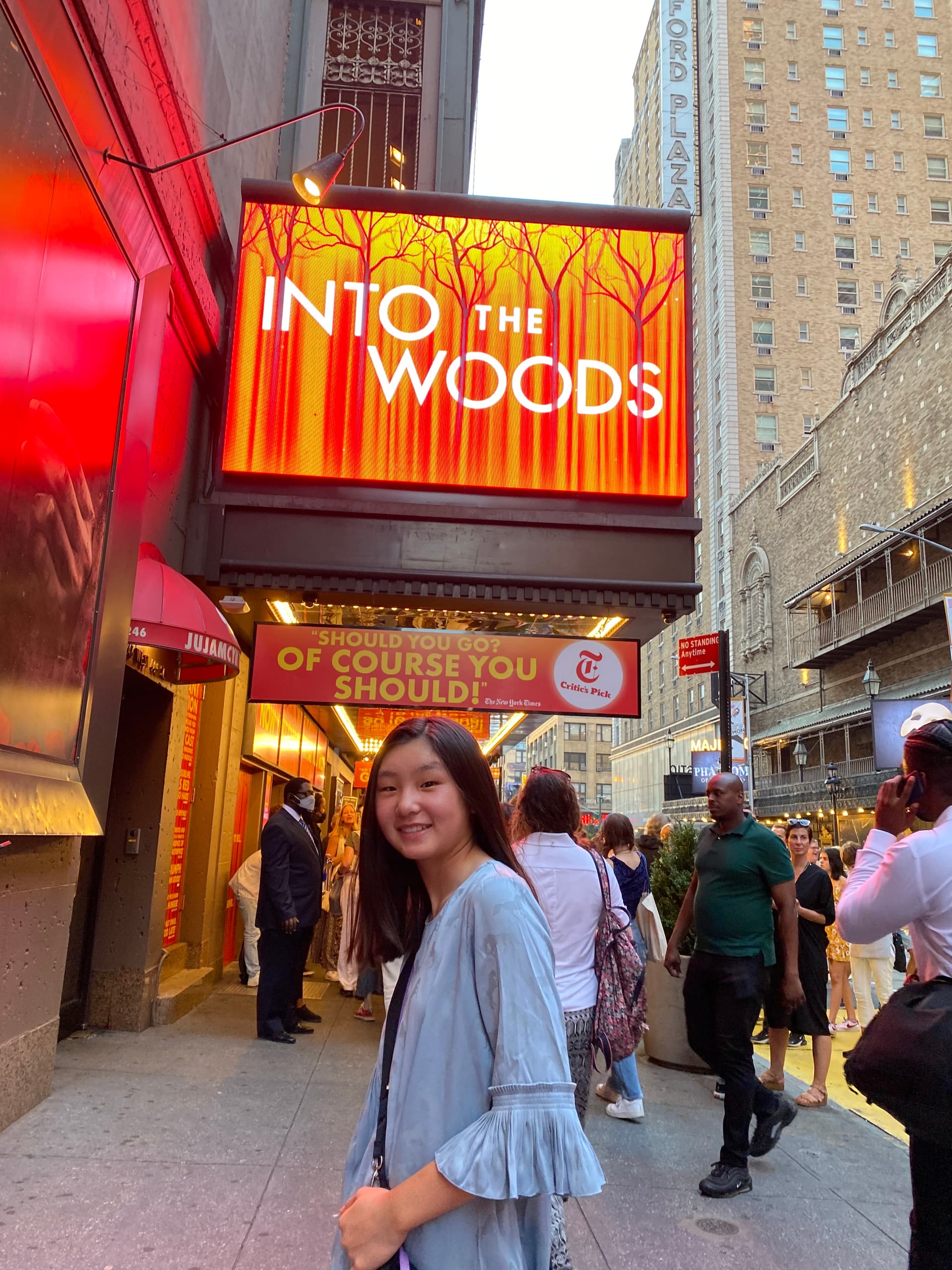
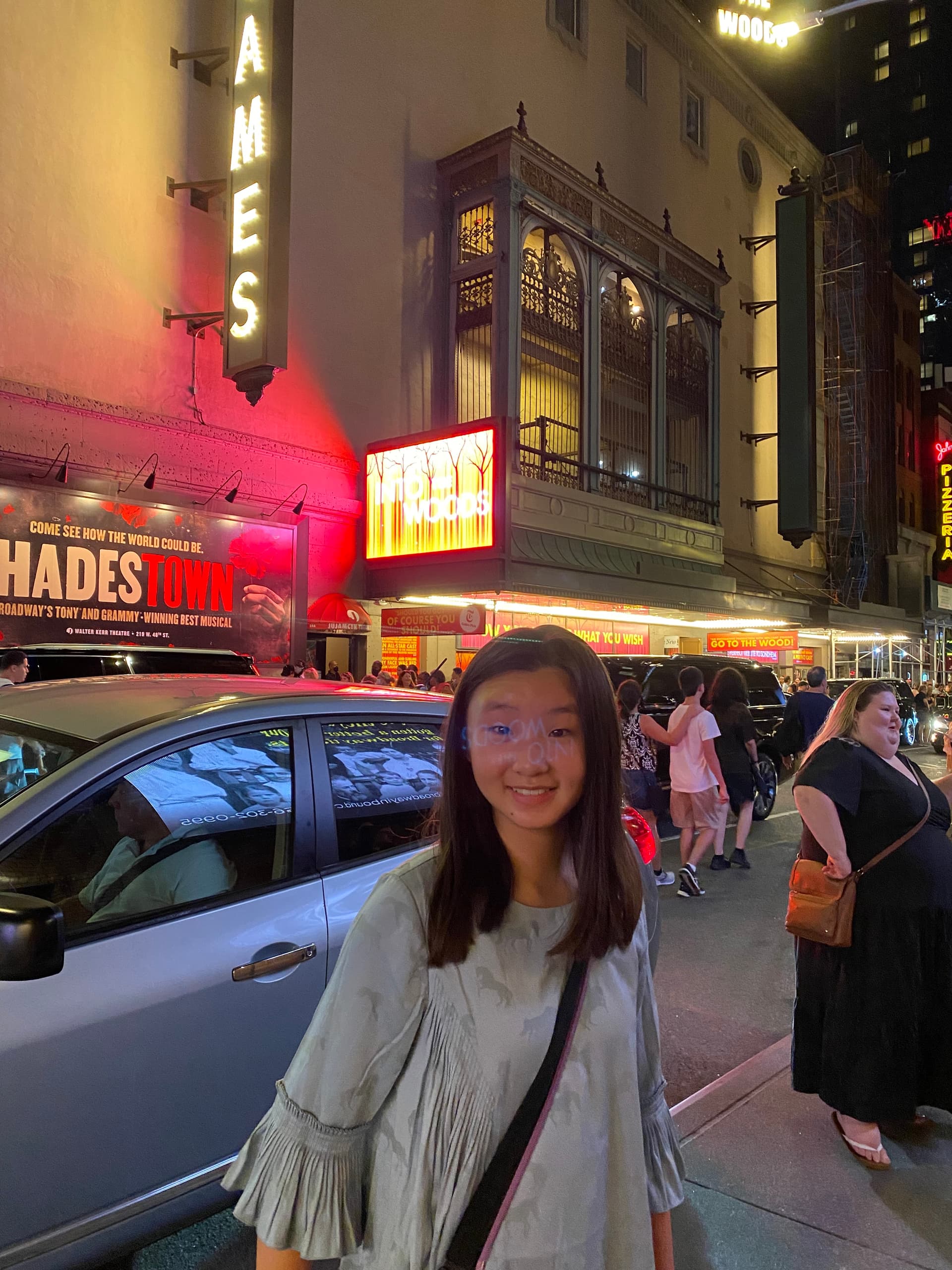
When Into the Woods returned to Broadway at the St. James Theatre on July 10, 2022, the production did something surprisingly radical for a revival of a beloved Sondheim musical: it stripped the show back to storytelling. There was no attempt to build a realistic enchanted forest. There was little elaborate scenery and relatively restrained theatrical machinery. Instead, director Lear deBessonet placed the performers, musicians, story, and Stephen Sondheim's score at the center. The revival began as part of New York City Center's Encores! series before transferring to Broadway. What had initially been conceived as a limited theatrical event became one of the major Sondheim revivals of the post-pandemic period. Its timing gave the musical unusual emotional resonance. Into the Woods has always begun with individual wishes: Cinderella wants to attend the festival. Jack wants his cow to give milk. The Baker and his Wife want a child. Little Red wants to visit her grandmother. By Act II, those private desires collide with consequences no individual can solve alone. In 2022, after years marked by pandemic isolation, loss, and uncertainty, a musical built around the realization that “No One Is Alone” inevitably sounded different. The text had not changed. The world around it had.
The Original Into the Woods
When Into the Woods premiered on Broadway in 1987, Sondheim and Lapine combined several familiar fairy tales—Cinderella, Jack and the Beanstalk, Little Red Riding Hood, and Rapunzel—with the original story of a Baker and his Wife. Act I appears to move toward the traditional fairy-tale ending. Wishes come true. Cinderella gets her prince. Jack gains wealth. The Baker and his Wife have their child. The curse is broken. Everyone seems positioned to live happily ever after. Then Act II asks the question fairy tales usually avoid: What happens after “happily ever after”? The characters discover that wishes create consequences, good people make mistakes, parents fail children, relationships change, and no magical narrator can guarantee that everything will make sense. The fairy tale becomes a story about adulthood.
Why Revive Into the Woods? By 2022, Into the Woods was already one of Sondheim's most frequently performed musicals. That creates a particular problem for a revival. How do you make audiences hear material they may already know extremely well? DeBessonet's answer was not to impose an elaborate new concept. Instead, the production emphasized clarity, communal storytelling, and the score itself. This makes the revival an important counterexample to Company.
Marianne Elliott transformed Company partly by changing the gender of its protagonist and substantially reconceiving its theatrical world. DeBessonet's Into the Woods demonstrated another philosophy of revival: sometimes rediscovery comes from removing things rather than adding them.
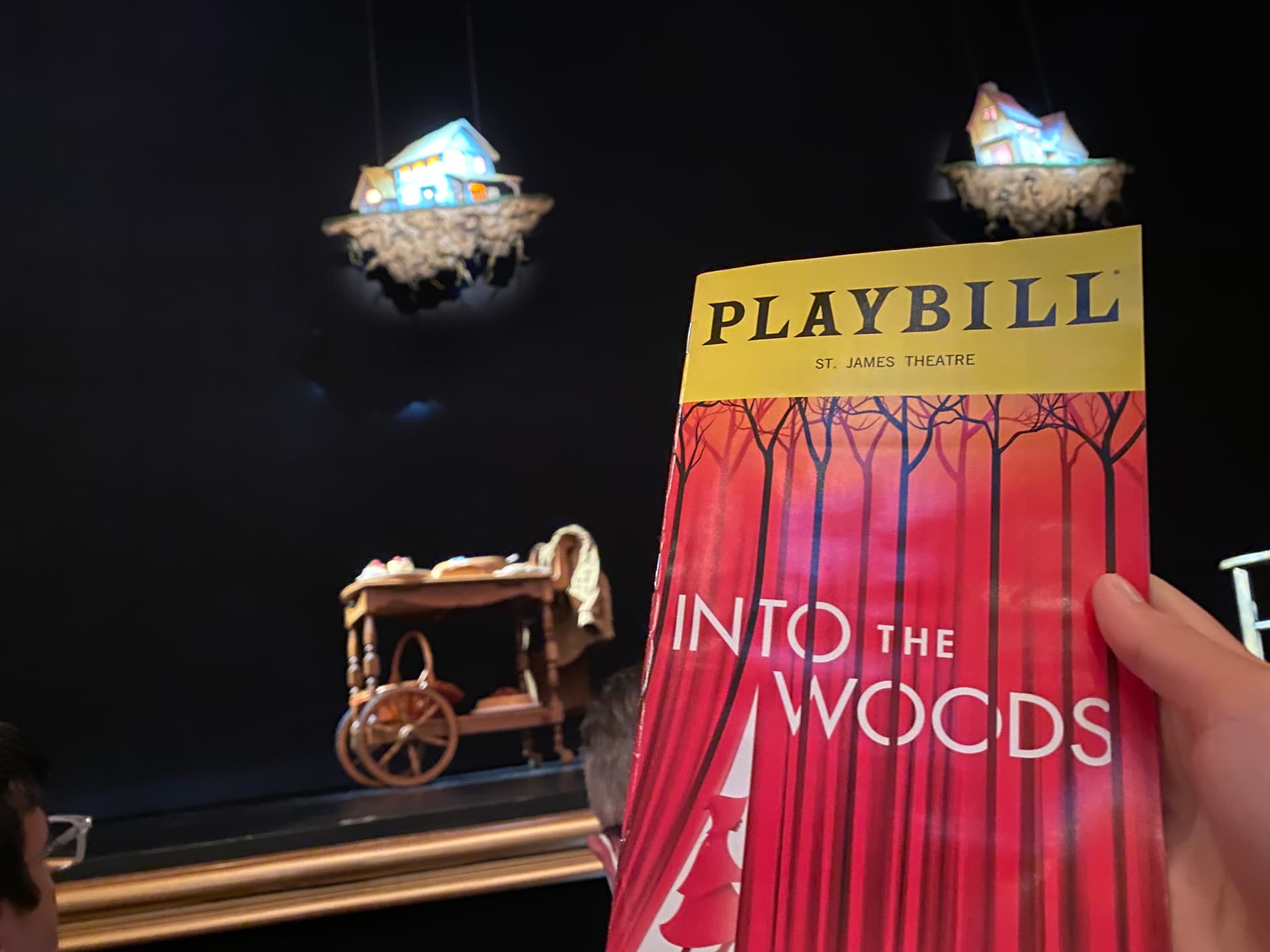
From Encores! to Broadway The production originated in New York City Center's Encores!, a series historically dedicated to presenting rarely heard American musicals with an emphasis on their scores. That origin shaped the Broadway production. The orchestra remained visibly important. The staging retained a sense that performers had gathered together to tell a story rather than disappear completely inside an illusionistic fairy-tale world. This theatrical simplicity returned attention to Sondheim's music and Lapine's language. It also exposed the mechanisms of storytelling. The audience did not need to believe that an actual forest existed behind the proscenium. A few objects, performers, lighting changes, music, and imagination could create one. The revival therefore celebrated something fundamental about theater: an audience can see how the illusion works and still believe in it.
The Orchestra as Part of the Event
One of the production's defining pleasures was its onstage orchestra, conducted by Rob Berman. Instead of hiding the musicians in the pit, the production made Sondheim's score physically present. That choice mattered particularly for Into the Woods, whose music is intricately constructed from recurring motifs, overlapping melodies, rhythmic language, and musical ideas that return with altered meanings. The score behaves much like the woods themselves.
Themes disappear and reappear. Characters' musical ideas collide. Something heard earlier returns later but no longer means quite the same thing. Making the musicians visible reminded audiences that the forest was being constructed not only through scenery but through music.
A Cast That Could Keep Changing
The revival became notable for its unusually fluid casting. The original Broadway transfer featured performers including Sara Bareilles as the Baker's Wife, Brian d'Arcy James as the Baker, Patina Miller as the Witch, Phillipa Soo as Cinderella, Gavin Creel as Cinderella's Prince and the Wolf, and Joshua Henry as Rapunzel's Prince. As the run continued, major performers rotated into roles. This gave the production something closer to a repertory quality than most commercial Broadway shows. Different actors changed the balance of familiar characters without requiring the production itself to be redesigned. That became another form of reinterpretation. A revival does not necessarily require one definitive new reading. Sometimes the text can remain stable while different performers continually reveal different possibilities inside it.
Milky White
One of the production's most beloved reinterpretations involved a character who does not usually receive top billing: Milky White. Jack's cow was performed through a puppet operated by Kennedy Kanagawa. Rather than attempting to hide the puppeteer, the production made Kanagawa fully visible.
He reacted emotionally alongside the puppet, turning Milky White into one of the most expressive characters in the show. The audience could simultaneously see: the puppet, the person operating it, and the character. Yet those layers did not weaken the illusion. They strengthened it. Milky White became a perfect example of the revival's theatrical philosophy: you do not have to hide the act of creation for an audience to believe in what has been created.
“Children Will Listen” Into the Woods has always been deeply concerned with what one generation passes to another. Parents tell children stories. Children imitate adults. Adults make mistakes that children inherit. “Children Will Listen” transforms fairy tales themselves into a metaphor for responsibility. The stories adults tell matter because children absorb more than the intended lesson. That idea acquired additional resonance in the revival. Many audience members had first encountered Into the Woods decades earlier and were now returning with children—or with entirely different experiences of adulthood, parenthood, grief, and responsibility. A musical about stories being passed between generations had itself become a story passed between generations. The revival made that process visible.
“No One Is Alone” After 2020 The production's historical timing is essential to understanding why it resonated so strongly. Broadway had only recently reopened after the COVID-19 shutdown. Audiences and theater workers had experienced isolation, death, disrupted families, uncertainty, and the disappearance of live performance itself. Then came a musical in which characters confront disaster after believing their problems were already solved. They lose people. Their plans collapse. No authority figure arrives to restore order. Eventually, they recognize that survival requires them to depend upon one another. “No One Is Alone” therefore carried a cultural meaning in 2022 that it could not have possessed in exactly the same way in 1987. The song does not promise that nobody will die or that everything will be repaired. It offers something more modest: even when certainty disappears, people still have one another.
Revival Without Reinvention
The 2022 Into the Woods is especially valuable to this gallery because it complicates the idea that an important revival must radically change a classic. It did not gender-swap the central characters like Company. It did not relocate the story into a completely different historical setting. It did not attempt to overturn the musical's fundamental interpretation. Instead, it demonstrated the power of context. A work can acquire new meaning simply because audiences have changed. The same lyric heard thirty-five years later may carry an entirely different emotional history.
That means revival itself is already an act of reinterpretation—even before a director changes a word.
Historical Significance
The Broadway revival received six Tony Award nominations, including Best Revival of a Musical, Best Leading Actress for Sara Bareilles, Best Featured Actor for Brian d'Arcy James, and Best Featured Actress for Patina Miller. Although it did not win a Tony, its influence cannot be measured only through awards. What began as a short Encores! engagement expanded into a Broadway run and then a national tour, demonstrating substantial demand for a relatively stripped-down revival of a 35-year-old musical. It also arrived only months after Stephen Sondheim's death in November 2021. That gave the production another unavoidable dimension. Audiences were not simply revisiting Into the Woods. Broadway itself was beginning to reconsider Sondheim's legacy without Sondheim there to participate in that process. The revival became part of the transition from living composer to theatrical canon.
Why This Revival Changed Broadway
The 2022 Into the Woods demonstrated that reinterpretation does not always mean transformation. Sometimes a director can reveal a classic by trusting it. The production stripped away much of the physical forest and discovered that the forest existed in Sondheim's music, Lapine's words, the performers, the musicians, and the audience's imagination. It also demonstrated how historical circumstances can reinterpret art without changing the art itself. In 1987, “No One Is Alone” was part of a new musical. In 2022, the same song was being heard by people emerging from years in which being alone had acquired an entirely different meaning. That distinction is at the heart of the revival.
The words stayed the same. We did not.
Why It Resonates With Me
What I find most meaningful about this revival is that it proves a show does not have to be radically rewritten in order to become new again. Into the Woods already asks what happens when the stories we inherit collide with the realities of growing up, and by 2022 both Broadway and its audiences had lived through experiences that changed how ideas like loss, community, and “No One Is Alone” sounded. I also love the visible musicians and Milky White puppetry because they reveal the mechanics of theater without destroying the magic. For me, this revival captures another essential reason revivals matter: sometimes we return to an old work expecting to see what has changed in the production, only to discover that what has really changed is us.