Overview
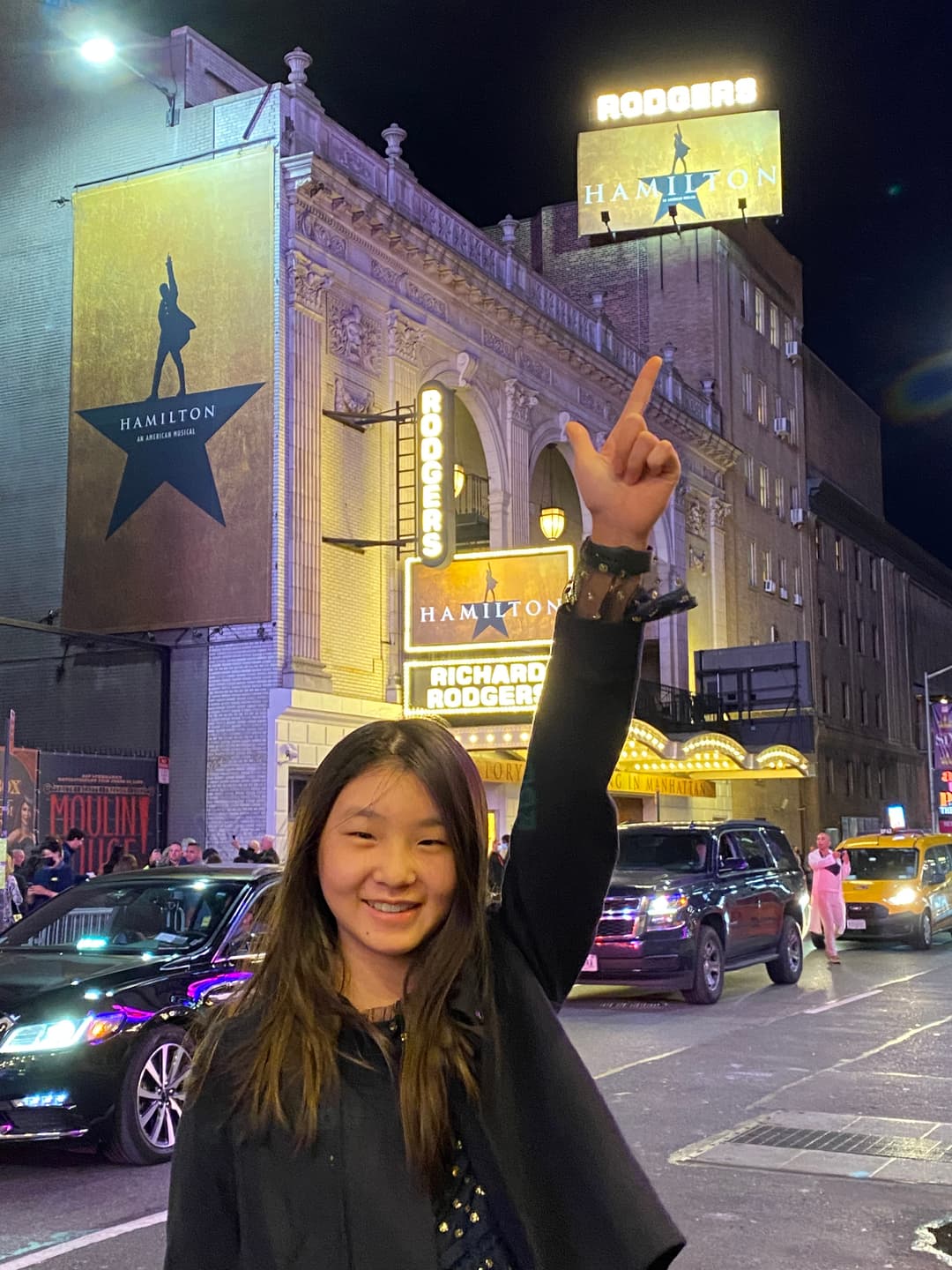
When In the Heights opened at the Richard Rodgers Theatre on March 9, 2008, it placed a neighborhood rarely centered in a Broadway musical at the center of the Broadway stage: Washington Heights, a predominantly Latino community in upper Manhattan. The musical unfolds over several summer days around a single city block. Usnavi, a Dominican American bodega owner, dreams of returning to the Dominican Republic and restoring his late father's business. Vanessa dreams of leaving the neighborhood for a downtown apartment. Nina Rosario returns from Stanford carrying a secret: overwhelmed by work, financial pressure, and isolation, she has lost her scholarship. Her parents, Kevin and Camila, struggle to keep their car-service business alive while hoping their daughter can achieve opportunities they never had. Around them are Benny, Daniela, Carla, Sonny, Abuela Claudia, and an entire neighborhood whose individual stories overlap. Then someone purchases a winning lottery ticket worth $96,000 from Usnavi's bodega. Songs including “In the Heights,” “Breathe,” “96,000,” “Paciencia y Fe,” “The Club,” “Blackout,” and “When the Sun Goes Down” combine hip-hop, salsa, merengue, Latin rhythms, pop, and traditional musical-theatre storytelling. The musical asks what it means to move forward without losing the people and places that made you who you are.
Historical Era
In the Heights arrived on Broadway in 2008, during a period when the sound and cultural vocabulary of American musical theatre were expanding rapidly. Rent had brought rock and the contemporary East Village to Broadway in the 1990s. Spring Awakening had combined nineteenth-century characters with alternative rock. In the Heights pushed Broadway toward another musical language: hip-hop and contemporary Latin music. Lin-Manuel Miranda had begun developing the show while he was a student at Wesleyan University in 1999, drawing partly from his own experience growing up in the Latino community of northern Manhattan. The production reached Off-Broadway in 2007 before transferring to Broadway the following year. Its success demonstrated that stories about Latino families and immigrant communities did not have to be treated as culturally specific material for a niche audience. They could occupy one of Broadway's largest stages.
Historical & Cultural Context
Washington Heights has been shaped by multiple generations of migration. Located in northern Manhattan, the neighborhood became particularly associated with Dominican immigration during the second half of the twentieth century, eventually becoming one of the most important centers of Dominican American culture in the United States. In the Heights reflects that history while deliberately avoiding the idea that “Latino” describes a single experience. Its characters have roots in the Dominican Republic, Puerto Rico, Cuba, and elsewhere. They move between English and Spanish, between generations, and between different ideas about what success means. For Usnavi, the Dominican Republic represents an imagined home connected to his parents. For Nina, success appears to mean leaving Washington Heights for Stanford. For Vanessa, it means moving downtown. But each character gradually discovers that leaving somewhere and belonging somewhere are more complicated than they initially seem. Immigration, Education, and the American Dream Like Ragtime, In the Heights is deeply interested in the American Dream, but it examines that idea from a twenty-first-century immigrant perspective. Nina is supposed to represent success. She has escaped the limits her parents faced and entered an elite university. Yet “Breathe” reveals the enormous pressure hidden beneath that achievement. Everyone in the neighborhood knows her as “the one who made it out.” Returning without her scholarship therefore feels not simply like personal failure but like failing an entire community that invested its hopes in her. Her parents respond by considering the sacrifice of their own business to finance her education. The question becomes uncomfortable: how much should one generation sacrifice so that the next can move somewhere else? The musical never offers a single answer. Instead, it allows ambition and belonging to exist simultaneously.
Production Innovation
The defining innovation of In the Heights was not technological spectacle but musical vocabulary. Miranda demonstrated that rap could perform many of the same dramatic functions traditionally assigned to musical-theatre lyrics: establishing characters, communicating exposition, creating conflict, and advancing narrative. The opening number provides a clear example. Usnavi introduces the neighborhood through rapid rhymes while customers move through his bodega and the block wakes around him. Rather than stopping the story for a song, the music organizes the rhythms of everyday life. Andy Blankenbuehler's choreography similarly combines Broadway movement with Latin social dance, hip-hop, and street vocabulary. The neighborhood therefore exists not merely through scenery. It exists through rhythm. The musical's sound tells us where we are. “Paciencia y Fe” and Memory At the emotional center of In the Heights is Abuela Claudia, the neighborhood matriarch who is not Usnavi's biological grandmother but functions as family. Her song “Paciencia y Fe”—“patience and faith”—connects the contemporary neighborhood to an earlier immigrant generation. Claudia remembers her childhood in Cuba, her family's migration to New York, her mother's struggle to find work, and years spent cleaning buildings in order to survive. Her life complicates the idea of immigration as either success or failure. She has experienced hardship and sacrifice, but she has also created community. When Claudia dies, Usnavi begins to reconsider what “home” actually means. The musical's answer gradually shifts from geography toward relationships, memory, and responsibility.
Historical Significance
In the Heights received 13 Tony Award nominations and won four, including the 2008 Tony Award for Best Musical and Best Original Score for Miranda. The production ran for 1,184 performances on Broadway.
Its significance extends far beyond that original run. The show established Lin-Manuel Miranda as a major new voice in American musical theatre and demonstrated that hip-hop could function effectively within Broadway narrative structure years before Hamilton would expand that experiment dramatically. It also brought a large ensemble of Latino characters to Broadway without making their ethnicity itself the central “problem” of the story. The characters fall in love, argue with their parents, worry about money, pursue careers, grieve, celebrate, and decide whether to leave home. Their cultural identities matter deeply, but they are allowed to possess ordinary complexity. The musical was later adapted into a 2021 film directed by Jon M. Chu, extending its representation of Washington Heights to a much larger audience. Representation and Its Complications In the Heights was widely celebrated for Latino representation, but later conversations also revealed the complexity of representing any diverse community. The 2021 film, in particular, faced criticism for the limited presence of dark-skinned Afro-Latino characters in leading roles, despite the significant Afro-Dominican population of Washington Heights. Those debates are important to the musical's historical legacy. Representation is not a finish line reached once a marginalized community appears onstage. Questions remain about which members of that community are centered, who tells the story, and whose experiences remain less visible. That conversation does not erase what In the Heights accomplished. It demonstrates how one breakthrough can create expectations for the next. Broadway and the Sound of a Changing America In the Heights occupies an especially important place in Broadway's musical evolution. Earlier works in this exhibition repeatedly changed what Broadway could sound like: Show Boat incorporated Black musical traditions within the integrated musical; Hair brought rock into Broadway; Rent gave 1990s alternative culture a theatrical voice. In the Heights brought hip-hop and Latin musical traditions into the center of mainstream Broadway storytelling. Seven years later, Miranda would take that experiment much further with Hamilton.
Seen historically, In the Heights therefore represents both a major achievement on its own and a bridge toward a broader transformation in what stories—and what musical languages—Broadway considered central.
Why It Resonates With Me
What resonates with me most about In the Heights is its idea of home as something you can carry between places. Many of its characters assume success requires leaving: Nina goes to Stanford, Vanessa wants to move downtown, and Usnavi dreams of returning to the Dominican Republic. But the musical gradually complicates the idea that belonging has to be tied to one location. That feels especially meaningful to me because identity can be shaped by multiple places, languages, communities, and cultures at once. In the Heights suggests that moving forward does not require choosing one part of yourself and leaving the others behind. Sometimes the challenge is learning how to build a future large enough to contain all of them.