Overview
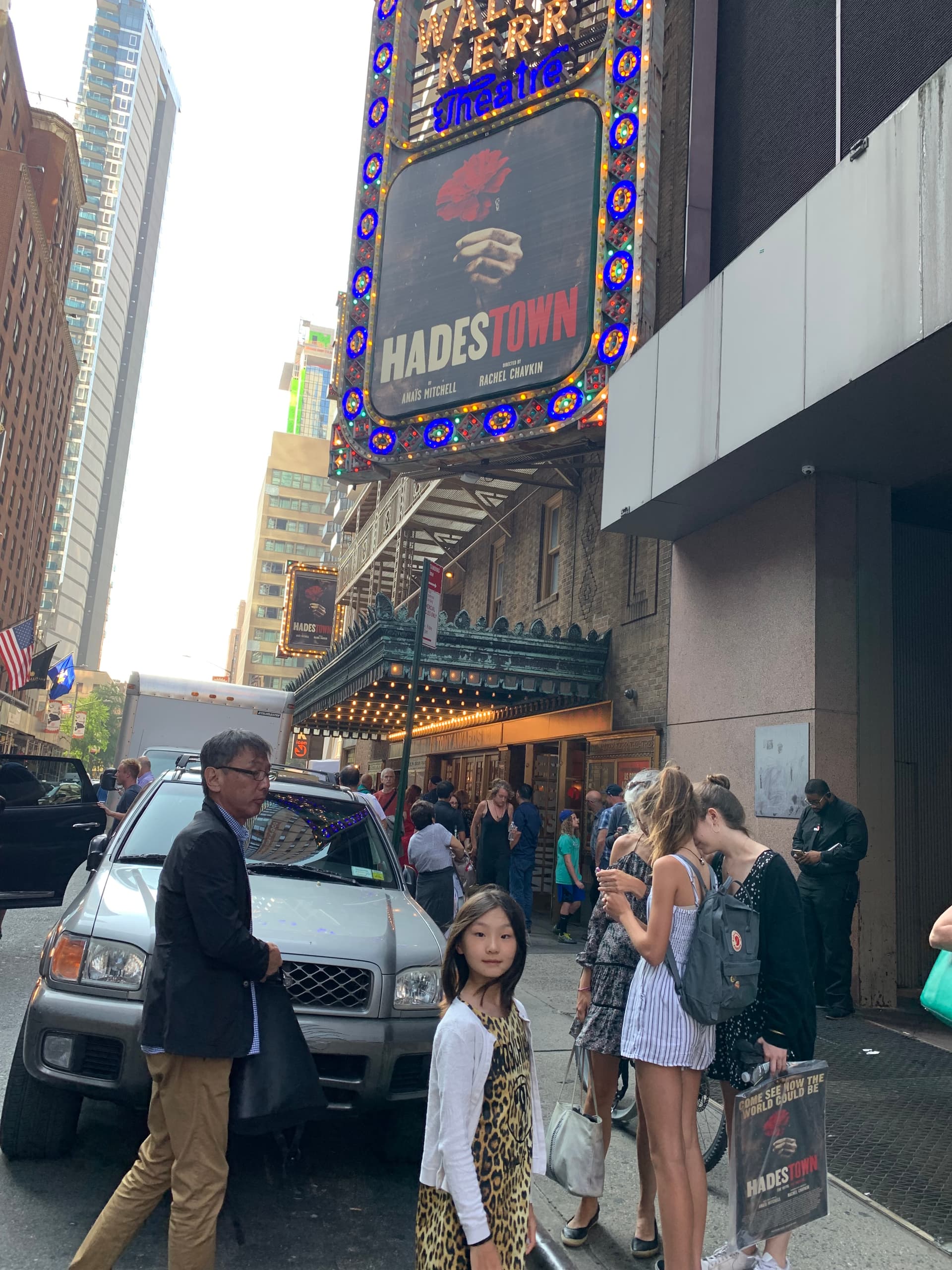
When Hadestown opened at the Walter Kerr Theatre on April 17, 2019, it took one of the oldest stories in Western mythology and transformed it into a folk-and-jazz-inflected musical about love, labor, power, climate, inequality, and the human impulse to keep telling stories even when we already know how they end. Two ancient myths unfold simultaneously. Orpheus, an idealistic young musician, falls in love with Eurydice, a practical young woman struggling to survive in an unstable world. Orpheus believes he can write a song so beautiful that it will restore harmony to nature. But while he works, Eurydice grows hungry and increasingly uncertain that love alone can keep them alive. She accepts an offer from Hades, ruler of the industrial underworld known as Hadestown, where workers surrender their freedom in exchange for security. Meanwhile, Hades's marriage to Persephone is deteriorating. His possessiveness disrupts the seasons, leaving the world above caught between brutal winter and unbearable summer. Orpheus travels to Hadestown to bring Eurydice home. The audience already knows what happens. That knowledge is the point. Songs including “Road to Hell,” “Wedding Song,” “Wait for Me,” “Why We Build the Wall,” “Flowers,” and “Wait for Me (Reprise)” ask why people continue to hope when experience tells them hope may fail.
Historical Era
Hadestown reached Broadway in 2019, but its development stretched across more than a decade. Anaïs Mitchell first developed the project as a community theater production in Vermont in 2006. She then transformed it into a 2010 concept album featuring artists including Justin Vernon, Ani DiFranco, and Greg Brown. The theatrical version continued evolving through collaborations with director Rachel Chavkin, eventually reaching New York Theatre Workshop in 2016, Edmonton and London, and finally Broadway.
That long development history is significant. Unlike musicals created primarily through a conventional Broadway commercial pipeline, Hadestown evolved through folk music, concept recording, regional performance, experimental theater, and international production before reaching Broadway. Its journey reflects an increasingly flexible twenty-first-century theatrical ecosystem in which Broadway can become the final stage of a work's development rather than its starting point. Ancient Myth in a Modern World The myth of Orpheus and Eurydice is thousands of years old. Orpheus, the greatest musician in Greek mythology, travels into the underworld after Eurydice dies. His music moves Hades, who agrees to release her under one condition: Orpheus must walk ahead and cannot look back until they have both reached the world above. At the final moment, Orpheus looks back. Eurydice is lost. Mitchell retains the basic structure but radically changes its social world. Eurydice does not simply die. She makes an economic choice. She goes to Hadestown because she is cold and hungry and Hades offers stability. That shift transforms the myth from a story primarily about death into one about what people may surrender when survival becomes uncertain. Labor, Capital, and “Why We Build the Wall” Hadestown is not merely an underworld. It is an industrial system. Workers labor endlessly building a wall. They gradually lose their names and identities. Hades controls energy, resources, contracts, and the conditions under which everyone works. In “Why We Build the Wall,” Hades teaches the workers to understand the wall as protection and labor as freedom. The song's circular logic is crucial. The workers build because they are told the wall keeps them free, and the evidence of their freedom is that they have work building the wall.
The musical therefore explores how systems of power reproduce themselves not only through force but through stories people are taught to believe about those systems. Orpheus threatens Hades not because he possesses greater physical power. He offers the workers another story. Climate and the Broken Seasons The relationship between Hades and Persephone gives the musical an ecological dimension. In Greek mythology, Persephone's annual movement between the underworld and the surface explains the changing seasons. In Hadestown, that cycle has broken. Hades keeps Persephone underground too long, and when she returns above, the climate becomes increasingly unstable. Eurydice describes a world of extreme weather where food and shelter are uncertain. The musical never becomes a literal lesson about climate change, but its imagery makes the connection difficult to miss. Environmental instability, economic insecurity, and political power become interconnected. When the natural world stops functioning predictably, the people with the fewest resources experience the consequences first.
Production Innovation
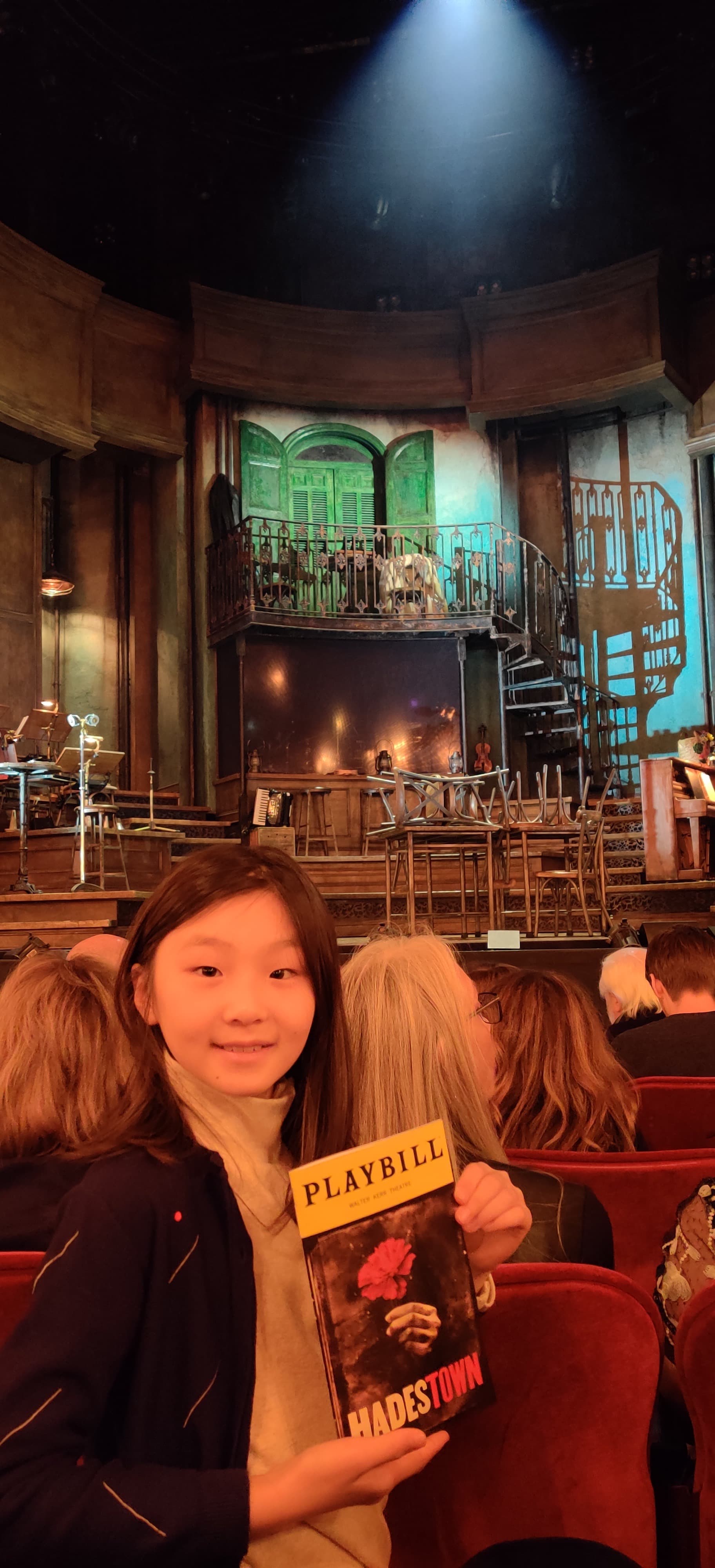
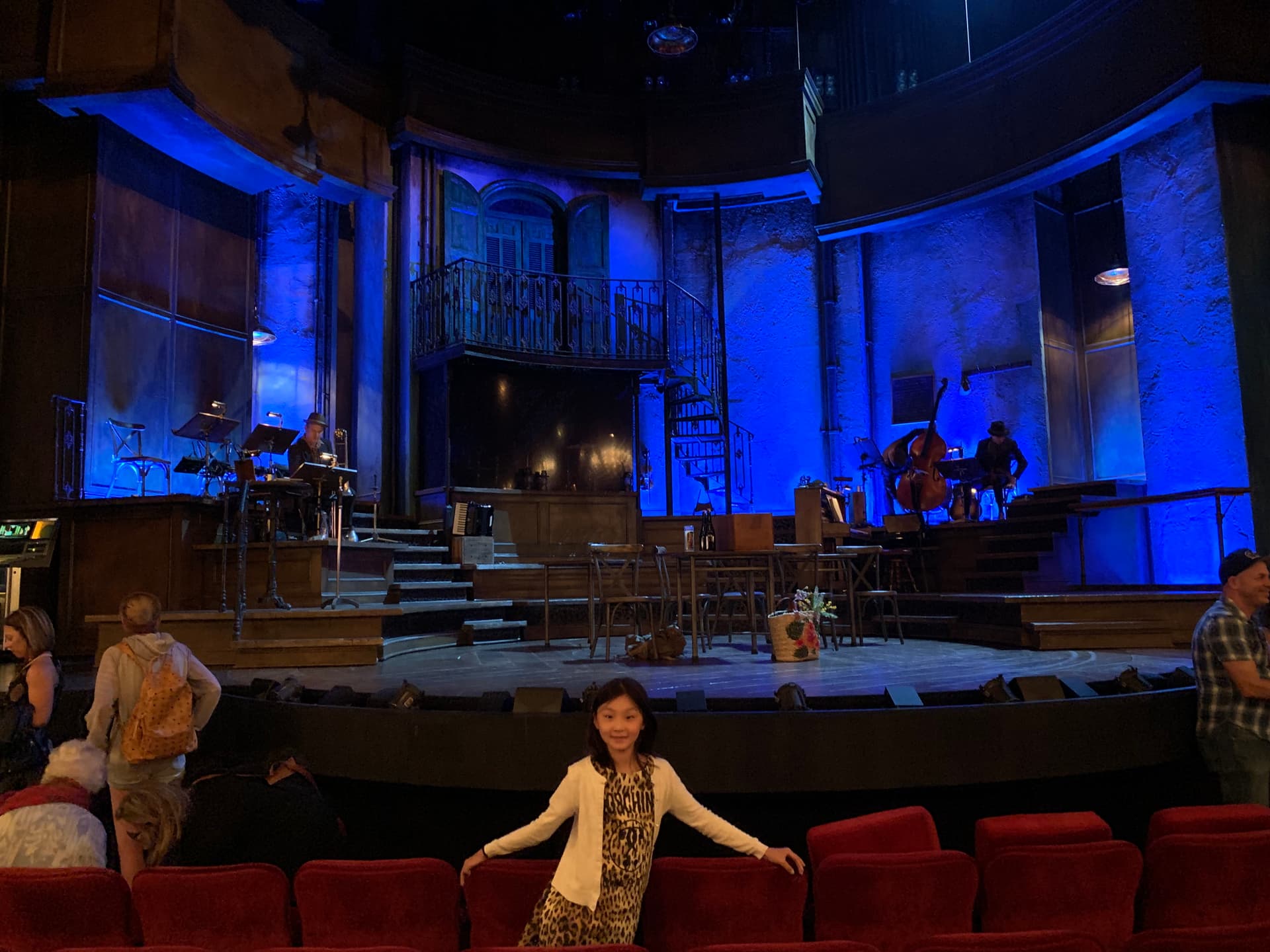
Rachel Chavkin's production makes the act of storytelling visible. The musicians remain onstage. Hermes introduces the performers. Characters acknowledge that they are participating in a story that has been told before. Rachel Hauck's scenic design initially resembles an intimate New Orleans-inspired club, with musicians surrounding the playing space. Then Hadestown opens beneath it. Elevators, rotating platforms, lighting, choreography, and industrial sound transform the warm communal space into something enormous and mechanical. One of the production's defining sequences is “Wait for Me.”
As Orpheus descends toward Hadestown, swinging lamps move through darkness around him, creating a journey that feels simultaneously ancient and completely theatrical. The lamps are relatively simple objects. Their movement turns them into spectacle. Like Once, Hadestown demonstrates that theatrical magic does not always depend on hiding machinery. Sometimes the audience can see exactly how the effect works and still be overwhelmed by it. Music and the Chorus Mitchell's score combines folk, blues, jazz, gospel, and New Orleans musical influences. Different characters inhabit different musical worlds. Orpheus's music is lyrical and searching. Hades possesses a deep, industrial authority. Persephone brings the energy of a nightclub bandleader. Hermes functions as narrator, guide, and master of ceremonies. The Workers Chorus is particularly important. At first, the workers appear almost interchangeable, stripped of individual identity by Hadestown. As Orpheus sings, however, they begin listening. Their movement gradually shifts. The chorus becomes a measure of whether imagination can interrupt a system designed to make alternatives seem impossible. “To Know How It Ends” Perhaps the most important idea in Hadestown appears before the tragedy even occurs. Hermes tells us that this is an old song. We know Orpheus will look back. The characters will perform it anyway. This radically changes the function of suspense. The audience is not primarily wondering what will happen. We are wondering whether, somehow, this time it might happen differently. For a few moments, the musical makes us believe that possibility.
Then Orpheus turns. Yet the musical begins again. Hermes introduces the story again because, as he explains, people continue singing it as though the ending might change. The failure does not make the attempt meaningless.
Historical Significance
At the 2019 Tony Awards, Hadestown received 14 nominations and won eight awards, including Best Musical, Best Original Score, Best Direction of a Musical, Best Featured Actor for André De Shields as Hermes, Best Scenic Design, Best Lighting Design, Best Sound Design, and Best Orchestrations. Rachel Chavkin's win was historically notable in a season when she was the only woman nominated for directing a musical. The original principal cast also included Reeve Carney as Orpheus, Eva Noblezada as Eurydice, Patrick Page as Hades, and Amber Gray as Persephone. Anaïs Mitchell became part of a still relatively small group of women who have written the music, lyrics, and book of a Broadway musical. The show's success demonstrated that an experimental folk opera developed over many years could become a major commercial Broadway production without abandoning its distinctive theatrical identity.
Why It Resonates With Me
What I find most powerful about Hadestown is that it tells us almost immediately that the story will end badly—and then somehow makes us hope anyway. Usually stories depend on uncertainty about what happens next. Hadestown depends on something more difficult: the possibility that knowing the outcome does not make the attempt meaningless. I also love the way Orpheus's music functions against Hades's system. He cannot defeat power with greater power; he can only make people imagine that the world might be organized differently. For me, that connects directly to why theater keeps retelling old stories. We do not return to them because we have forgotten the ending. We return because every generation gets another chance to decide what the story means—and perhaps to imagine what we might do differently before we reach the same ending.