Overview
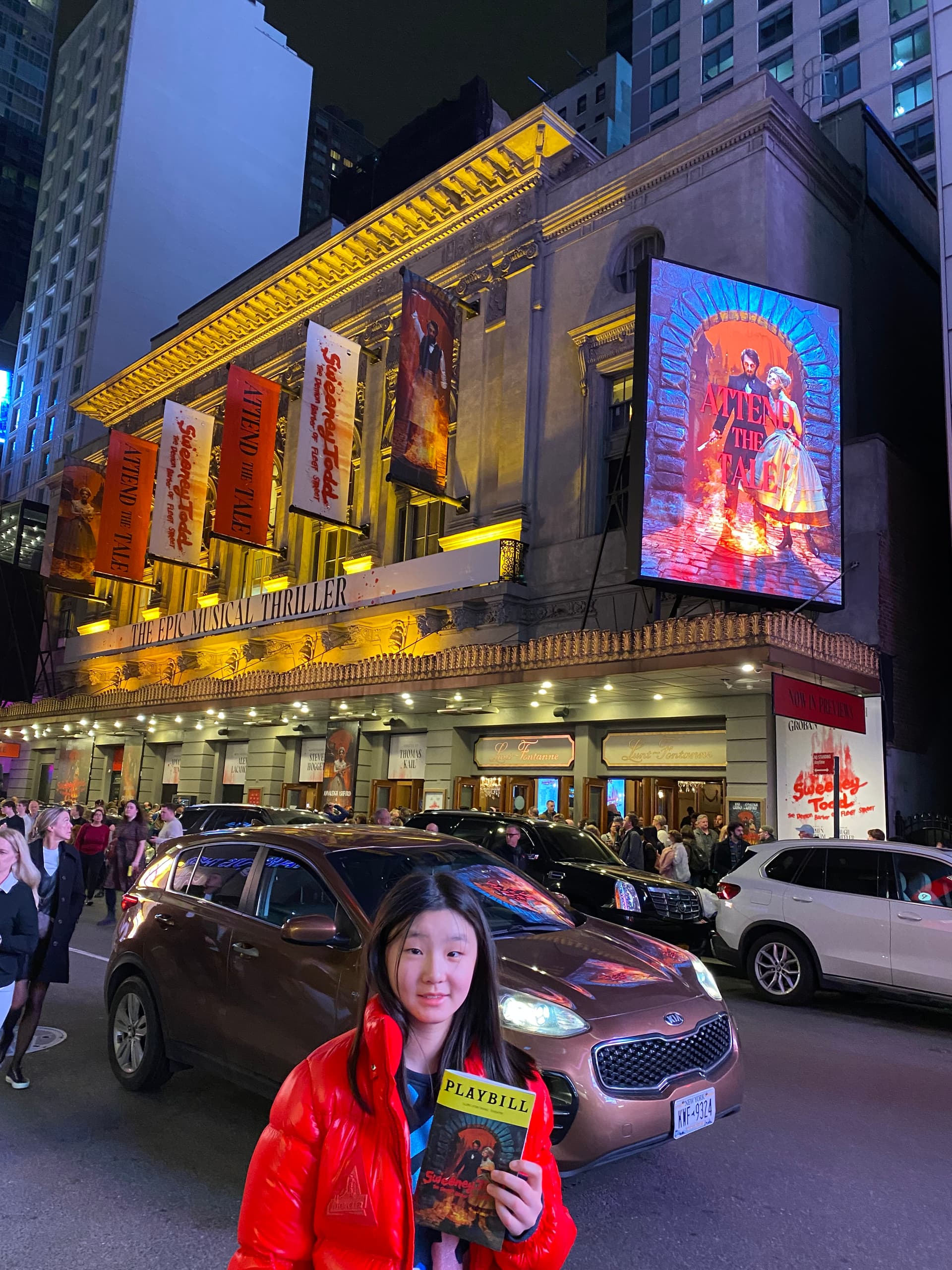
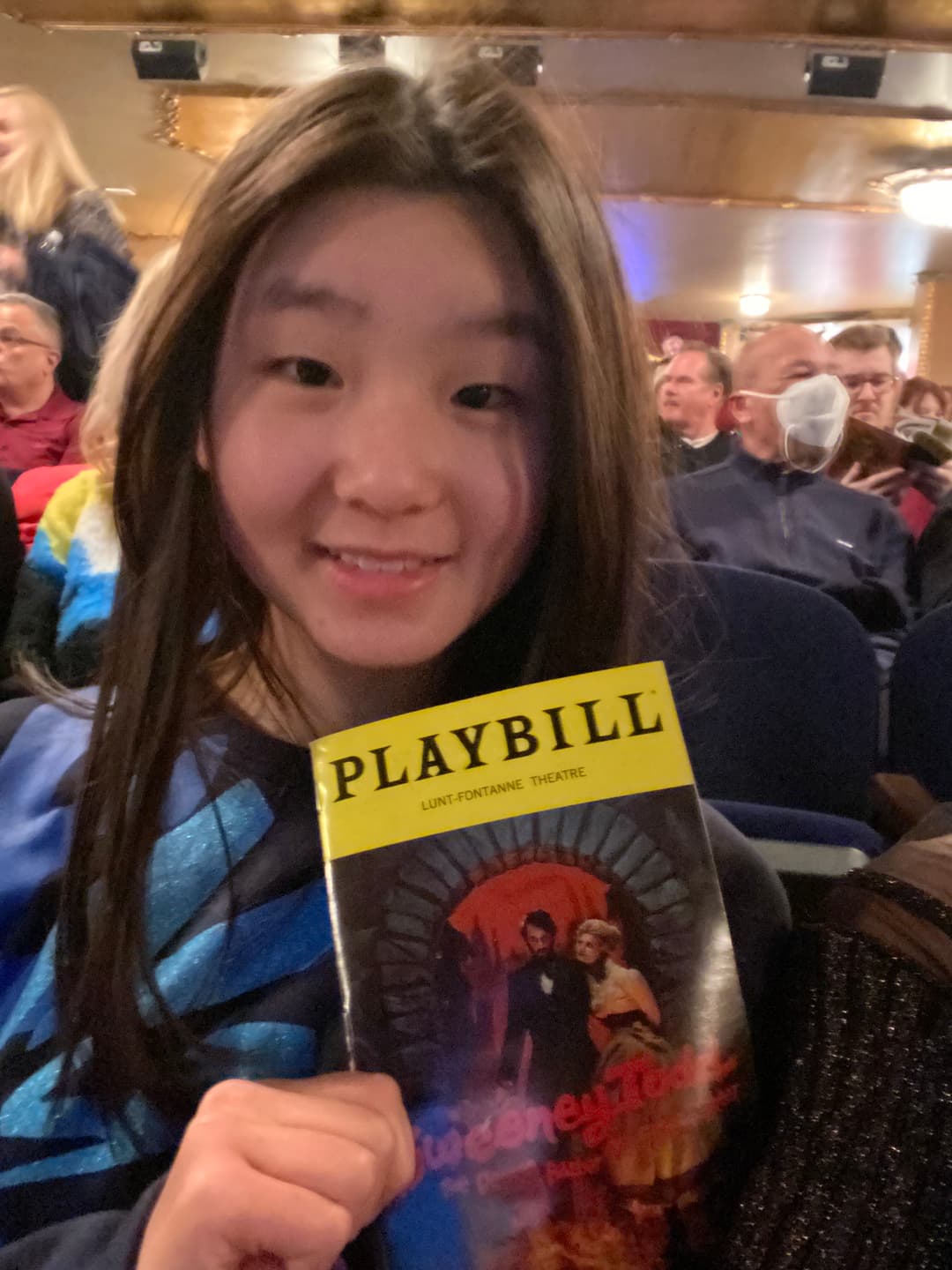
When Sweeney Todd returned to Broadway at the Lunt-Fontanne Theatre on March 26, 2023, director Thomas Kail took an approach that distinguished the production from many of the other revivals in this gallery. He did not radically rewrite the musical. He did not change its period. He did not gender-swap its characters. He did not strip the score down. Instead, the revival asked what would happen if Broadway restored the enormous musical and emotional scale of Stephen Sondheim's masterpiece while allowing contemporary performers to make its characters feel more psychologically immediate. For the first time since 1980, Broadway audiences heard Jonathan Tunick's original 26-player orchestration, giving Sondheim's score the operatic force for which it had originally been conceived. Josh Groban played Sweeney, with Annaleigh Ashford as Mrs. Lovett, alongside Ruthie Ann Miles, Gaten Matarazzo, Jordan Fisher, and others. (Tony Awards) The result provides an important counterargument within this gallery: Reimagining a classic does not always mean changing what it says. Sometimes it means restoring its scale while changing how human its characters feel.
The Original Sweeney Todd
When Sweeney Todd opened on Broadway in 1979, it was already unlike almost anything else in American musical theater. Sweeney returns to nineteenth-century London after being unjustly transported to Australia by the corrupt Judge Turpin, who desired Sweeney's wife, Lucy. He discovers that his former home is now occupied by Mrs. Lovett, proprietor of a failing meat-pie shop. Sweeney initially wants revenge on Turpin.
But revenge expands. His anger at one man becomes hatred toward an entire society. Soon Sweeney is murdering customers in his barber chair while Mrs. Lovett turns the bodies into meat pies. The premise is grotesque. It is also funny. And tragic. And political. Sondheim and Wheeler transform a Victorian revenge tale into an examination of class, industrialization, injustice, obsession, and the way personal suffering can mutate into indiscriminate violence. That complexity is what makes Sweeney Todd so difficult to revive.
The Shadow of the 1979 Production
Any major revival must confront the enormous reputation of the original production, directed by Harold Prince and starring Len Cariou and Angela Lansbury. Prince staged the musical within an enormous industrial environment. The original production famously incorporated elements of a nineteenth-century iron foundry, transforming Sweeney's story into something larger than the psychology of one murderous barber. The world itself seemed mechanical. Human beings appeared caught inside a brutal industrial system. That staging reinforced one interpretation of the musical: Sweeney is not simply an individual monster. He is a product of a society in which human lives have become expendable. Thomas Kail's revival did not attempt to reproduce Prince's production. But neither did it reject its scale entirely.
Instead, it found that scale primarily through music, movement, and performance.
Restoring the Orchestra
The most important act of restoration occurred before anyone spoke a word. The orchestra was back. The 2023 revival used Jonathan Tunick's original 26-player orchestration, the first Broadway production since 1980 to present Sondheim's score with that orchestral scale. (Tony Awards) That decision matters enormously for Sweeney Todd. The score is not merely accompaniment. It creates the world. The opening organ blast immediately announces something enormous and threatening. The recurring “Dies Irae” motif connects Sweeney's revenge to death itself. Musical ideas reappear, overlap, and accumulate as characters move toward catastrophe. Restoring the orchestra therefore becomes a form of reinterpretation through sound. At a moment when Broadway economics frequently encourage smaller orchestras, the revival made largeness itself feel radical. Sometimes preservation can be an artistic statement.
Josh Groban: A Different Kind of Sweeney
Casting Josh Groban created another significant reinterpretation. Groban was internationally famous primarily as a vocalist rather than as the kind of dark dramatic actor audiences might automatically associate with Sweeney. His instrument gave Sondheim's score tremendous musical richness. But his casting also allowed the production to emphasize something important: Sweeney was once Benjamin Barker. Before he became the Demon Barber of Fleet Street, he was a husband and father.
That humanity matters. If Sweeney enters the musical already appearing entirely monstrous, his transformation has nowhere to go. Groban's interpretation could make the character's grief and wounded humanity more visible, allowing audiences to understand the emotional path by which his desire for one act of revenge expands into something horrifying. Understanding him is not the same as forgiving him. It makes the tragedy worse.
Annaleigh Ashford Reinvents Mrs. Lovett If Groban gave the production its darkness, Annaleigh Ashford's Mrs. Lovett gave it unpredictable comic energy. Mrs. Lovett is one of musical theater's strangest characters. She is funny. She is lonely. She is practical. She is deeply in love with Sweeney. She is also perfectly willing to bake murdered human beings into pies. Ashford leaned heavily into Lovett's physical comedy, eccentricity, sexuality, and almost chaotic ability to adapt to any situation. That makes her more than Sweeney's comic sidekick. In some ways, she is his opposite. Sweeney is consumed by the past. Lovett is constantly thinking about what comes next. Sweeney sees a corpse. Lovett sees inventory. That is the horrifying joke at the center of “A Little Priest.”
“A Little Priest” The Act I finale remains one of Sondheim's most extraordinary achievements. Sweeney and Lovett begin imagining which professions might produce the best meat pies. Priest. Lawyer. Actor. Politician. The sequence is built around elaborate wordplay and increasingly ridiculous jokes. But underneath the comedy is something deeply disturbing. Sweeney has crossed a moral boundary. He is no longer interested only in killing Judge Turpin. Everyone has become potentially disposable. The audience laughs at precisely the moment the character becomes most dangerous. That contradiction is essential to Sweeney Todd. The musical repeatedly implicates audiences in enjoying something they know is horrifying. Ashford's comic instincts made that contradiction particularly sharp. The funnier Lovett became, the more uncomfortable the laughter could become.
Movement Instead of Conventional Dance
The revival's physical language was shaped by Steven Hoggett, whose work exists somewhere between choreography and movement direction. Sweeney Todd does not require conventional dance numbers. Instead, the ensemble becomes a physical extension of the story.
Bodies twist. Groups move together. Characters appear almost pulled through space by forces larger than themselves. The ensemble therefore becomes something like the collective body of London. This is especially effective because the musical constantly moves between individual tragedy and social nightmare. Sweeney's story belongs to him. But the Ballad repeatedly reminds us that society is watching. “Attend the tale of Sweeney Todd.” The audience is being told a story. The ensemble is telling it. And eventually we become part of the crowd attending the tale.
The Factory Becomes a Void
Mimi Lien's scenic design did not attempt to reproduce Harold Prince's famous industrial factory. Instead, the production placed the characters inside a large, dark theatrical environment. Objects could emerge from the space. The barber shop could become the central mechanism of Sweeney's killing. But the production did not surround audiences with a detailed recreation of Victorian London. That shifts some responsibility toward imagination. London becomes less a realistic city than a psychological landscape. Darkness surrounds the characters. Doors appear. Bodies disappear.
The environment seems capable of swallowing people. The design therefore retains the original production's sense that individuals are trapped inside something larger than themselves without recreating its industrial architecture.
Mrs. Lovett and the Tragedy Beneath the Comedy One of the reasons Ashford's interpretation works is that Mrs. Lovett cannot simply be played as comic relief. She has constructed an entire fantasy around Sweeney. In “By the Sea,” she imagines escaping London with him. They will live near the water. They will marry. They will have something resembling an ordinary domestic life. The audience understands how impossible this fantasy is. Sweeney barely participates. Lovett keeps constructing the future anyway. That makes her strangely parallel to Sweeney. Sweeney cannot escape the past. Lovett cannot stop inventing the future. Neither can live honestly in the present. And both fantasies eventually destroy them.
Revenge Becomes a System
The revival also preserves one of Sweeney Todd's most important political ideas. Sweeney begins with a legitimate grievance.
Judge Turpin abused his authority. Sweeney's family was destroyed. The justice system failed him. But Sondheim refuses to transform that injustice into a simple justification for revenge. Instead, revenge spreads. Sweeney eventually sings that: “We all deserve to die.” His logic has expanded from individual guilt to universal condemnation. That is where the musical becomes much larger than a Victorian horror story. What happens when someone who has genuinely suffered injustice begins using that injustice to justify harming people who had nothing to do with it? Sweeney becomes both victim and perpetrator. The musical refuses to let one identity erase the other.
The Final Revelation
The tragedy eventually returns to where it began. Sweeney discovers that the Beggar Woman he has killed is actually Lucy, his wife. The person whose loss fueled his entire campaign of revenge has been standing in front of him. He simply could not recognize her. That revelation completes the musical's argument about obsession. Sweeney has spent years looking backward toward the family that was taken from him. But revenge has made him incapable of seeing what remains of that family in the present. The irony is devastating. In trying to avenge the destruction of Benjamin Barker's family, Sweeney Todd completes that destruction himself.
A Revival About Scale
This makes the 2023 Sweeney Todd particularly useful within “The Revivals That Changed Broadway.” It demonstrates that reinterpretation can happen through scale. The production does not need to overturn the musical's fundamental premise. Instead, it asks what happens when contemporary Broadway gives Sondheim's score its full orchestral force again while actors approach the characters with a more intimate psychological vocabulary. The orchestra becomes enormous. The people become more human. Those two scales work against one another. The music tells us that something mythic is happening. The performances remind us that the myth began with ordinary people making terrible choices.
Historical Significance
The revival opened at the Lunt-Fontanne Theatre on March 26, 2023, starring Groban and Ashford, and ultimately ran until May 5, 2024, playing 406 regular performances. (IBDB) It received eight Tony Award nominations, including Best Revival of a Musical, Best Actor for Groban, Best Actress for Ashford, Best Featured Actress for Ruthie Ann Miles, Best Choreography for Steven Hoggett, and Best Scenic Design for Mimi Lien. It won Best Lighting Design for Natasha Katz and Best Sound Design for Nevin Steinberg. (Tony Awards) The production also proved flexible enough to survive the departure of its original stars. After Groban and Ashford left, Aaron Tveit and Sutton Foster assumed Sweeney and Lovett for the final portion of the run. (Broadway.com) That replacement casting reinforced something central to revival culture: canonical roles remain alive because new performers continue entering them.
Why This Revival Changed Broadway
The 2023 Sweeney Todd adds another philosophy of revival to this gallery. Company demonstrates gender reinterpretation. Chicago demonstrates minimalism and cultural recontextualization. Cabaret demonstrates immersive reinterpretation. Gypsy demonstrates the transformative power of casting. Sunset Boulevard uses live video and radical visual reconstruction. Merrily We Roll Along demonstrates historical reevaluation. Sweeney Todd demonstrates something equally important: restoration can itself become reinvention. Bringing back Tunick's 26-player orchestration was not an exercise in nostalgia. It allowed contemporary audiences to experience the overwhelming musical architecture of Sondheim's score while Kail's staging, Hoggett's movement, and a new generation of actors found their own psychological routes into the characters. A revival does not always need to tear a classic apart. Sometimes it needs to ask what has been lost over decades of performing it—and whether restoring that element can make the work feel new again.
Why It Resonates With Me
What I find most interesting about the 2023 Sweeney Todd is that it expands my idea of what “reimagining” can mean. Compared with Company or Sunset Boulevard, its changes may initially seem less radical. But restoring the full orchestra while allowing performers like Josh Groban and Annaleigh Ashford to find very different emotional and comic dimensions in Sweeney and Lovett shows that revival can work in two directions at once—backward toward the original and forward toward a new interpretation. For me, that is an important part of this gallery's argument. Broadway does not keep classics alive only by changing them. Sometimes it changes our understanding of them by letting us hear, see, or feel something that had gradually been lost.
Introduction
Instead of preserving Broadway in a museum, every revival asks a different question:
What does this story mean today? Unlike paintings or novels, musicals are rewritten every night. Directors reinterpret scripts, actors discover new emotional truths, choreographers rethink movement, and audiences bring new historical perspectives into the theatre. A musical written decades earlier can suddenly feel contemporary because society itself has changed. This gallery explores Broadway as a living repertory rather than a fixed collection of works.
Gallery X
Broadway as Living History How Musicals Tell the Story of America After moving chronologically through Broadway history and then examining how revivals allow old works to speak to new generations, this final gallery steps back. The question is no longer simply: How did Broadway change? It is: What can Broadway tell us about how America changed? Across more than a century, musicals have recorded the country's arguments about immigration and belonging, race and representation, war and patriotism, gender and sexuality, wealth and inequality, family and identity, and technology and social change. They do not record those histories neutrally. Musicals reflect the assumptions of the eras that created them—their blind spots as well as their breakthroughs. That is what makes Broadway a form of living history. A history textbook can tell us what happened. A musical can show us what a generation feared, celebrated, laughed at, romanticized, ignored, or imagined could be different. And when another generation revives that musical, the conversation begins again.
Section 1
Broadway Mirrors America The Stage as a Record of a Changing Nation Broadway has never existed separately from American history. The country outside the theater has always found its way onto the stage. Sometimes it arrives directly. 1776 reconstructs the debate over American independence. Hamilton retells the founding of the nation. Parade confronts antisemitism and the Leo Frank case. Suffs dramatizes the struggle for women's voting rights. But Broadway records history in less obvious ways too. The immigrant families of Fiddler on the Roof and Ragtime reveal changing ideas about belonging. West Side Story turns ethnic conflict and urban inequality into tragedy. Hair captures a generation divided by Vietnam. Rent carries the memory of the AIDS crisis. Fun Home and Cabaret reveal changing representations of sexuality and identity. Company records evolving expectations surrounding marriage. A Chorus Line places ordinary working performers at the center of the stage. In the Heights asks what home means in an immigrant neighborhood undergoing economic change. Taken together, these musicals become more than entertainment. They become evidence of what America was thinking about itself.
Immigration
Who Gets to Call America Home? Immigration is woven throughout the history of American musical theater because immigration is woven throughout the history of America itself. Broadway was shaped by immigrant artists, particularly Jewish composers, lyricists, producers, and performers whose families had arrived from Europe. Yet for decades, immigrant experiences were often transformed into generalized stories of becoming American rather than examined directly. Fiddler on the Roof changed that relationship.
Tevye's family is forced from Anatevka, making displacement central to the musical's conclusion. The audience knows something the characters cannot: families like theirs will scatter across Europe and America, carrying traditions into new countries. In Ragtime, immigration becomes part of a larger portrait of early twentieth-century America. Tateh arrives as a struggling Jewish immigrant and eventually reinvents himself within the American entertainment industry. His story exists beside those of Black Americans and wealthy white families, revealing that the supposedly unified American experience is actually composed of radically unequal ones. In the Heights moves the question forward another century. Its characters are not simply arriving in America. They have built a community in Washington Heights and must now confront another question: Can you belong somewhere even when economic forces make it increasingly difficult to remain there? Broadway's immigration stories therefore evolve alongside America's. The question moves from How do we become American? to Who gets to define what American means?
Race
Who Gets to Be Seen? Broadway's history of race contains both artistic breakthroughs and profound exclusions. Early American popular theater included blackface minstrelsy, one of the most influential and racist entertainment traditions in the country's history. Stereotypes created during that era survived long after minstrel shows themselves declined. Later musicals attempted to confront race more directly. Show Boat was groundbreaking in 1927 for placing interracial relationships, racial identity, and racism within a serious musical narrative. Yet it also contains representations shaped by the racial assumptions of its own period. West Side Story attempted to place Puerto Rican characters at the center of a Broadway tragedy, while its original production simultaneously reflected limitations in casting and representation. Decades later, musicals such as The Color Purple, Hairspray, Ragtime, and Hamilton approached American racial history from dramatically different perspectives.
Hamilton made casting itself part of historical interpretation. Black and Latino performers embodied figures traditionally imagined as white Founding Fathers, allowing contemporary America to physically occupy the story of eighteenth-century America. The history of race on Broadway therefore cannot be told as a simple progression from prejudice to inclusion. Instead, every production raises two questions: Whose story is being told? And: Who is being allowed to tell it?
War
What Happens When National History Becomes Personal? American musicals have repeatedly responded to war, although often indirectly. South Pacific emerged only a few years after World War II and placed romance alongside questions of racism, military service, and American identity in the Pacific. By the late 1960s, Hair reflected an entirely different relationship between young Americans and war. Vietnam divided generations. Claude faces military service while his friends challenge conventional ideas about patriotism, sexuality, authority, and conformity. The musical does not present war primarily through generals or battlefields. It presents war through the young people expected to fight it. Miss Saigon later returned to the Vietnam War from another perspective, focusing on the collapse of Saigon and the relationship between an American soldier and a Vietnamese woman. Its enormous success—and later debates surrounding Asian representation and casting—demonstrate how the way Broadway represents war can itself become historically contested. Musicals therefore record more than wars. They record how Americans remembered those wars.
Politics
Who Gets to Write the National Story? Politics appears throughout musical theater, sometimes where audiences least expect it. 1776 turns the drafting of the Declaration of Independence into political drama. Its Founding Fathers argue, compromise, negotiate, stall, and trade support. Decades later, Hamilton returns to America's founding mythology but changes its theatrical language completely. Hip-hop, R&B, pop, and race-conscious casting transform eighteenth-century political history into a conversation with twenty-first-century America. Assassins approaches politics from the opposite direction. Instead of celebrating presidents, it places people who attempted to kill them at the center. The musical examines alienation, entitlement, celebrity, and the darker side of the American promise. And Suffs shifts attention from presidents to activists struggling to change the political system from outside it. Together, these musicals demonstrate that political history is not simply about elections or presidents. It is about who has power, who wants it, who is excluded from it, and who gets remembered afterward.
Family
What Does an American Family Look Like? Family may be Broadway's most persistent historical subject. But the family Broadway places onstage has changed dramatically. In Fiddler on the Roof, family is inseparable from tradition. Tevye's daughters increasingly challenge the marriage customs that structured earlier generations. In The Sound of Music, family becomes a refuge against political authoritarianism. In Gypsy, family and ambition become dangerously intertwined.
In Fun Home, family memory becomes fragmented and uncertain as Alison Bechdel tries to understand her father, her sexuality, and her childhood. In Next to Normal, the idealized suburban family is dismantled by grief and psychological suffering. And in Kimberly Akimbo, family is simultaneously absurd, dysfunctional, frustrating, and necessary. Across these musicals, Broadway records a larger cultural shift. The family moves from something society defines for the individual toward something individuals increasingly question, reconstruct, and sometimes choose for themselves.
Gender
Who Is Allowed to Want More? Broadway heroines have always wanted things. But what they are permitted to want has changed. Earlier musicals frequently organized women's stories around romance and marriage. Over time, female characters increasingly demanded ambitions that existed beyond romantic fulfillment. Rose in Gypsy wants success with an almost terrifying intensity. Eva Perón in Evita wants political and cultural power. Elphaba in Wicked refuses the identity society assigns her. The women of Suffs demand political citizenship. The six wives of SIX reclaim historical identities traditionally defined through their relationships to Henry VIII. Revivals make these changing expectations even more visible. When Bobby became Bobbie in the 2021 Company, the same questions about being unmarried at thirty-five acquired different meanings because the protagonist was now a woman. Gender on Broadway therefore exists not only inside stories. It shapes how audiences interpret ambition, independence, marriage, power, aging, and success.
Technology
What Happens When the World Changes Faster Than We Do? Technology has transformed both what Broadway talks about and how Broadway tells stories. Theater itself has absorbed increasingly sophisticated automation, projection, amplification, digital scenery, puppetry, video, and lighting. The Phantom of the Opera represented an era when massive physical stage machinery became part of Broadway spectacle. The Lion King moved in another direction, revealing rather than hiding the mechanics of puppetry. The 2024 revival of Sunset Boulevard incorporated live cameras and enormous projected close-ups, transforming the relationship between theater and film. And Maybe Happy Ending placed technology at the center of the story itself. Its robots confront memory, obsolescence, companionship, and mortality. That progression reflects a broader American transformation. Technology begins as something Broadway uses. Increasingly, it becomes something Broadway questions. What happens to human relationships when machines become more sophisticated? What separates simulation from emotion? What happens when technology designed to serve us becomes part of how we understand ourselves? These questions are still unfolding, which means Broadway's history of technology is also a history that has not yet reached its ending.
Inequality
Who Gets the American Dream? Perhaps the most persistent contradiction running through American musicals is the distance between the promise of opportunity and the unequal reality of who receives it. West Side Story places young people inside neighborhoods divided by race, ethnicity, poverty, and territorial conflict.
A Chorus Line reveals the economic vulnerability underneath theatrical glamour: dozens of extraordinarily talented performers compete for a handful of jobs. Rent places artists within a New York transformed by AIDS, poverty, and gentrification. In the Heights asks whether a community can survive when the people who created it can no longer afford to remain. The Outsiders makes class difference visible through teenagers: the Greasers and Socs live in the same city but inhabit radically different versions of America. And Hamilton turns the American promise into its central contradiction. Alexander Hamilton arrives with almost nothing and rises extraordinarily far. But the musical also asks who gets remembered, who gets excluded, and who controls the narrative afterward. The American Dream has always been powerful partly because it promises movement: you can become something other than what you were born into. Broadway repeatedly tests that promise against reality.
The Stage as an American Mirror
No single musical tells the story of America. Neither do eighty. There are experiences Broadway ignored, communities it stereotyped, histories it simplified, and voices that took generations to reach its most prominent stages. But those limitations are also part of the historical record. Put the musicals beside one another and patterns begin to emerge. America's understanding of race changes. Its definition of family expands. Its attitudes toward gender and sexuality shift. Immigrants move from the margins of stories toward their centers.
Wars are remembered differently by generations that did and did not experience them. Technology changes both the subjects of musicals and the tools available to create them. And old musicals return in revivals where new performers and audiences discover meanings their creators could never have completely anticipated. That is why Broadway can function as living history. A musical does not preserve America exactly as it was. It preserves something more subjective and, in another way, more revealing: how America imagined itself. And every time the curtain rises again, another generation gets to look into that mirror and decide what has changed.
Section 2
Broadway Changes America When the Stage Becomes Part of the Conversation Broadway is often described as a mirror. It reflects the country around it—its politics, prejudices, conflicts, anxieties, and changing ideas about identity. But a mirror only reflects. Theater can also intervene. A musical or play can place an issue before hundreds of people at once and ask them not simply to understand it intellectually, but to experience it through characters they have spent hours learning to care about. A political argument becomes a song. A historical statistic becomes a person. An identity that some audience members may rarely encounter becomes the emotional center of an evening. That does not mean Broadway single-handedly causes social change. South Pacific did not end racism. Rent did not end the AIDS crisis. Hamilton did not rewrite American history by itself. Their influence works differently.
They can change whose experiences receive attention, what subjects enter mainstream culture, how historical figures are remembered, and what audiences consider possible on a major American stage. Sometimes Broadway follows social change. Sometimes it participates in it. And sometimes the theater becomes one of the places where America rehearses a different version of itself.
South Pacific
Putting Racial Prejudice Inside the Love Story When Rodgers and Hammerstein's South Pacific opened in 1949, Broadway audiences encountered what initially looked like a sweeping wartime romance. But underneath the romance was an explicit confrontation with racism. Nellie Forbush falls in love with French plantation owner Emile de Becque but recoils when she discovers that his deceased wife was Polynesian and that his children are mixed-race. Lieutenant Cable loves Liat, a Tonkinese woman, but believes social expectations make marriage impossible. Then comes “You've Got to Be Carefully Taught.” The song makes an argument that was unusually direct for a major Broadway musical of its era: racial hatred is learned. Children are not born automatically fearing people of other races. Society teaches them whom to fear and whom to hate. Rodgers and Hammerstein were pressured by some critics and politicians over the song, but they refused to remove it. That decision matters. The musical does not place racism safely in a villain. Nellie is charming. Cable is sympathetic.
They are people the audience has been encouraged to like. Their prejudice therefore cannot simply be dismissed as the behavior of obviously evil individuals. The audience has to confront racism inside people with whom it has already identified. That is a much more uncomfortable argument.
Rent
Making a Crisis Visible When Rent opened on Broadway in 1996, the AIDS crisis had already devastated communities for more than a decade. Broadway did not discover AIDS. Activists, artists, doctors, journalists, families, and organizations such as ACT UP had already spent years fighting government indifference, discrimination, misinformation, and death. What Rent did was bring characters living with HIV/AIDS, queer identity, poverty, addiction, and unstable housing into one of the most visible spaces in American popular culture. Roger is HIV-positive. Mimi is HIV-positive. Collins is HIV-positive. Angel is living with AIDS. But the characters are not presented primarily as diagnoses. They fall in love. They fight. They create art. They become jealous. They celebrate. They make mistakes. They build a chosen family.
And they ask how to live when the future cannot be assumed. That is why “No Day But Today” became more than a musical refrain. It expressed the urgency of a generation for whom time had become frighteningly uncertain. Rent helped move stories about queer people and people living with HIV/AIDS further into mainstream American culture—not by turning them into issues, but by insisting they were people whose lives were worthy of being the center of a Broadway musical.
Angels in America
When Broadway Became Political Argument Tony Kushner's Angels in America is a play rather than a musical, but it belongs in this gallery because it demonstrates what Broadway can do when theater becomes an explicit confrontation with American politics. The two-part work—Millennium Approaches and Perestroika—places the AIDS crisis inside a much larger examination of Reagan-era America, sexuality, religion, conservatism, identity, power, and national mythology. The personal and political constantly collide. Prior Walter's illness is simultaneously intimate and historical. Roy Cohn's AIDS diagnosis intersects with his power, denial, closeted sexuality, and political identity. Characters argue about America itself: What does the country promise? Who gets included in that promise? Who gets abandoned? The play refuses the idea that AIDS can be understood separately from politics. Disease exists inside systems of power. Who receives attention matters. Who receives care matters. Whose suffering society chooses to recognize matters.
When Angels in America reached Broadway in the early 1990s, it helped place gay lives and the AIDS crisis at the center of serious American theatrical culture. It did not ask permission to treat those lives as historically significant. It assumed they were.
Fun Home
Changing Who Gets to Stand at the Center When Fun Home opened on Broadway in 2015, it quietly expanded the boundaries of what a mainstream Broadway musical could center. Based on Alison Bechdel's graphic memoir, the musical follows Alison at three ages as she attempts to understand her childhood, her sexuality, her relationship with her father Bruce, and the secrets within her family. Its significance lies partly in scale. There is no revolution. No war. No enormous historical event. Instead, a lesbian woman attempts to understand herself. That is enough. The musical's emotional center includes Small Alison recognizing her attraction to a woman in “Ring of Keys.” The moment is powerful precisely because the child does not yet possess all the language needed to describe what she recognizes. She simply sees someone and experiences recognition: I might be like you. That moment gave Broadway audiences something historically rare—a young queer character discovering identity without that discovery being treated as a joke, villainy, or moral failure. When Fun Home won the 2015 Tony Award for Best Musical, composer Jeanine Tesori and writer Lisa Kron also became the first all-female writing team to win the Tony for Best Original Score.
Representation existed both inside the musical and behind it.
Hamilton
Changing Who Gets to Perform American History Few twenty-first-century musicals have affected American historical culture as visibly as Hamilton. When Lin-Manuel Miranda's musical arrived on Broadway in 2015, it transformed Alexander Hamilton from a Founding Father familiar largely through textbooks and the ten-dollar bill into a major figure in popular culture. But Hamilton's most consequential intervention may be who embodies the founding. Black, Latino, Asian, and multiracial performers portray Hamilton, Washington, Jefferson, Madison, Burr, and other figures historically associated with white political power. The production does not claim those historical figures were racially diverse. Instead, casting creates a conversation between the America that founded the country and the America inheriting it. Hip-hop performs a similar function. A musical language created largely within Black and Latino American culture becomes the language through which the nation's founding story is retold. The effect extends beyond Broadway. Hamilton encouraged enormous public interest in early American history, entered classrooms and educational programs, produced debates among historians about its treatment of slavery and the Founders, and demonstrated that historical theater could become a major popular-cultural event. Importantly, its influence also produced criticism. Who remains missing from its version of the founding? How fully does it confront slavery? Does diverse casting challenge the mythology of the Founders—or make audiences more comfortable celebrating them? Those arguments are themselves evidence of cultural influence. The musical did not end the debate about American history. It brought millions of people into it.
Parade
Theater as Historical Reconsideration Parade demonstrates another way Broadway can affect historical memory. Jason Robert Brown and Alfred Uhry's musical dramatizes the prosecution and lynching of Leo Frank, the Jewish factory superintendent convicted of murdering thirteen-year-old Mary Phagan in Georgia. The musical asks audiences to confront antisemitism, sensational journalism, prejudice, political pressure, and mob violence. When Parade originally opened on Broadway in 1998, it struggled commercially. When Michael Arden's revival arrived in 2023, the surrounding culture had changed. Antisemitism and extremist rhetoric had become highly visible subjects of contemporary concern. Then reality intruded directly upon the production. During an early preview, neo-Nazi protesters appeared outside the theater. A musical about an antisemitic campaign surrounding Leo Frank was suddenly being performed while contemporary antisemites demonstrated outside the building. The distance between historical drama and contemporary America collapsed. The production became not merely a retelling of what happened to Leo Frank but part of a renewed public conversation about how prejudice survives, how conspiracy becomes accepted as truth, and how societies remember injustice.
From Representation to Participation
These works changed Broadway in different ways. South Pacific made racial prejudice part of the moral argument of a mainstream postwar musical. Angels in America demanded that AIDS, queer lives, and American politics occupy the center of serious theatrical culture. Rent brought queer communities, chosen family, and HIV/AIDS into a hugely popular musical. Fun Home centered a lesbian woman's memory and identity with unprecedented visibility on Broadway.
Hamilton changed who could physically embody America's founding mythology. Parade demonstrates how theater can return forgotten or contested history to public attention. But none of these works changed America alone. That distinction matters. Theater exists inside larger movements created by activists, writers, journalists, politicians, communities, scholars, and ordinary people. Broadway's particular power is different. It can make those changes visible.
The Audience Leaves the Theater
A Broadway performance eventually ends. The lights come up. The actors bow. The audience leaves. But the ideas do not necessarily stay behind. A person who has never thought seriously about inherited racial prejudice hears “You've Got to Be Carefully Taught.” Someone encounters queer characters through Rent or Fun Home and recognizes a life they rarely see centered in mainstream culture. A student hears the Cabinet debates in Hamilton and decides to learn what actually happened. An audience member leaves Parade and searches for Leo Frank. A young performer looks at the people occupying a Broadway stage and realizes that there might be a place there for someone like them. None of those reactions can be guaranteed. That is what separates art from propaganda. Theater cannot determine what an audience will think.
It can determine what audiences are asked to confront.
The Feedback Loop
Broadway and America therefore do not move in one direction. The relationship is a loop: America changes → Broadway reflects that change → Broadway gives the change a story → audiences carry that story back into the culture → new artists respond → Broadway changes again. That is why the distinction between “Broadway Mirrors America” and “Broadway Changes America” is ultimately artificial. The two processes happen simultaneously. Rent could exist because queer artists and AIDS activists had already changed American culture. But Rent then introduced those experiences to millions more people. Hamilton emerged from a more diverse twenty-first-century America. But its casting subsequently changed expectations about who could embody American history onstage. Fun Home was possible because LGBTQ+ representation had expanded. But its success expanded those possibilities further. Culture changes theater, and theater returns the change to culture in a form people can see, hear, remember, and repeat.
Broadway as a Civic Space
That may be Broadway's most important historical function. A theater is one of the few places where hundreds or thousands of strangers voluntarily sit together in darkness and give their attention to the same story. For several hours, they temporarily form a community. They laugh together.
They become uncomfortable together. They disagree silently. They applaud. Then they scatter back into the city. Most musicals will not change laws. They will not end wars. They will not eliminate prejudice. But they can change something that often comes before larger social change: what people are willing to imagine. Who can be the hero? Whose love deserves a song? Whose suffering counts as history? Who gets to play a president? Whose family belongs at the center of the stage? What parts of America's past deserve to be remembered? And what might America become next? That is where Broadway's power extends beyond reflection. America creates Broadway. But sometimes, Broadway helps America imagine itself differently.
Section 3
Broadway as Innovation How Technology Changes the Way We Tell Stories
Broadway history can be measured in songs, writers, performers, and productions. It can also be measured in what became technically possible. A performer once needed little more than a voice, scenery, and footlights to fill a theater. Over time, stages acquired electric lighting, amplified sound, automated scenery, hydraulic lifts, wireless microphones, computer-controlled cues, sophisticated puppetry, digital projections, live cameras, motion tracking, and increasingly complex systems that coordinate hundreds of technical decisions during a single performance. But theatrical innovation is not simply a history of adding more technology. Some of Broadway's most revolutionary productions have done the opposite. A Chorus Line needed almost nothing but dancers, mirrors, and light. Chicago made minimalism part of its theatrical language. The Lion King revealed the performers operating its puppets instead of hiding them. The 2024 Sunset Boulevard removed the mansion traditionally associated with the musical and replaced physical spectacle with cameras, screens, and bodies. The important question is therefore not: What can technology do? It is: What can technology help theater say?
Choreography
When the Body Becomes the Story Long before Broadway became technologically sophisticated, it possessed one extraordinary storytelling instrument: the human body. Dance initially appeared in musicals largely as entertainment. A story might temporarily stop so performers could demonstrate spectacular technique. Gradually, choreographers transformed movement into narrative.
Agnes de Mille's “Dream Ballet” in Oklahoma! (1943) demonstrated that dance could reveal Laurie's fears and desires in ways dialogue could not. Jerome Robbins pushed integration further in West Side Story. The Jets and Sharks do not simply dance because the musical needs a dance number. Movement defines who they are. Their posture, gestures, rhythm, aggression, and use of space transform choreography into social identity. Bob Fosse created another recognizable vocabulary—isolations, turned-in knees, curved shoulders, hats, gloves, controlled sensuality. In Chicago, that vocabulary becomes inseparable from the musical's cynical world of sex, performance, and celebrity. Then A Chorus Line made dancers themselves the subject. Choreography was no longer decoration surrounding the story. Choreography was the story. Broadway innovation begins with an important reminder: before the stage became digital, the body was already technology.
Lighting
Painting with Time Lighting may be one of Broadway's least visible technologies precisely because successful lighting often feels natural. But light determines almost everything an audience sees. It directs attention. Creates architecture. Changes time. Separates one performer from a crowd. Turns an empty stage into an intimate room. Makes something disappear.
Before electric lighting, theater relied on candles, oil lamps, and gaslight. The arrival and development of electric stage lighting radically expanded what designers could control. By the late twentieth and twenty-first centuries, computerized lighting systems allowed hundreds of precisely programmed changes during a performance. Productions such as The Phantom of the Opera used darkness, candlelight, shadow, and theatrical illusion to create Gothic spectacle. Hadestown uses light differently. Its industrial fixtures and exposed theatrical equipment help create a world that feels simultaneously mythological and handmade. And the 2024 Sunset Boulevard revival makes high-contrast lighting inseparable from its black-and-white live-video aesthetic. Light no longer simply illuminates the scenery. Increasingly: light is the scenery.
Scenic Automation
When the Stage Begins to Move For centuries, theaters have used machinery to create illusion. But modern scenic automation transformed the scale and precision of what Broadway could accomplish. Platforms rise. Floors rotate. Walls move. Objects fly. Entire environments appear and disappear within seconds. Few productions made machinery more iconic than The Phantom of the Opera. The chandelier became more than scenery. Its movement became an event audiences anticipated.
Similarly, the barricade in Les Misérables transformed through staging and mechanical precision, while the show's original turntable allowed performers and scenery to move through an apparently continuous world. The helicopter in Miss Saigon became one of the defining spectacle images of the megamusical era. Yet automation does not need to create something enormous. The 2021 revival of Company used moving box-like rooms to make Bobbie's New York feel psychologically unstable. Apartments could shift and reorganize around her as though her possible futures were physically moving. The best automation therefore becomes almost invisible conceptually. The audience stops thinking: That is impressive machinery. And starts thinking: The world itself is changing.
Costume Design
A Character Before They Speak Costume is technology worn on the body. It communicates information before a performer says a word. Class. Gender. Profession. Historical period. Wealth. Age. Power. Belonging.
Transformation. In My Fair Lady, Eliza Doolittle's changing appearance makes class mobility visible. Clothing becomes part of the experiment through which society begins reading her differently. In Wicked, costume helps create an Oz that is recognizable but distinct from familiar cinematic imagery. Elphaba's silhouette eventually transforms her into the image audiences already associate with the Wicked Witch—while the musical has spent hours teaching us to interpret that image differently. SIX takes historical silhouettes associated with Tudor queens and transforms them through the visual vocabulary of contemporary pop stars. And The Lion King refuses to use costumes simply to disguise humans as animals. Instead, costume and puppetry coexist, allowing audiences to see human performer and animal character simultaneously. Costume design demonstrates something essential about theatrical illusion: we do not always need to believe that what we see is literally real. We need to understand what it means.
Puppetry
Seeing the Human and the Illusion at Once Puppetry provides one of Broadway's clearest examples of technological innovation that does not depend on hiding its mechanism. Julie Taymor's The Lion King transformed Broadway puppetry partly by refusing to make the puppeteer disappear. We see the performer. We see the puppet. We see how the puppet moves. And somehow we still see the animal. The theatrical illusion survives despite being exposed. Avenue Q uses a similar contradiction for comedy and emotional storytelling. Puppeteers remain visible beside characters who increasingly feel emotionally independent from the humans operating them. In the 2022 Into the Woods revival, Kennedy Kanagawa's visible manipulation of Milky White transformed a relatively simple cow puppet into one of the production's most memorable characters.
The audience knows perfectly well that Milky White is not alive. That knowledge does not prevent us from caring about her. Puppetry therefore challenges a fundamental assumption about theatrical technology: illusion does not require deception. Sometimes showing us how something works makes it more magical.
Sound
Making Intimacy Possible at Broadway Scale One of Broadway's most consequential technological transformations is also one audiences may notice least: amplification. Earlier Broadway performers developed vocal techniques partly because their voices had to travel through large theaters. The widespread adoption of microphones changed performance. A singer could become quieter. More conversational. More intimate. Sound designers could balance voices against increasingly complex orchestras and create sonic environments surrounding the audience. Wireless microphones eventually allowed performers to move freely without remaining near fixed microphones. Productions such as The Phantom of the Opera demonstrated how sound could contribute to environmental illusion, while contemporary shows increasingly use sophisticated speaker systems to control where audiences perceive sound as originating. Buena Vista Social Club demonstrates another philosophy. Its musicians are visible. The production does not ask audiences to forget where the music comes from.
Instead, the act of producing sound becomes part of what we watch. The technology amplifies something fundamentally physical: a human being making music in a room with other human beings.
Projection Mapping
When Scenery Becomes Information Traditional scenery is physical. A wall is built. A landscape is painted. A building is constructed. Projection allows scenery to become changeable. Images can transform surfaces instantly, allowing one physical structure to represent multiple locations. Projection mapping pushes the idea further by precisely fitting digital images onto physical surfaces, making architecture appear to move, dissolve, transform, or acquire entirely new textures. This changes the economics and aesthetics of scenic design. A production can create scale without constructing every environment physically. But projection can do more than replace scenery. It can provide information. Historical photographs can interrupt theatrical fiction. Text can become part of the visual environment. Memory can appear around a character. Reality and image can overlap. The 2023 revival of Parade used historical photographs and projections to remind audiences that the characters they were watching corresponded to real people. The screen therefore became something closer to historical evidence.
Projection was not decorating the story. It was challenging the audience's relationship to it.
Live Video
When Broadway Learns the Language of Film Theater and cinema traditionally ask audiences to look differently. In a theater, the audience chooses where to look. In a film, the camera chooses. Contemporary productions increasingly combine those systems. Jamie Lloyd's 2024 Broadway revival of Sunset Boulevard provides one of the clearest examples. Cameras follow performers in real time. Faces become enormous projections. Actors move backstage while audiences continue watching them onscreen. During the title number, Joe Gillis even leaves the theater and walks onto the street while the audience remains inside watching his journey. The theater therefore expands beyond the physical stage. More importantly, the audience can simultaneously see: the performer and the performer's image. That distinction is perfectly suited to Sunset Boulevard, a musical about celebrity and the psychological consequences of living through one's image. The technology works because it is not arbitrary. The medium becomes part of the meaning.
AI When Technology Becomes the Subject Artificial intelligence introduces a different challenge. Most previous theatrical technologies primarily changed how stories could be presented. AI also raises questions about who—or what—is creating them. Could an AI generate dialogue? Compose music? Design imagery? Respond differently during every performance? Control interactive environments? Create characters that respond to performers in real time? Technically, increasingly, yes. But those possibilities create larger artistic and ethical questions. If an algorithm generates part of a performance, who is the artist? How should the work be credited? What training material was used? Does automation expand what artists can create, or replace work previously performed by artists? How much unpredictability can a live production safely tolerate? And what happens to the fundamental theatrical relationship between human performer and human audience? Broadway has not answered these questions. That is precisely why AI belongs in this gallery.
Maybe Happy Ending: Technology Looking Back at Us
Maybe Happy Ending provides an especially interesting bridge into these questions because its protagonists are themselves technologies.
Oliver and Claire are HelperBots. They were manufactured. Programmed. Purchased. Used. Eventually replaced by newer models. But they develop memories, preferences, attachments, and something that appears remarkably similar to love. The musical therefore reverses the usual question about theatrical technology. Instead of asking: How can technology help humans tell stories? It asks: What happens when technology becomes the character through which we understand being human? Oliver and Claire's obsolescence also reflects a technological culture obsessed with constant upgrading. New model. New version. New device. Old technology disappears. But what if the old technology remembers us? The science-fiction premise ultimately returns to a deeply human question: Does being replaceable mean being without value?
Innovation Is Not the Same as Progress
The history of Broadway technology might appear to move in a straight line.
Stages become more advanced. Lights become more precise. Sound becomes clearer. Scenery becomes more automated. Projection becomes more sophisticated. Cameras become smaller. Computers become faster. But theatrical history does not actually work that way. Newer is not automatically better. The 1996 revival of Chicago became revolutionary partly by removing scenery. The 2022 Into the Woods revival allowed audiences to see the musicians and puppeteers. Hadestown embraces an aesthetic in which theatrical machinery frequently remains visible. The Lion King asks audiences to watch the mechanism and the illusion simultaneously. And Sunset Boulevard uses extremely sophisticated technology to create a stage that often appears almost empty. The history of Broadway innovation therefore is not a march from simple to complicated. It is a growing collection of choices.
The Human Inside the Machine
Every technological advance creates a temptation. If a stage can do something spectacular, perhaps it should. Broadway history repeatedly demonstrates the opposite. Technology becomes meaningful when it serves the story. The chandelier matters because it belongs to the Phantom's world.
The barricade matters because people die defending it. The puppets of The Lion King matter because they create a theatrical vocabulary through which humans and animals can coexist. The cameras in Sunset Boulevard matter because Norma Desmond cannot separate herself from the image the camera once created. Milky White matters because a puppeteer can make an audience care about a collection of materials. And the robots of Maybe Happy Ending matter because their artificiality ultimately forces audiences to reconsider what they believe is uniquely human. That leads to one of the central paradoxes of theatrical innovation: the more technologically sophisticated Broadway becomes, the more important the human presence can feel.
Why Innovation Matters to Broadway History
Broadway is unusual because it continuously absorbs new technologies without surrendering its oldest technological requirement: a performer and an audience must occupy the same moment. Film can be edited. A recording can be replayed. A digital image can be duplicated perfectly. A Broadway performance cannot. Someone may miss an entrance. A microphone may fail. A prop may break. A joke may receive enormous laughter one night and silence the next. Even in a production filled with automation, projection, cameras, and computers, the performance remains vulnerable to the present. That vulnerability is not a technical flaw.
It is what makes theater live. Across Broadway history, artists have adopted nearly every new tool available to them—electricity, amplification, automation, video, digital projection, and now potentially artificial intelligence. But the most important innovation has never been the machine itself. It is the moment an artist discovers a new way to use that machine to make an audience feel something. That is why Broadway's technological history is ultimately still a human history. The tools keep changing. The reason we use them does not.
Section 4
Broadway as Community Why Audiences Matter Broadway is created by writers, composers, directors, designers, musicians, technicians, and performers. But none of them can complete a performance alone. There is one final participant: the audience. Unlike a film, a Broadway performance does not exist in exactly the same form before its audience arrives. Hundreds or thousands of people enter a theater, sit beside strangers, and agree to pay attention to the same story for several hours. Then something unusual happens. They respond. They laugh.
They become silent. They gasp. They applaud. Sometimes they stand. And the performers hear them. That exchange makes theater fundamentally different from almost every other form in this exhibition. A cast recording can preserve the music. A photograph can preserve the design. A video can preserve a performance. But none can completely preserve what happened between a particular audience and a particular group of performers on a particular night. That moment disappears as soon as it happens. Broadway is therefore not only a collection of shows. It is a collection of temporary communities.
Applause
The Audience Enters the Performance Applause is one of theater's simplest traditions. It is also one of its most important. When an audience applauds, the boundary between stage and auditorium temporarily disappears. The performers have spent the evening communicating outward. Now the audience communicates back. And applause can actually alter the rhythm of a performance. A performer may have to wait before continuing. A conductor may hold the orchestra.
A joke may receive a larger reaction than expected. An entrance may trigger applause before the actor has spoken. The length of a pause can change from night to night because the audience is changing the timing of the show. This means that even an extremely precise Broadway production contains something unpredictable. The audience. A musical may have been rehearsed for months. Its lighting cues may be programmed to fractions of a second. Its scenery may move through computer-controlled automation. Its orchestra may follow an exact score. But nobody can program exactly how the room will respond. That uncertainty is part of what makes theater live.
The Standing Ovation
A Broadway Ritual At the end of many Broadway performances comes a familiar transformation. One person stands. Then another. Rows begin rising. Within seconds, much of the theater may be on its feet. The standing ovation has become one of Broadway's most recognizable rituals. It can celebrate an extraordinary performance. It can welcome a beloved performer. It can mark a final performance, an opening night, or the return of a production after an interruption. Sometimes it responds to something larger than the production itself.
When Broadway reopened after the COVID-19 shutdown, applause could carry the accumulated emotion of audiences and performers returning to a communal art form that had disappeared for eighteen months. At moments like that, the audience is not simply saying: “That was good.” It is saying: “We were here.”
The Audience Changes the Show
Anyone who sees the same production more than once begins to notice something important. The show is never exactly identical. A comedy with an energetic audience may feel faster and funnier. A tragedy can become almost painfully quiet. A famous performer may receive entrance applause. A beloved song may stop the show. During another performance, the audience may remain almost completely still. Performers respond to that energy—not necessarily by changing the script or score, but through rhythm, timing, intensity, and attention. This is why live theater cannot be reduced to its written text. Hamilton is not simply the published libretto. Wicked is not simply its score. Sweeney Todd is not simply Sondheim's music. A Broadway musical exists fully only when the material is performed for someone. The audience is not outside the work. It is part of the conditions that make the work possible.
Cast Recordings
Taking Broadway Home For most of Broadway history, the overwhelming majority of people who loved Broadway could not regularly attend Broadway shows. Cast recordings changed that relationship. A performance that might be seen by several thousand people each week could reach listeners hundreds or thousands of miles away. Someone who had never entered a Broadway theater could know every word of West Side Story. A teenager could discover Rent through headphones. A family could play The Phantom of the Opera in the car. A future performer could learn Wicked alone in a bedroom. Albums turned Broadway from something that happened primarily in a few blocks of Manhattan into something people could carry with them. But a cast recording does something strange to a musical. It removes most of the musical. No scenery. No choreography. No costumes. No lighting. Often very little dialogue. What remains is the score. Listeners therefore imagine the missing production themselves. Before ever seeing a show, someone may already have created an entire version of it in their head. Cast recordings do not simply preserve Broadway. They allow audiences to participate imaginatively in rebuilding it.
Fans
When Watching Becomes Participating Some shows attract audiences. Others create communities. Fans learn lyrics. They debate casting. They compare performers. They collect Playbills. They make fan art. They travel to see replacements. They introduce friends to favorite shows. They return to the same production multiple times. They memorize choreography. They discuss interpretations. They preserve performances through memories and stories long after productions close. Shows such as Rent, Wicked, Hamilton, Beetlejuice, Hadestown, SIX, The Phantom of the Opera, and others have developed particularly visible fan cultures. These communities can affect a musical's historical life. A show does not survive only because critics declare it important. It survives because people continue to care about it. They play the album. They perform the songs. They stage the show in schools. They tell someone younger, You have to hear this. In that sense, audiences become part of Broadway's archive.
Stage Door
Where Character Becomes Performer Again After the curtain call, another Broadway ritual sometimes begins outside the theater. The stage door occupies a strange space between performance and ordinary life. Minutes earlier, an actor may have been Elphaba, Alexander Hamilton, Sweeney Todd, or Sally Bowles. Then a door opens. The costume is gone. The character disappears. The performer walks outside. Fans may wait for autographs, exchange a few words, or simply acknowledge the person whose performance they have just experienced. At its best, the stage door can create a brief human connection between performer and audience. But it also reveals an important boundary. A ticket purchases admission to a performance. It does not purchase access to a performer afterward. Actors may choose not to stage-door because they are tired, ill, protecting their voices, maintaining privacy, or simply want to go home. The tradition works because it is voluntary. That makes the stage door an interesting symbol of Broadway community: theater can create intimacy between strangers without eliminating the boundaries between them.
From Stage Door to Screen
The Broadway Community Goes Online For most of Broadway history, the community surrounding a show depended heavily on geography.
To see a performance, you went to the theater. To meet other fans, you might wait outside the theater, join a fan club, read theater magazines, or exchange recordings and memorabilia. The internet transformed that system. Broadway communities now form across TikTok, Instagram, YouTube, Reddit, podcasts, fan forums, and other online spaces. A person thousands of miles from New York can follow casting announcements, watch rehearsal clips, discuss performances, learn choreography, listen to interviews, and participate in a show's fandom without ever having visited Broadway. The Broadway audience has therefore become geographically enormous. The physical theater may contain 1,500 people. The digital audience surrounding the production can contain millions.
Social Media
When the Audience Becomes the Publicist Social media also changed the relationship between audiences and Broadway marketing. Historically, producers largely controlled how a production was presented publicly through advertisements, reviews, television appearances, posters, and press coverage. Now audiences produce their own publicity. A song circulates on TikTok. A performance clip goes viral. A costume becomes recognizable. Fans create edits. Memes spread. A performer develops a following independent of the production. People who had never considered buying a Broadway ticket suddenly know a song from a show. This can be especially powerful for productions appealing to younger audiences.
Beetlejuice became famous for its unusually passionate online fandom. SIX benefited from songs that could circulate independently within a pop-music environment. Hamilton developed an enormous digital fan culture. Shows such as Wicked have continued generating online communities decades after opening. Word of mouth has always mattered to Broadway. Social media transformed word of mouth into something that can travel around the world in hours.
Fans Can Change a Show's History
This produces an important reversal. Audiences are usually described as the people who receive culture. Broadway demonstrates that they can also preserve and reshape it. A production may close, but its audience does not disappear. Fans continue listening to the recording. They upload memories. They discuss performances. They collect artifacts. They perform songs at concerts and auditions. Regional theaters revive the work. Schools introduce it to another generation. Eventually, Broadway itself may return to it. That is exactly what happened to musicals whose original Broadway lives did not predict their eventual reputations. Merrily We Roll Along closed after only sixteen performances in 1981. But people kept performing it. Listening to it. Studying it.
Revising it. Arguing about it. More than forty years later, its 2023 Broadway revival became one of the most celebrated productions of its season. A musical can fail commercially and still remain alive because someone keeps caring about it.
Fandom and Ownership
But community also creates tension. When audiences love something deeply, they can begin to feel that it belongs to them. A revival changes a character. A replacement performer interprets a song differently. A film adaptation changes a scene. A casting decision challenges the image fans have carried for years. Suddenly, affection can become resistance. That tension appeared throughout this exhibition's revival gallery. Does Bobby have to be a man in Company? What should Rose sound like in Gypsy? What should the Emcee look like in Cabaret? Does Sunset Boulevard need Norma's mansion? Fans often develop strong answers because they have built personal relationships with these works. But theater survives precisely because no audience gets the final version. The next performer gets another attempt. The next director asks another question. The next audience responds differently.
Community preserves Broadway. It must also leave enough room for Broadway to change.
Broadway After the Curtain Falls
The strangest thing about theater may be how little of it physically survives. The original Oklahoma! cannot be visited. Neither can Ethel Merman's Gypsy or the opening night of A Chorus Line. Sets are dismantled. Costumes enter storage. Performers move on. The audience goes home. What remains? Scores. Scripts. Photographs. Reviews. Playbills. Recordings. Archives. And memories. Someone remembers seeing the chandelier fall in Phantom. Someone remembers hearing “Defying Gravity” for the first time. Someone remembers Jonathan Groff, Daniel Radcliffe, and Lindsay Mendez singing “Our Time.” Someone remembers the silence after a devastating scene in Parade.
Someone remembers standing when the cast bowed. Those memories become part of the show's history. They are subjective. Incomplete. Sometimes contradictory. But that is exactly what living history looks like.
My Place in the Audience
This is also where My Broadway becomes part of the history it has been documenting. I did not experience every era in this exhibition firsthand. I could research Show Boat. I could listen to Oklahoma!. I could study the original West Side Story, Company, A Chorus Line, or Sweeney Todd. But eventually the timeline reaches productions that I did encounter. At that point, Broadway history becomes personal history. I remember which performances made me laugh. Which songs stayed with me afterward. Which productions confused me. Which ones became more meaningful as I got older. And when I returned to older musicals through revivals, I was participating in exactly the process this exhibition has been examining: one generation encountering work created by another and deciding what it means now. That is why seeing these shows matters to this project. The eighty productions are not simply eighty objects I collected.
They are eighty experiences through which I learned to watch theater—and, increasingly, to watch the culture around it.
Why Audiences Matter
A Broadway musical begins long before an audience enters the theater. Someone writes a song. Someone drafts a scene. Someone raises money. Someone builds a set. Someone designs a costume. Someone rehearses an orchestra. Someone learns choreography. Someone programs hundreds of cues. Thousands of hours of work accumulate before the first person takes a seat. And then the house lights dim. For the next few hours, all of that work is directed toward a room full of strangers. The audience cannot rewrite the score. It cannot control the actors. It cannot determine what happens next. But it can do something no technology can fully replace. It can be present. That presence completes the exchange. Broadway therefore does not live only in its theaters, archives, cast albums, or scripts. It lives in the relationship between the people who make it and the people who continue showing up to experience it.
That may be the simplest explanation for how Broadway has survived more than a century of changing technologies, changing cities, changing audiences, and changing ideas of entertainment. A performance ends. An audience remembers it. Someone tells someone else. And the story continues.
Section 5
Why Broadway Endures The Art of Being There Every few decades, a new technology seems capable of making theater unnecessary. Film brought moving images to audiences without requiring actors to perform every night. Television brought entertainment directly into the home. The internet made almost unlimited media available instantly. YouTube made video searchable. Netflix and streaming made thousands of films and television shows available on demand. TikTok compressed entertainment into seconds and placed an endless feed in our pockets. Virtual reality promises immersion without leaving home. Artificial intelligence can now generate images, music, voices, video, and stories almost instantly. And still, people go to the theater. They travel to Times Square. They buy tickets months in advance.
They wait in lines. They squeeze into old seats. They turn off their phones. They sit beside strangers. And they wait for the lights to go down. Why?
Theater Has Survived Every New Medium
Broadway's survival can seem strange if we think about entertainment only in terms of convenience. Almost everything about digital entertainment is easier. Streaming is cheaper. Video can be paused. Songs can be replayed. Movies can create worlds physically impossible to build onstage. A close-up can show details no audience member in the balcony could ever see. Digital effects can make almost anything appear real. Algorithms can recommend the next thing before we have decided what we want. Broadway cannot compete with those technologies on their terms. And it does not need to. Because theater offers something fundamentally different. It happens once.
No Two Performances Are Identical
A Broadway production may perform the same script eight times a week. The same notes are written in the score. The same lighting cues are programmed. The same scenery moves. The same choreography is rehearsed. And yet the performance is never exactly the same. A performer holds a note slightly longer. A joke receives an enormous laugh. Someone improvises around a mistake. An understudy performs the role. A prop behaves unexpectedly. An audience becomes completely silent. Someone applauds in a place nobody expected. A performer is having the best night of their run. Another is exhausted but performs anyway. These differences may be tiny. But they matter because everyone in the theater knows—consciously or not—that what is happening cannot be replayed. Tomorrow's performance will resemble tonight's. It will never be tonight's.
The Performer Is Really There
When Elphaba rises during “Defying Gravity,” there is a human performer above the stage. When Sweeney raises his razor, an actor is standing several feet away.
When a dancer completes an exhausting sequence in A Chorus Line, the audience can hear the physical effort. When an actor's voice cracks with emotion, the audience does not know whether that exact sound will ever happen again. That physical presence creates a particular kind of attention. A film performance may be extraordinary, but it has already happened. The actor cannot hear us. A Broadway performer can. The audience and performer share the same air, the same silence, the same laughter, and the same passage of time. We are watching them, and they know we are watching. That knowledge changes both sides of the relationship.
The Audience Is Really There Too
Live performance also asks something increasingly unusual from its audience. Attention. For several hours, hundreds of people agree to follow the same story at the same speed. We cannot pause. We cannot rewind. We cannot open another tab without leaving the experience. We cannot ask the performance to wait. The musical controls time. That can seem inconvenient. But the inconvenience may be part of its value. Digital culture increasingly allows each person to inhabit a customized stream of entertainment.
Different feeds. Different recommendations. Different videos. Different timelines. Theater temporarily reverses that fragmentation. A room full of people who may share almost nothing outside the building suddenly share one timeline. The curtain rises for everyone. The joke arrives for everyone. The song begins for everyone. The lights go out for everyone. For several hours, attention becomes collective.
Imperfection Is Part of the Medium
Technology often moves toward eliminating error. Record another take. Edit the mistake. Tune the note. Correct the image. Regenerate the response. Optimize the result. Theater cannot completely do that. Someone may forget a line. A microphone may malfunction. A piece of scenery may fail.
A performer may enter late. An understudy may be called with little notice. Broadway productions contain enormous systems designed to prevent those problems, but the possibility can never disappear completely. And strangely, that vulnerability makes the performance more valuable. We are not watching a perfect object. We are watching people attempt something difficult in real time. That is why an extraordinary live performance can feel so different from an extraordinary recording. The achievement is happening while we witness it.
Presence Cannot Be Downloaded
Almost every part of a Broadway musical can now be digitized. The music can be streamed. The script can be downloaded. Performances can be filmed. Sets can be photographed. Interviews can be watched online. Fan communities can exist on social media. Digital archives can preserve enormous amounts of theatrical history. AI may eventually allow increasingly convincing simulations of performers, voices, characters, and theatrical environments. But digitization always changes one fundamental condition: the event is no longer happening between us. A recording preserves what happened.
It cannot preserve the possibility that something might happen differently. That uncertainty is the boundary between documentation and presence.
Why AI Makes Live Theater More Interesting
Artificial intelligence makes this distinction especially important. AI can increasingly produce cultural material at enormous speed. Images can appear in seconds. Music can be generated. Voices can be synthesized. Stories can be produced and revised almost instantly. That does not necessarily make human creativity less valuable. It may make us more conscious of what we value about human creation in the first place. Live theater contains effort that cannot be hidden completely. A singer must breathe. A dancer becomes tired. An actor ages. A musician can make a mistake. A performer has only one body and one evening. The limitation is part of the art. The question may therefore shift from: Can technology reproduce this? to: Why does it matter to us that a person is doing it? Broadway offers one possible answer.
Because we are people too.
Broadway Is Temporary
This exhibition has tried to preserve Broadway history. But theater resists preservation. Productions close. Sets are destroyed. Actors leave roles. Theaters are renovated. Companies separate. Even legendary performances survive only partially through photographs, reviews, recordings, archival footage, and the memories of people who were there. That impermanence might seem like a weakness. It is actually one of theater's defining qualities. If every performance could be perfectly preserved and reproduced, there would be less reason to be present. Instead, theater gives us something and immediately begins taking it away. The scene ends. The song ends. The curtain falls. Eventually, the production closes. What remains is memory.
Eighty Shows, Eighty Moments
That is also what changed for me as I built this exhibition. At first, My Broadway could be understood as a number. Eighty shows. Eighty Playbills. Eighty titles on a spreadsheet. But numbers flatten experience. They make The Lion King, Hamilton, Wicked, Hadestown, Sweeney Todd, Maybe Happy Ending, and every other production look like equivalent entries in a database. They were not. I saw them at different ages. I entered the theater knowing different amounts about the world. Some productions amazed me immediately. Others became more important only when I looked back at them. Sometimes I remember a performance. Sometimes a song. Sometimes a design choice. Sometimes I remember something much smaller—the anticipation before the lights went down or the feeling of walking out of the theater afterward. The archive can preserve what I saw. It cannot completely preserve what it felt like to be there.
From Archive Back to Experience
That creates a paradox at the center of this entire project. I have spent My Broadway organizing theater.
I divided productions into eras. I researched their historical contexts. I examined innovations. I compared revivals. I traced changing representations of race, gender, politics, family, and technology. I turned performances into information. But the more closely I studied Broadway, the clearer something became: the most important part cannot be archived. A database can tell me when a production opened. An article can tell me how critics responded. A cast recording can preserve the score. A photograph can preserve a costume. A video can preserve movement. But none can recreate the exact room in which a particular performance happened. The audience is missing. The anticipation is missing. The uncertainty is missing. The knowledge that the people onstage are doing this now is missing.
Why Broadway Endures
Broadway has survived film. Radio. Television. Recorded music.
Home video. The internet. YouTube. Streaming. TikTok. Virtual reality. And now artificial intelligence. It will continue to borrow from those technologies. It will project images. Automate scenery. Amplify voices. Use cameras. Experiment with immersive environments. Perhaps it will increasingly use AI. Broadway has never survived by refusing technological change. It survives by absorbing new tools while protecting something much older. A person enters a space. Another person performs. Others gather to watch. For a short period of time, everyone agrees to be present. Then it ends. That is all. And somehow, after centuries of technological innovation, it is still enough.
The Moment That Cannot Be Replayed
Perhaps Broadway endures not despite its limitations, but because of them. You have to arrive at a particular place. At a particular time. The performers have to arrive too. So does the audience. Thousands of things have to go right for the performance to happen. And when they do, a temporary world appears. For two or three hours, strangers laugh together. They become silent together. They applaud together. Then the lights come up. The performers leave. The audience scatters back into the city. The world that existed inside the theater disappears. Tomorrow, everyone can return. The actors can say the same words. The orchestra can play the same notes. The lights can follow the same cues. But they cannot recreate what just happened. There will be different people in the seats. The performers will be one day older. The room will respond differently. It will be another performance.
Another community. Another memory. And perhaps that is the simplest answer to the question at the end of this exhibition: Why do people still leave their homes for live theater when almost everything else can come to them? Because we are not only looking for stories. Sometimes we are looking for an experience that belongs to one place, one group of people, and one moment in time. A moment that cannot be paused. Cannot be regenerated. Cannot be perfectly reproduced. Cannot happen again. Broadway endures because, for a few hours, we are all there. Together. And then we aren't.
Epilogue
Why Broadway Continues to Matter to Me
I attended my first Broadway show when I was three years old. At the time, I couldn't have explained what made Broadway special. I only knew that when the lights dimmed and the orchestra began to play, I was entering another world. Over the years, those evenings became more than family outings—they became milestones marking different chapters of my own life.
As I grew older, I began to notice patterns. Musicals separated by decades were speaking to one another. Show Boat influenced Oklahoma!. West Side Story transformed choreography. Company challenged narrative structure. Hamilton borrowed from history while reinventing it. Broadway was not a collection of isolated productions but an ongoing conversation spanning generations. My interests gradually expanded beyond the theatre itself. I became fascinated by history, journalism, technology, artificial intelligence, and the ways people tell stories. Rather than pulling me away from Broadway, those interests brought me back to it with new questions. Every musical became more than a performance; it became evidence of the historical moment that produced it. Each production reflected the political debates, technological innovations, artistic ambitions, and cultural values of its era. That realization became the foundation of My Broadway. This exhibition is not simply a record of the shows I have seen. It is an attempt to preserve something less tangible: the history of an art form that continues to reinvent itself while remaining deeply connected to the society around it. Every exhibition card represents a conversation between theatre and history, between artists and audiences, and between the past and the future. Broadway continues to matter because it is alive. No two performances are identical. Every audience changes a performance, and every generation changes the meaning of a musical. A revival becomes a reinterpretation. A new work becomes tomorrow's classic. The conversation never ends. As I continue attending Broadway productions, this exhibition will continue to grow. Like Broadway itself, it is unfinished—and perhaps it always should be.
My Broadway is a living exhibition. Every season, Broadway tells new stories. Every revival uncovers new meanings. Every audience adds another chapter to its history. This exhibition will continue to evolve—just as Broadway always has.