Overview
When The Lion King opened at the New Amsterdam Theatre on November 13, 1997, it did more than adapt a beloved animated film. It fundamentally redefined what Broadway could be, proving that theatrical spectacle could rival and surpass the cinematic experience that inspired it. The musical follows “Simba”, a young lion prince whose world is shattered when his father Mufasa is killed by his scheming uncle Scar. Exiled and burdened by guilt, Simba abandons his destiny, finding refuge in a carefree philosophy with Timon and Pumbaa. But when the Pride Lands fall into ruin under Scar's rule, Simba must confront his past and reclaim his place in the “Circle of Life”. Director Julie Taymor faced an extraordinary challenge: how could the savannah, its animals, and its sweeping landscapes be brought to life on stage? Her solution—the "double event"—allowed audiences to see both the actor and the animal simultaneously, making the human presence an essential part of the theatrical magic . Songs from the film—including "Circle of Life," "Hakuna Matata,"and "Can You Feel the Love Tonight"—were joined by new material like "Shadowland," "Endless Night," and the South African-inflected "He Lives in You".
At its heart is a coming-of-age story about responsibility, identity, and the courage to face who you are meant to become.
Historical Era
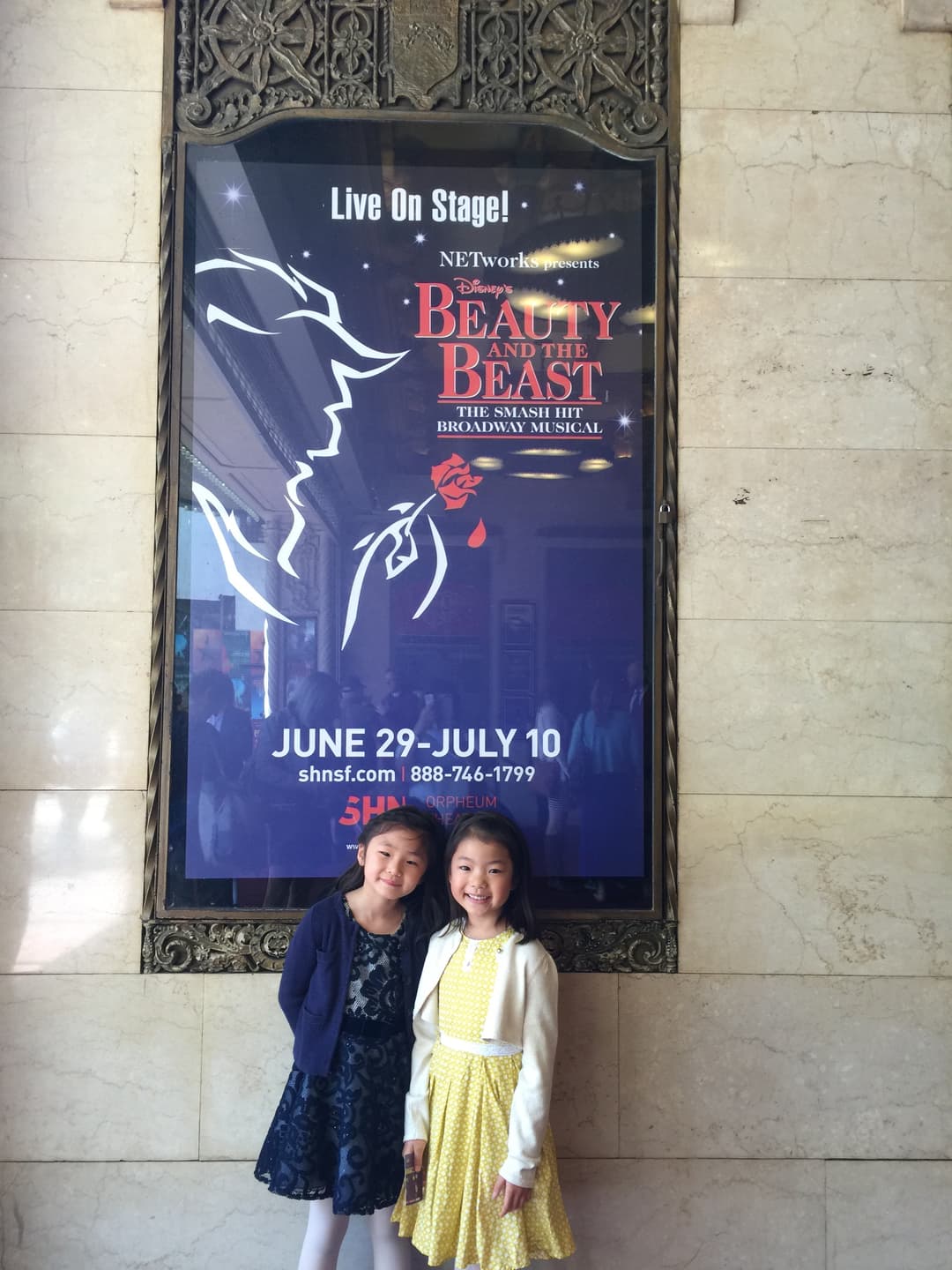
The Lion King arrived on Broadway in 1997, following Disney's first theatrical production, Beauty and the Beast (1994). By the mid-1990s, Disney Theatrical Productions had established a foothold, but the industry still viewed Hollywood's incursion with skepticism . The show opened during a pivotal transformation of New York's theater district. 42nd Street was being rehabilitated from its reputation as a red-light district into a family-friendly destination. Disney's commitment to restore the historic New Amsterdam Theatre—a decaying ruin that required a $34 million renovation—acted as an anchor for this revitalization . This moment also represented a broader shift in Broadway's economics. The 1980s megamusicals (Cats, The Phantom of the Opera) had demonstrated that musicals could become global brands, but Disney brought a new model: integrating theatrical production with film franchises, merchandise, tourism, and long-term corporate investment .
Historical & Cultural Context
The Lion King draws from multiple cultural traditions, making it one of Broadway's most consciously global productions. The story itself echoes Shakespearean tragedy—critics have noted its parallels to Hamlet—while also invoking archetypal coming-of-age myths and prodigal-son narratives . But the stage adaptation pushed far beyond the film's roots. Director Julie Taymor, drawing on her experience with mask and puppet traditions from around the world—including Japanese Bunraku, Indonesian shadow puppetry, and African ceremonial arts—created a theatrical language that honored diverse performance traditions . Perhaps most significantly, Taymor expanded the African identity of the production. The film's South African musical contributions, by composer Lebo M, had largely served as background atmosphere. On Broadway, they moved to the forefront, with songs incorporating Zulu, Xhosa, Sotho, and Swahili lyrics and choral arrangements rooted in South African a cappella traditions . Taymor also addressed the film's gender imbalance by changing Rafiki—the mandrill shaman—into a female role, expanding Nala's agency with the song "Shadowland," and giving the lionesses greater prominence . The casting itself was deliberately "color-conscious," ensuring that the Pride Lands reflected African and Black performers in leading roles .
Production Innovation
Taymor faced a fundamental question: how do you stage animals on Broadway without reducing them to either realistic suits or abstract representations? Her answer became the production's signature innovation. The "double event" meant that audiences would see both the actor and the animal simultaneously. Masks sat atop actors' heads, allowing their faces to remain visible. Puppets, rods, and harnesses were not hidden but integrated into the theatrical language. As Taymor explained: "Showing the mechanics, revealing the rods, ropes and wires that make it all happen, is something that the theatre can do that the film and television cannot... Magic can exist in blatantly showing how theatre is created rather than hiding the 'how'" . The creative team was intentionally drawn from outside Broadway's usual circles: Jamaican choreographer Garth Fagan from the modern dance world, Zimbabwean scenic designer Richard Hudson from opera, and South African composer Lebo M from film music. This diversity of expertise produced a production unlike anything Broadway had seen. The challenges were immense. The wildebeest stampede, elephant graveyard, and other cinematic scenes demanded theatrical solutions . Puppet co-designer Michael Curry worked with Taymor to create everything from life-sized giraffes to birds that swooped over the audience. The result was not an imitation of the film but a reinvention of its spirit.
Historical Significance
The Lion King ran for over 11,000 performances as of 2025, making it the highest-grossing entertainment title in any medium, with worldwide gross exceeding $8 billion. Thirty global productions have been seen by over 127 million people . Its awards record is equally distinguished: six Tony Awards in 1998, including Best Musical, with Julie Taymor becoming the first woman to win Best Direction of a Musical. Lebo M and Garth Fagan hold the record as the longest-running Black composer and choreographer in Broadway history. But the show's historical importance extends beyond its own run. It cemented Disney Theatrical Productions as a dominant force, paving the way for Aida, Mary Poppins, Newsies, Aladdin, and Frozen. It helped legitimize Broadway as a destination for families and tourists, transforming the economic model of the theater district. The show also challenged assumptions about what Broadway could be. Critics who had dismissed Beauty and the Beast for its corporate origins could not so easily dismiss The Lion King—its artistry, innovation, and cultural ambition demanded respect. In many ways, the musical ushered in the "blockbuster era" of Broadway, where spectacle, intellectual property, and theatrical craft could coexist. Representation
The production's approach to representation was deliberate and groundbreaking. Racial casting was central to Taymor's vision. By casting Black actors as Mufasa, Simba, Nala, and Rafiki, the production placed Black performers in positions of power and dignity rarely seen on Broadway at the time. As Taymor recalled: "Those children had never seen a black king on stage. There was no Obama" . Meanwhile, Scar—the villain—was typically played by a white actor, his whiteness obscured by makeup, subverting expectations. Gender representation was also reimagined. Rafiki became a female sangoma (faith healer), and Nala received her own song ("Shadowland") and expanded role, departing from the film's more limited focus. The production's African identity—through its cast, music, and cultural references—represented a conscious decision to center Black artistry and storytelling. Performer Lindiwe Dlamini, who has been with the show since its first preview, described its resonance: "Simba is a young man who's trying to find himself because he's exiled, which is connected with us. We had people who left the country to go fight for our land" .
Why It Resonates With Me
What fascinates me about The Lion King is how it transformed a commercial property into a genuine theatrical landmark. The production could have simply replicated the film's success—as Beauty and the Beast largely did—but instead it chose a radically different path. Taymor refused to hide the mechanics of theatre, making the craft visible and turning it into part of the spectacle. This feels like a profound statement about what live theatre offers that film cannot: the shared experience of watching something being made in real time, in front of our eyes. At the same time, the show's commitment to representation and cultural authenticity gives its visual brilliance a deeper meaning. It is not simply spectacle for spectacle's sake—it is about who gets to be seen, who gets to lead, and whose stories are told. The image of a Black king on a Broadway stage in 1997, before the country had ever elected a Black president, was quietly revolutionary. And the show's South African soul—its choral music, languages, and spirit—reminds us that Broadway's future has always been global.