Overview
When Hello, Dolly! opened at the St. James Theatre on January 16, 1964, it offered Broadway audiences an exuberant celebration of romance, reinvention, and theatrical personality. At its center is Dolly Gallagher Levi, a widowed matchmaker who makes a living arranging other people's lives while gradually deciding that it is time to reclaim her own. Set in New York in the 1890s, the musical follows Dolly as she travels to Yonkers to arrange a marriage for wealthy, irritable merchant Horace Vandergelder. But Dolly has already decided that Horace would
make a suitable husband for someone else: herself. While she carefully manipulates events toward that goal, Horace's employees Cornelius Hackl and Barnaby Tucker escape to New York City in search of adventure and encounter Irene Molloy and Minnie Fay. Their stories converge at the glamorous Harmonia Gardens, where Dolly makes one of the most famous entrances in Broadway history. Songs including “Put On Your Sunday Clothes,” “Before the Parade Passes By,” “It Only Takes a Moment,” and “Hello, Dolly!” helped make the musical a phenomenon. Yet its greatest theatrical asset was Dolly herself—a role built around the ability of a performer to take command of an entire theater.
Historical Era
Hello, Dolly! premiered in 1964, at a fascinating transitional moment in American musical theatre. The traditional Broadway musical remained enormously popular, but American culture was changing rapidly. The Civil Rights Movement, changing gender expectations, television, youth culture, and rock music were transforming the country. Only weeks after Hello, Dolly! opened, the Beatles arrived in the United States and appeared on The Ed Sullivan Show, symbolizing the growing cultural power of a new generation of popular music. Broadway itself would soon respond with increasingly experimental works such as Cabaret, Hair, and eventually the concept musicals of Stephen Sondheim. Against this changing landscape, Hello, Dolly! looked deliberately backward. Its 1890s New York is filled with horse-drawn transportation, elaborate dresses, restaurants, parades, and old-fashioned courtship. But that nostalgia was part of its theatrical identity. At the beginning of a rapidly changing decade, Hello, Dolly! perfected many of the pleasures of the traditional Broadway musical.
Historical & Cultural Context
Although Hello, Dolly! is remembered primarily as a joyful musical comedy, Dolly's story begins with loss. She has been widowed and has spent years helping other people arrange their lives. Beneath her enormous confidence is someone who recognizes that she has gradually withdrawn from fully participating in her own life. This becomes explicit in “Before the Parade Passes By.” Dolly decides that she no longer wants to watch life from the sidelines. She wants to rejoin the parade. That idea gives the musical an emotional depth beneath its spectacle. Dolly's goal is not simply to marry Horace. Marriage represents a larger decision to return to society, desire, risk, and possibility.
Her agency is also striking. Dolly drives nearly every major event in the story. She negotiates, manipulates, improvises, and understands the other characters better than they understand themselves. Horace may possess greater economic power, but Dolly possesses social intelligence. The musical therefore gives its central female character unusual control over the machinery of the plot. Dolly does not wait for the story to happen to her. She makes it happen.
Production Innovation
Hello, Dolly! is a quintessential example of the star-driven Broadway musical. The show was originally built around Carol Channing, whose distinctive voice, comic timing, physicality, and direct relationship with the audience helped define Dolly Levi. The character's entrance into Harmonia Gardens during the title song became more than a plot moment—it became a ritual of theatrical recognition. The waiters stop. The staircase fills the stage. Dolly appears. The entire fictional world seems to acknowledge that the star has arrived. The production also demonstrated the power of large-scale staging and choreography. Director-choreographer Gower Champion created sequences such as “Put On Your Sunday Clothes,” “Dancing,” and “The Waiters’ Gallop” that transformed ordinary movement into expansive theatrical spectacle. Jerry Herman's score matched that scale. His melodies are emotionally direct, designed to communicate immediately with an audience. The title song itself became one of Broadway's most recognizable numbers and achieved extraordinary popularity outside the theater when Louis Armstrong's recording reached No. 1 on the Billboard Hot 100 in 1964. Broadway and American popular music were still capable of meeting at the center of mass culture.
Historical Significance
Hello, Dolly! became one of the great commercial successes of the 1960s, running for 2,844 performances in its original Broadway production. It won 10 Tony Awards, including Best Musical—a record at the time. Its original run also produced an extraordinary succession of Dollys. After Carol Channing, the role was played by stars including Ginger Rogers, Martha Raye, Betty Grable, Pearl Bailey, and Ethel Merman. The 1967 production starring Pearl Bailey with an all-Black principal cast became particularly significant. Bailey won a special Tony Award for her performance, and the production demonstrated how changing the performers could transform the cultural meaning of a familiar Broadway work without fundamentally changing its story.
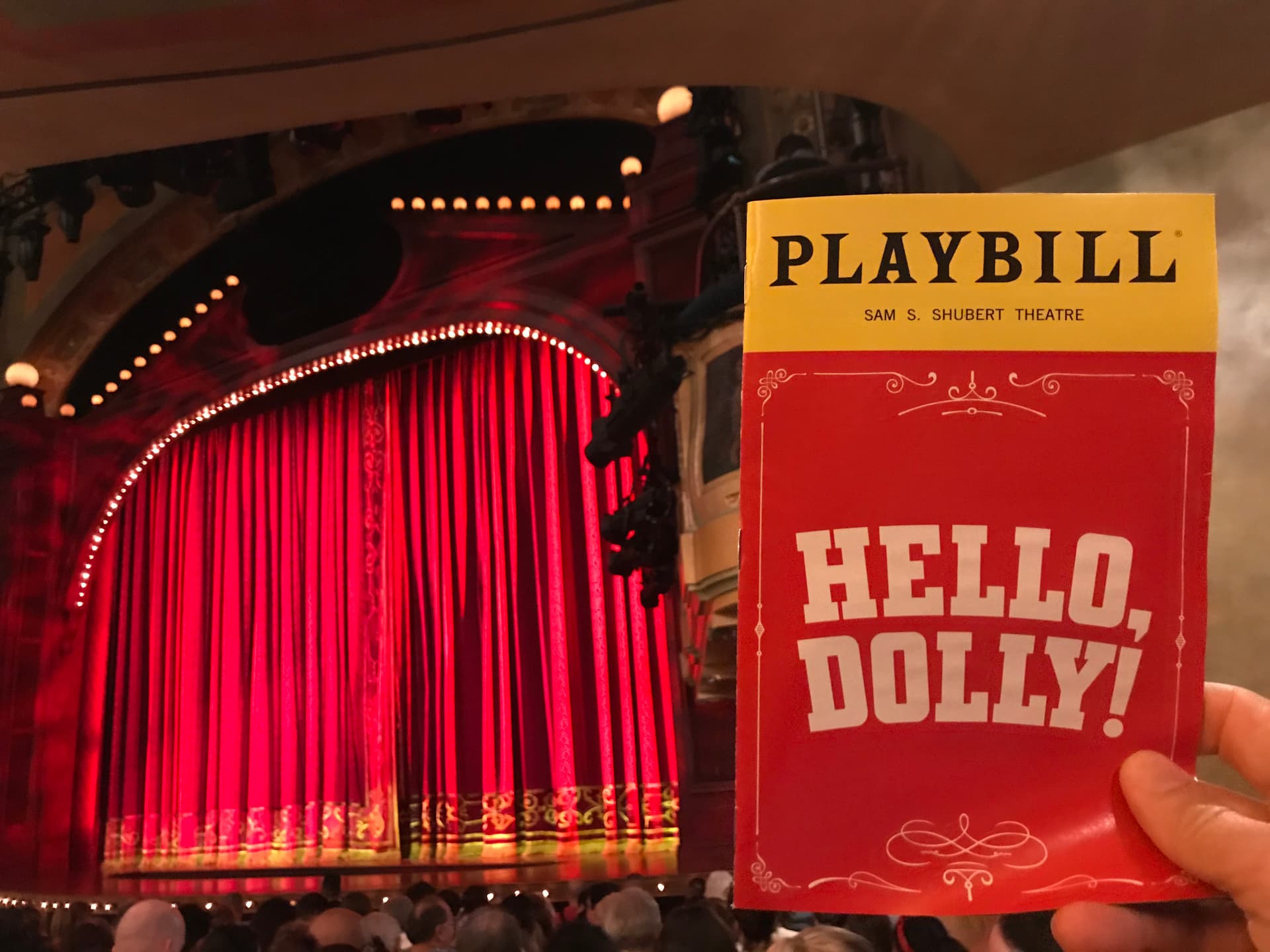
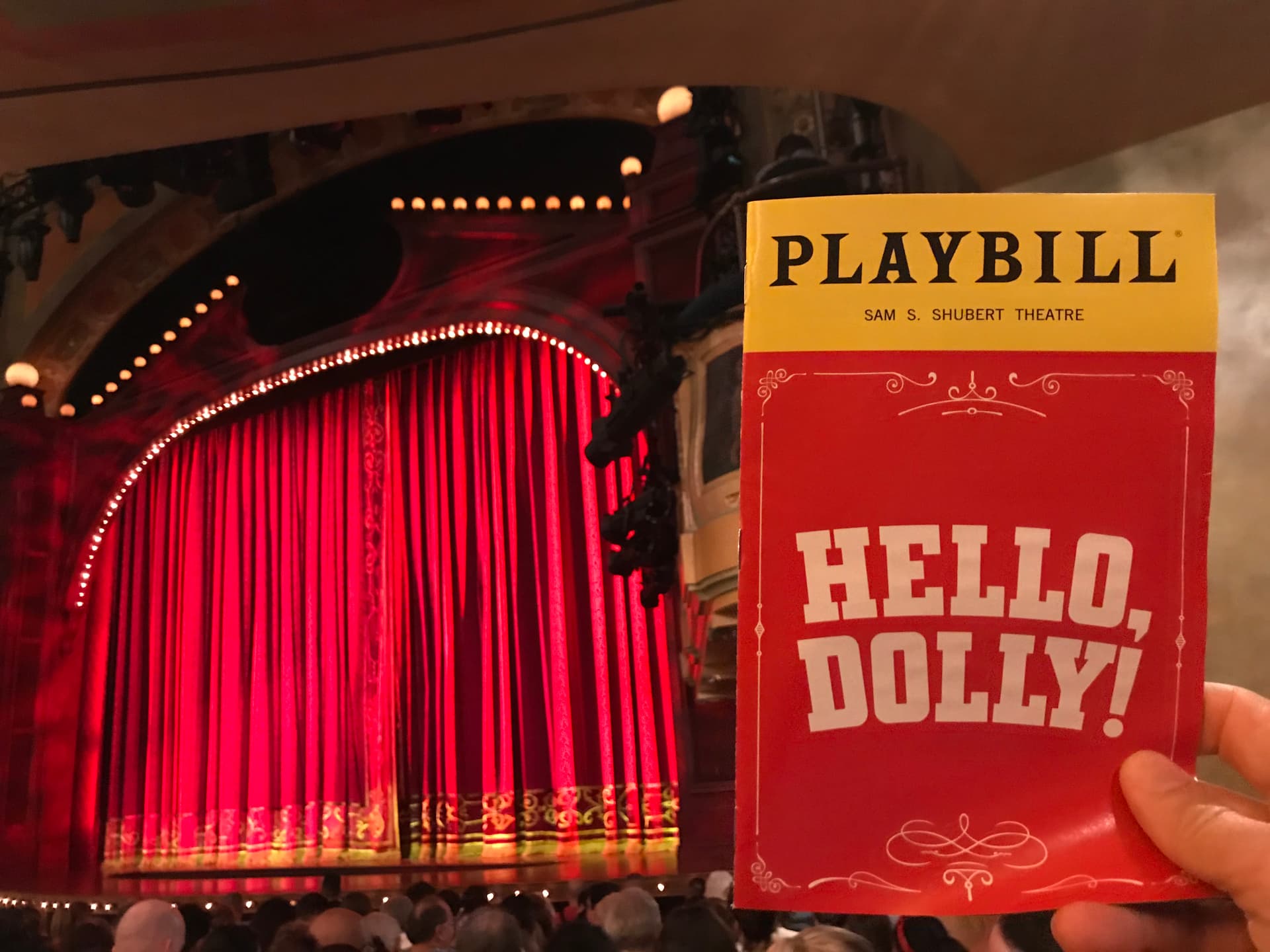
The role of Dolly consequently became larger than any single performer. That tradition continued through later revivals, most notably the acclaimed 2017 Broadway revival starring Bette Midler, followed by Bernadette Peters. Each new Dolly inherits the audience's memory of previous performers while creating a distinct version of the character. This makes Hello, Dolly! especially important to the history of Broadway stardom. Some musicals are remembered primarily for their stories or formal innovations. Hello, Dolly! demonstrates another essential theatrical tradition: the performer whose presence becomes the event itself.
Why It Resonates With Me
What I love about Hello, Dolly! is the idea behind “Before the Parade Passes By”: that there can be a moment when you realize you have been watching life rather than fully participating in it. Dolly's decision to step back into the parade gives all the spectacle around her an emotional purpose. And every actress who plays her makes that return feel slightly different, reminding me that Broadway is not only about the role on the page—it is also about the individual performer who walks down the staircase and makes it her own.