Overview
When Company opened at the Alvin Theatre on April 26, 1970, it challenged one of the fundamental assumptions of the Broadway musical: a story did not have to unfold in a conventional linear plot. The musical centers on Robert—usually called Bobby—a single man celebrating his thirty-fifth birthday in New York City. Around him are five married couples, all his closest friends, who continually ask why he has not settled down. Rather than following Bobby through a straightforward sequence of events, Company presents a series of encounters, memories, conversations, and imagined situations through which he observes other people's marriages and considers what commitment might mean for him. The relationships he sees are hardly advertisements for conventional romance. His friends argue, divorce, reconcile, compete, drink, worry, and depend on one another. Bobby simultaneously envies and fears their intimacy. Songs including “Sorry-Grateful,” “You Could Drive a Person Crazy,” “Getting Married Today,” “The Ladies Who Lunch,” and “Being Alive” explore those contradictions rather than resolving them neatly. Company asks not whether marriage is good or bad, but something more difficult: why do people choose intimacy when intimacy inevitably makes life more complicated?
Historical Era
Company premiered at the beginning of the 1970s, as American ideas about marriage, gender, sexuality, and adulthood were undergoing major change. The traditional postwar expectation of early marriage and clearly defined domestic roles was increasingly being questioned. Second-wave feminism challenged assumptions about women's roles within marriage and work. Divorce was becoming more socially visible, sexual norms were changing, and urban professionals were developing lifestyles that did not necessarily follow the conventional sequence of marriage, children, and suburban family life. Bobby embodies this changing world. At thirty-five, he has friends, romantic partners, and an active social life, yet remains unmarried. The musical refuses to treat his situation simply as a problem waiting for the correct woman to solve. That represented a significant departure from many earlier Broadway musicals, in which marriage traditionally functioned as the natural conclusion of romantic storytelling.
In Company, marriage is the question rather than the answer.
Historical & Cultural Context
New York City is essential to the musical's identity. This is not the romanticized Manhattan of Guys and Dolls or the nostalgic city of Hello, Dolly!. Company depicts the experience of the modern urban professional: crowded apartments, cocktails, dating, dinner parties, telephone calls, and the strange possibility of being surrounded by people while remaining emotionally isolated. The title itself captures the contradiction. Bobby always has company. His friends constantly call him, invite him over, arrange dates, and express affection for him. Yet their presence can also prevent him from confronting his loneliness. The married couples are equally complicated. “Sorry-Grateful” describes marriage through apparently contradictory feelings: partners can simultaneously regret and value their relationships. “Getting Married Today” turns Amy's panic before her wedding into a breathtaking expression of anxiety. Then Joanne, the cynical and perceptive older friend, delivers “The Ladies Who Lunch,” attacking the affluent Manhattan social world she herself inhabits. No single character provides the correct model for adulthood.
Production Innovation
Company became one of the foundational examples of what came to be called the concept musical. Instead of organizing itself primarily around “what happens next,” the musical is structured around an idea: commitment. George Furth's scenes originated as a series of separate one-act plays about different couples. With director Harold Prince and Stephen Sondheim, they were reorganized around Bobby, whose relationships connect the otherwise distinct episodes. The resulting structure is deliberately fragmented. Time is unstable, events do not always occur chronologically, and some sequences may be memories, fantasies, or hypothetical possibilities. Sondheim's score responds to this structure with an equally distinctive musical language. The opening title number layers fragments of Bobby's friends calling his name until their voices become an overwhelming representation of modern social connection. The final song, “Being Alive,” reverses that process emotionally. Bobby begins by describing everything difficult about intimacy—someone who knows you too well, interrupts you, hurts you, and forces you to care. Gradually, those burdens become the very things he realizes he wants.
The song does not provide a conventional romantic ending. Bobby does not suddenly marry. What changes is his willingness to be vulnerable enough to need another person.
Historical Significance
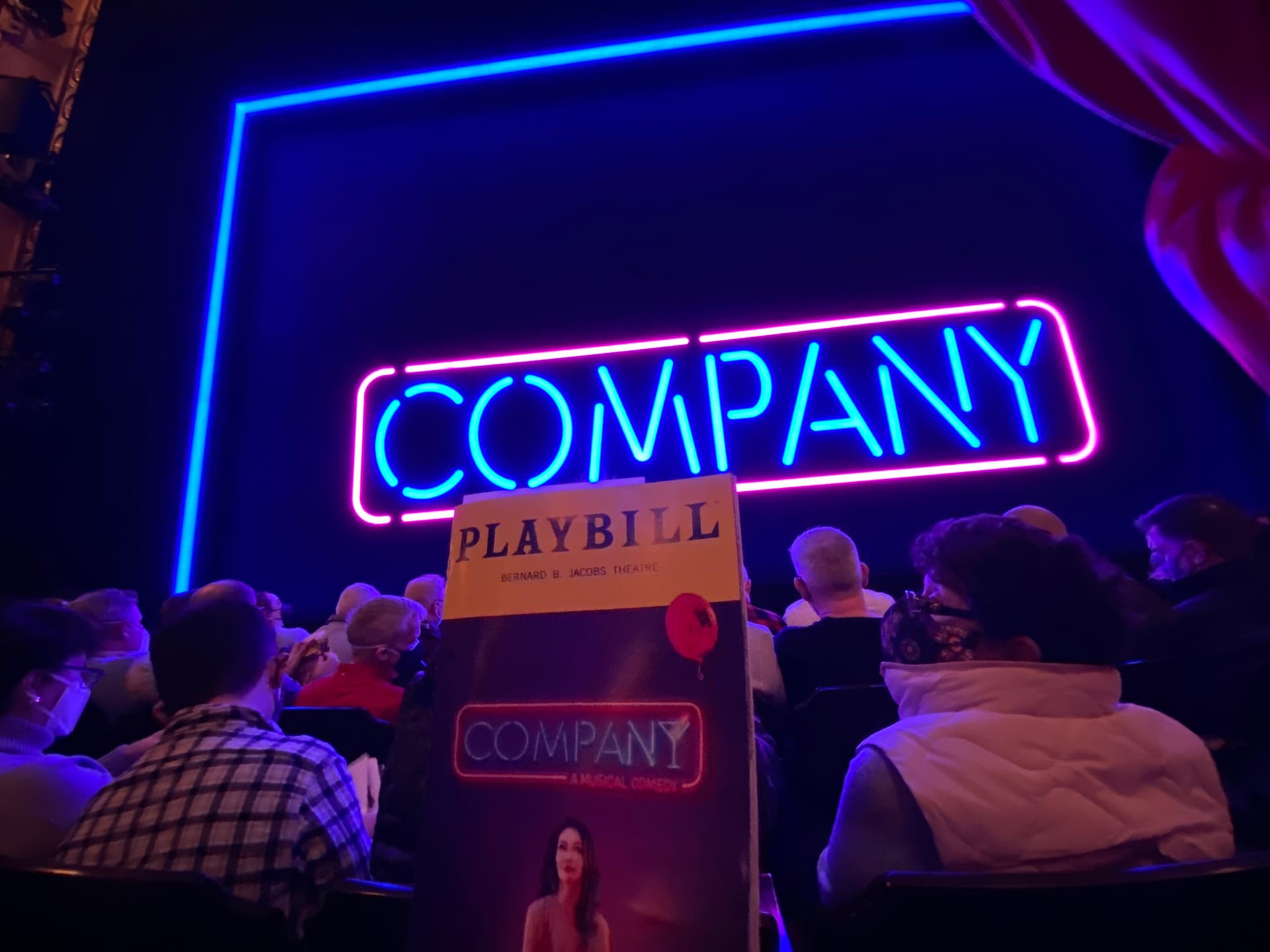
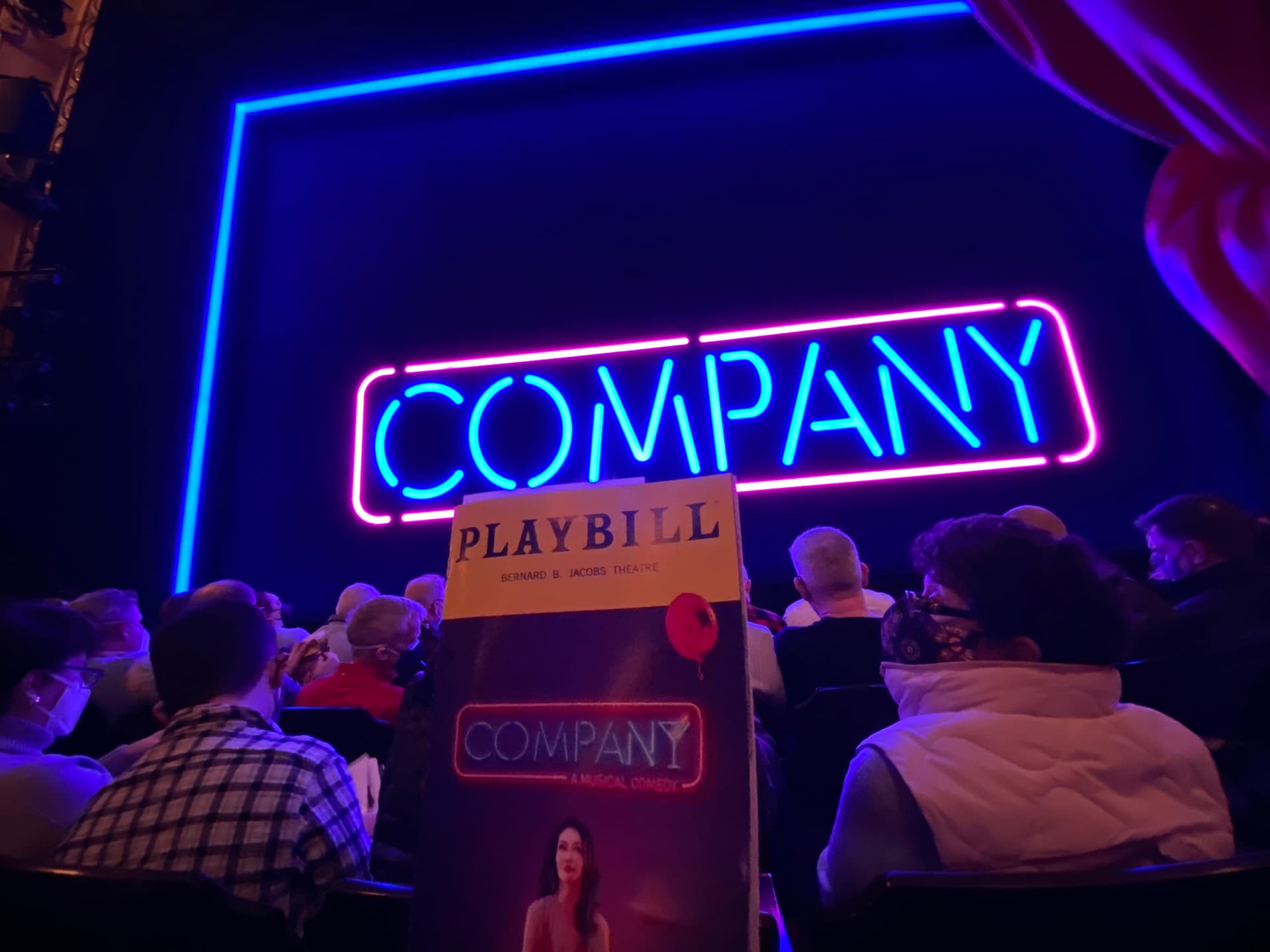
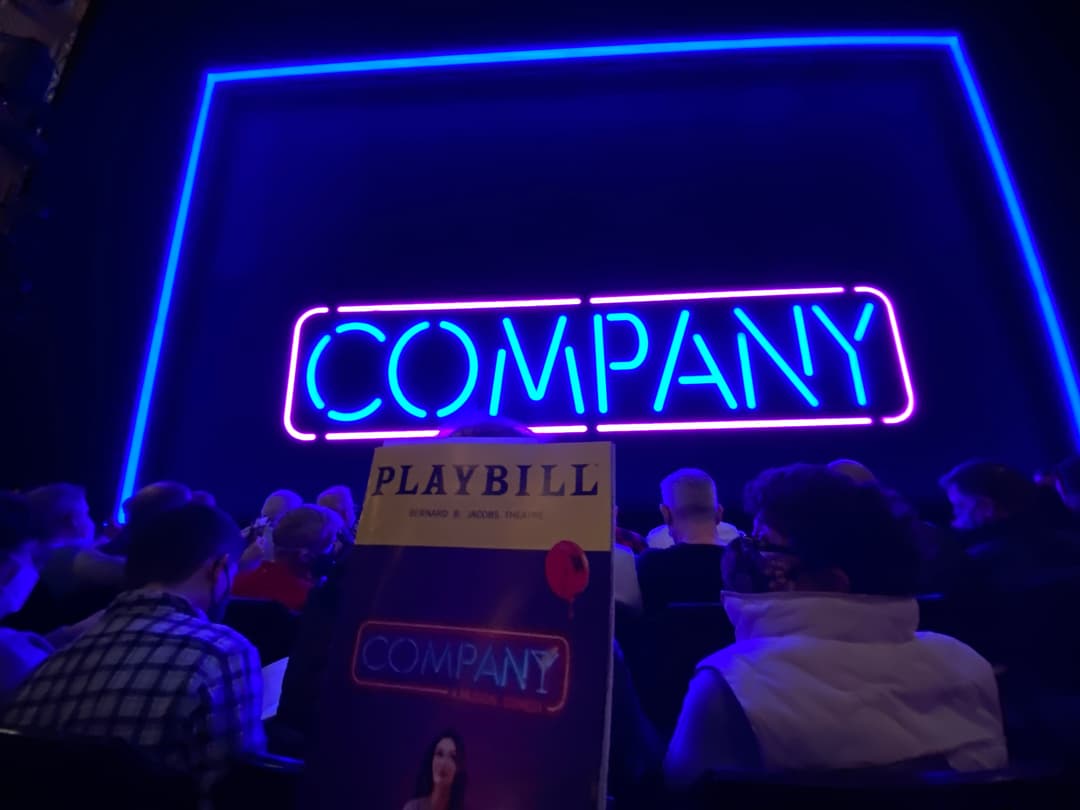
Company received 14 Tony Award nominations and won six, including Best Musical, Best Original Score, and Best Book of a Musical. More importantly, it helped redefine what a Broadway musical could be. Earlier integrated musicals had demonstrated that songs, dialogue, and dance could work together to tell increasingly sophisticated stories. Company asked whether Broadway even needed to tell a traditional story at all. Its influence can be traced through later concept-driven and nonlinear musicals in which theme, structure, and theatrical idea become as important as plot. It also marked a crucial stage in Stephen Sondheim's emergence as the defining composer-lyricist of the post-Golden Age Broadway musical. Its revival history has revealed how flexible that structure can be. The 2006 Broadway revival, directed by John Doyle, had the actors play musical instruments themselves, emphasizing the isolation and interconnectedness of the characters. The 2021 Broadway revival, directed by Marianne Elliott, made an even more fundamental change: Bobby became Bobbie, a thirty-five-year-old woman, played by Katrina Lenk. Several relationships and gender dynamics were reconfigured around her. The experiment demonstrated the strength of the musical's central question. Change the protagonist's gender, and the social pressures surrounding marriage shift—but the fear of intimacy, loneliness, and commitment remains.
Why It Resonates With Me
What fascinates me about Company is that it does not pretend there is a perfect answer to how a person should live. Bobby's married friends are not necessarily happier than he is, but his independence is not necessarily freedom either. “Being Alive” ultimately reframes connection itself: the people who complicate our lives may also be the people who make those lives feel fully lived. And by breaking apart the traditional Broadway plot, Company finds a form that feels remarkably close to the way people actually think—through fragments, contradictions, memories, possibilities, and questions that do not always resolve neatly.