Overview
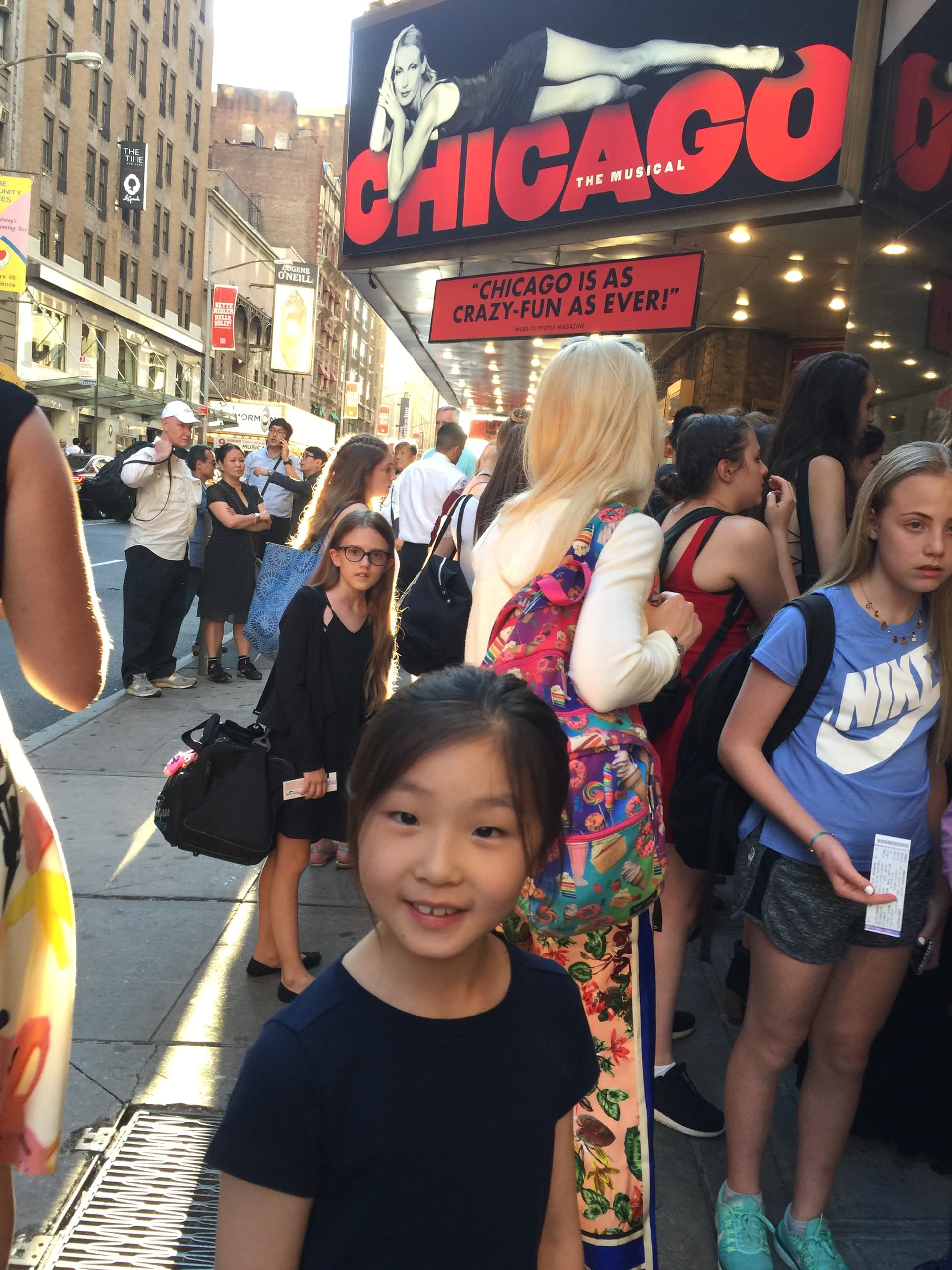
When Chicago opened at the 46th Street Theatre on June 3, 1975, it presented murder, celebrity, journalism, and justice as parts of the same performance. Its central idea is brutally simple: if you can control the story, you may be able to control the truth. Set in Chicago during the 1920s, the musical follows Roxie Hart, an aspiring performer who murders her lover and discovers that prison may provide the fame she could never achieve onstage. There she meets vaudeville performer Velma Kelly, another accused murderer who has already learned how to transform criminal notoriety into celebrity. Both women compete for public attention with the help of defense attorney Billy Flynn, who understands that winning a case requires more than legal argument. He manufactures narratives, coaches his clients, manipulates reporters, and turns murder trials into entertainment. Songs including “All That Jazz,” “Cell Block Tango,” “When You’re Good to Mama,” “Razzle Dazzle,” and “Nowadays” unfold through the language of vaudeville. The result is a musical in which
almost everyone is performing—and the audience must continually ask whether there is any meaningful distinction left between justice, publicity, and show business.
Historical Era
Chicago premiered in 1975, during a period of profound American distrust toward public institutions. The Vietnam War had ended only weeks earlier. The Watergate scandal had forced President Richard Nixon to resign the previous year. Television had transformed politics and public opinion, while investigative journalism had become newly powerful and visible. Against that background, Chicago's cynicism about truth, institutions, and media manipulation felt distinctly contemporary even though its story was set half a century earlier. The musical also arrived during a period of experimentation on Broadway. The integrated narrative traditions of Rodgers and Hammerstein had given way to works such as Cabaret, Company, Follies, and Pippin, in which staging and concept could comment on the story rather than simply illustrate it. Chicago pushed that approach further: the entire musical is structured as entertainment because entertainment is precisely what it is criticizing.
Historical & Cultural Context
The story has roots in actual history. Reporter and playwright Maurine Dallas Watkins covered sensational murder trials in Chicago during the 1920s, including cases involving women accused of killing men. Her reporting became the basis for her 1926 play Chicago, which Kander, Ebb, and Fosse later transformed into the musical. The historical context mattered. Newspapers competed aggressively for readers, and sensational criminal cases could transform defendants into temporary celebrities. Stories involving attractive women, sex, betrayal, and murder were particularly marketable. Chicago exaggerates this relationship between crime and publicity, but its central mechanism is recognizable: public attention can become a form of power. Roxie quickly realizes that innocence matters less than whether people are interested in her. When a newer, more sensational defendant arrives, reporters abandon Roxie almost instantly. Fame is not moral judgment. It is attention—and attention must constantly be renewed.
Production Innovation
The defining theatrical concept of Chicago is vaudeville.
Nearly every musical number is constructed as a performance inspired by a recognizable entertainment style. Characters do not simply express emotions through song; they package those emotions as acts for an audience. In “Cell Block Tango,” six imprisoned women transform stories of murder into a seductive ensemble routine. Billy Flynn presents courtroom manipulation as literal spectacle in “Razzle Dazzle.” Perhaps the sharpest example is “We Both Reached for the Gun.” Billy controls Roxie's press conference while Roxie sits on his knee like a ventriloquist's dummy. He supplies her answers while reporters enthusiastically reproduce the story. The metaphor could hardly be clearer: Roxie appears to speak, but Billy is manufacturing the narrative. Bob Fosse's choreography intensified the effect. Isolated gestures, angular bodies, turned-in positions, controlled sexuality, and visible theatricality created a world in which performance itself becomes manipulation. The audience is placed in an uncomfortable position. We understand that the show is criticizing spectacle—while enjoying the spectacle enormously.
Historical Significance
The original production starred Gwen Verdon as Roxie, Chita Rivera as Velma, and Jerry Orbach as Billy Flynn and ran for 936 performances. Yet Chicago did not initially become the defining musical of its season. It opened the same year as A Chorus Line, whose emotional sincerity and groundbreaking structure dominated Broadway and the Tony Awards. Its historical transformation came two decades later. In 1996, a stripped-down revival directed by Walter Bobbie and choreographed by Ann Reinking “in the style of Bob Fosse” returned Chicago to Broadway. Instead of elaborate scenery, the production emphasized performers, choreography, black costumes, and an orchestra visible onstage. The simplicity made the satire feel newly contemporary. The revival became an extraordinary success, winning the 1997 Tony Award for Best Revival of a Musical and eventually becoming the longest-running American musical in Broadway history. Its longevity radically changed the historical status of the work: a musical that had originally been overshadowed became one of Broadway's most recognizable institutions. The 2002 film adaptation, starring Renée Zellweger, Catherine Zeta-Jones, and Richard Gere, expanded its global reach and won the Academy Award for Best Picture.
More importantly, the world increasingly seemed to catch up with Chicago. Celebrity trials, reality television, social media, personal branding, viral scandals, and twenty-four-hour news cycles made its central argument feel less like exaggeration.
Why It Resonates With Me
What fascinates me about Chicago is how accurately it understands the economics of attention. Roxie does not need everyone to believe she is a good person; she needs them to keep looking at her. The musical was written decades before social media, yet its characters already understand how to manufacture narratives, compete for attention, and turn controversy into visibility. Its most uncomfortable trick is that it makes us part of the system it criticizes: we know Roxie and Velma are manipulating their audience, and we keep watching anyway.