Overview
When Cabaret opened at the Broadhurst Theatre on November 20, 1966, it challenged one of the most basic expectations of musical theatre: that entertainment should allow the audience to escape from reality. Set in Berlin in 1929–1930, during the final years of the Weimar Republic and the rise of Nazism, the musical follows American writer Clifford Bradshaw and English nightclub performer Sally Bowles. Their relationship unfolds alongside the quieter romance between Cliff's landlady, Fräulein Schneider, and Jewish fruit vendor Herr Schultz. Watching over everything is the Emcee, master of ceremonies at the Kit Kat Klub. The nightclub initially appears to offer escape—sex, humor, music, and freedom from conventional morality. But as Nazi ideology spreads through the world outside, the boundary between the cabaret and political reality gradually collapses. Songs including “Willkommen,” “Maybe This Time,” “Money,” “Tomorrow Belongs to Me,” and the title song have become inseparable from the musical's identity, although the exact score has changed across stage and film versions. What begins with the Emcee welcoming the audience into a place where “life is beautiful” ultimately asks a far more disturbing question: what happens when people continue entertaining themselves while the world outside becomes dangerous?
Historical Era
Cabaret premiered in 1966, when Broadway and American culture were undergoing profound change. The Vietnam War was escalating, the Civil Rights Movement had transformed national politics, and younger Americans were increasingly questioning established institutions. Broadway's traditional Golden Age form was also beginning to fracture. Musicals such as Hair, Company, and Follies would soon experiment even more radically with structure and subject matter. Cabaret became one of the crucial works in that transition. Instead of presenting a seamless fictional world, director Harold Prince deliberately divided the musical between realistic scenes and cabaret performances. The Kit Kat Klub numbers did not simply entertain; they commented on the story and the political world surrounding it. This approach helped move Broadway toward what would later be called the concept musical, in which a central idea or theatrical device can become as important as conventional plot.
Historical & Cultural Context
The Berlin of Cabaret is the Weimar Republic, the democratic government that existed in Germany between the end of World War I and Hitler's rise to power.
Berlin became famous during this period for artistic experimentation, nightlife, sexual openness, political conflict, and cultural modernism. But that apparent freedom existed alongside economic instability, antisemitism, political violence, and growing support for extremist movements. The musical dramatizes the rise of Nazism not primarily through famous political leaders but through ordinary social relationships. Ernst Ludwig initially appears to be Cliff's friendly German acquaintance. His later revelation as a Nazi changes how both Cliff and the audience understand him. More devastatingly, Fräulein Schneider ends her engagement to Herr Schultz because he is Jewish. She does not suddenly become a committed Nazi; she becomes frightened of what marriage to him might cost her. That distinction is central to Cabaret. Political catastrophe does not require every person to become a fanatic. It can advance through fear, accommodation, denial, and the decision that resistance is too personally expensive.
Production Innovation
The original Cabaret used the Kit Kat Klub as a kind of distorted mirror reflecting the outside world. The Emcee does not function like a conventional narrator. He entertains the audience while gradually revealing the ugliness beneath that entertainment. Cabaret numbers interrupt and comment upon the realistic story, forcing audiences to interpret connections between performance and politics. One of the most chilling examples is “Tomorrow Belongs to Me.” Its musical beauty initially resembles an innocent patriotic folk song, but its context gradually reveals its connection to Nazi nationalism. The contrast between attractive form and dangerous ideology demonstrates how political movements can make themselves emotionally appealing. The show's structure also implicates the audience. We sit in a theater watching the Kit Kat Klub's performers just as the fictional patrons do. That relationship becomes increasingly uncomfortable. If we are enjoying the spectacle while political disaster develops around the characters, how different are we from the people inside the cabaret?
Historical Significance
Cabaret became a major success, running for 1,165 performances and winning eight Tony Awards, including the 1967 Tony for Best Musical. Its influence grew further through Bob Fosse's 1972 film adaptation, starring Liza Minnelli and Joel Grey. The film substantially restructured the stage musical, eliminating most traditional book songs and placing almost all musical numbers inside the cabaret itself. It won eight Academy Awards and became one of the most influential movie musicals ever made.
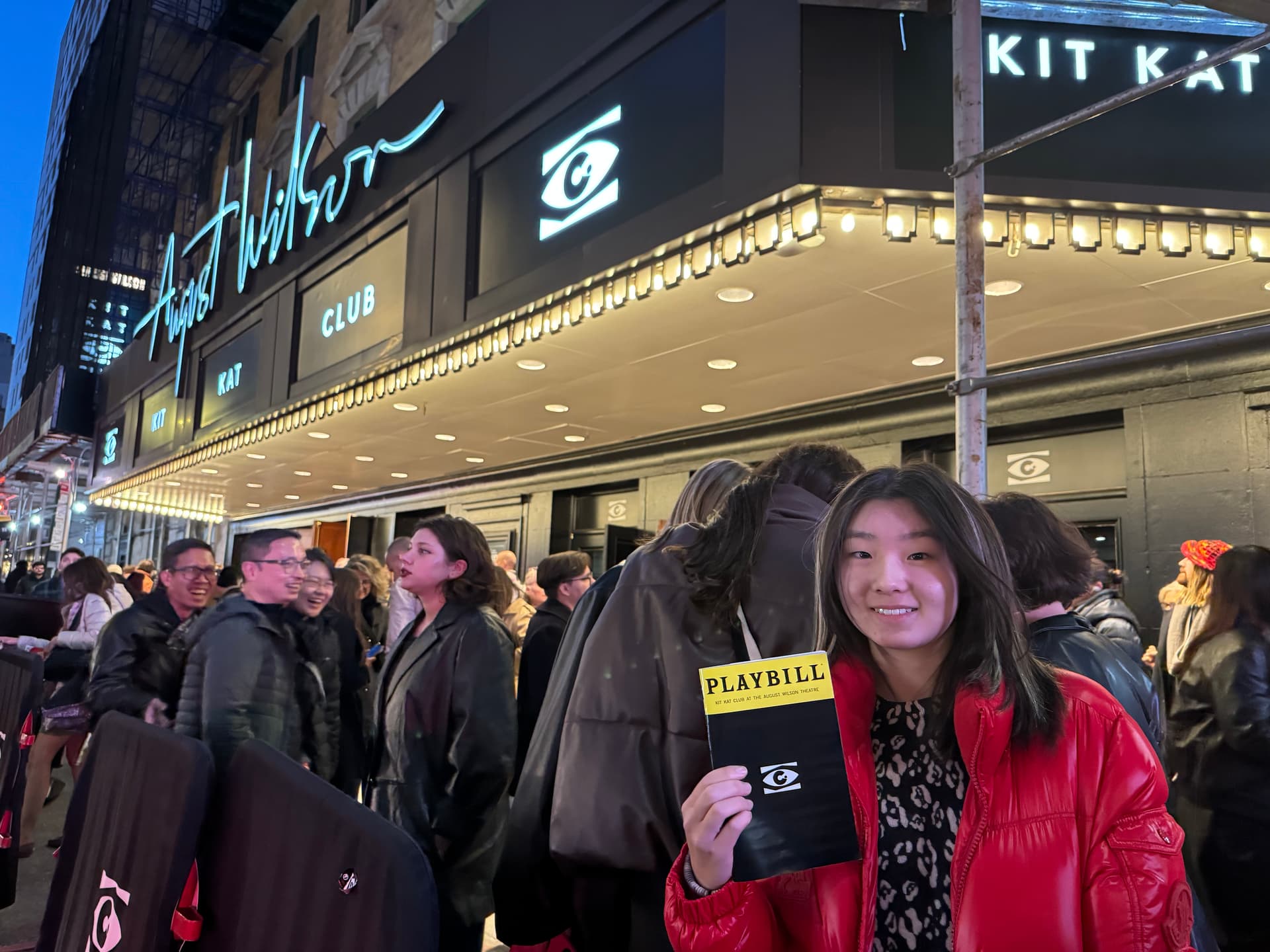
On Broadway, Cabaret has demonstrated an extraordinary capacity for reinvention. The landmark 1998 revival, directed by Sam Mendes and co-directed and choreographed by Rob Marshall, transformed the theater itself into the Kit Kat Klub. Audience members entered a space that blurred the boundary between spectator and participant, making the show's warning about complicity even more immediate. The 2024 Broadway revival, Cabaret at the Kit Kat Club, pushed that immersive approach further, transforming the August Wilson Theatre so that the audience entered the world of the club before the musical formally began. These radically different productions reveal why Cabaret occupies such an important place in Broadway history. Its meaning depends not only on its script and score but on how the audience is positioned in relation to what it sees.
Why It Resonates With Me
What I find most powerful about Cabaret is that it does not allow the audience to observe history from a safe distance. The Emcee invites us to laugh, watch, and enjoy ourselves while the world outside the club becomes increasingly dangerous. Eventually, that entertainment starts to feel like complicity. For me, that is what makes the musical so unsettling and enduring: it asks not simply what we would do in a moment of political crisis, but whether we would recognize the crisis before it became impossible to ignore.